

[For Elementary Students] Flower Kanji Quiz! How many flowers do you know?

Hidden within the names of flowers we casually see every day are actually lots of kanji reading quizzes.
For flowers like “kinmokusei” (fragrant olive) and “ajisai” (hydrangea), the kanji often have surprising readings and spellings that make you go, “Really?!” The more you learn, the deeper and more fascinating the world of kanji becomes.
You can also learn about the origins of the flowers themselves.
In this article, we introduce kanji quizzes about flowers that children in elementary school through adults can enjoy.
Discover the fun of kanji alongside seasonal flowers!
- How do you read this? Check your general knowledge with a kanji reading quiz about flowers!
- How many can you read? Test your general knowledge with a spring flower kanji quiz
- [For Elementary School Students] Country Names in Kanji Quiz. A quick, fun quiz
- [For Elementary School Students] Brain Training with Kanji Decomposition Quiz! Guess the Complete Kanji from Its Parts
- Let’s learn more about hydrangeas! Trivia quiz and fun facts about hydrangeas for kids
- A four-character idiom quiz that elementary schoolers will love! Questions become fun once you understand the meanings
- Learn by Playing! Recommended Games with a Kanji Theme
- [Interesting] Summary of Kanji Reading Quiz Questions
- A quiz of interesting obscure kanji: characters that look easy but are hard to read
- [Hard-to-Read Quiz] Single-character difficult kanji — including surprisingly simple ones!
- How many can you read? A quiz on difficult kanji for foods
- Recommended for lower grades! A fun, educational quiz for elementary school students
- [For Elementary School Students] A Collection of Fun, Educational Quiz Ideas for Mother's Day
[For Elementary School Students] Flower Kanji Quiz! How many flowers do you know? (1–10)
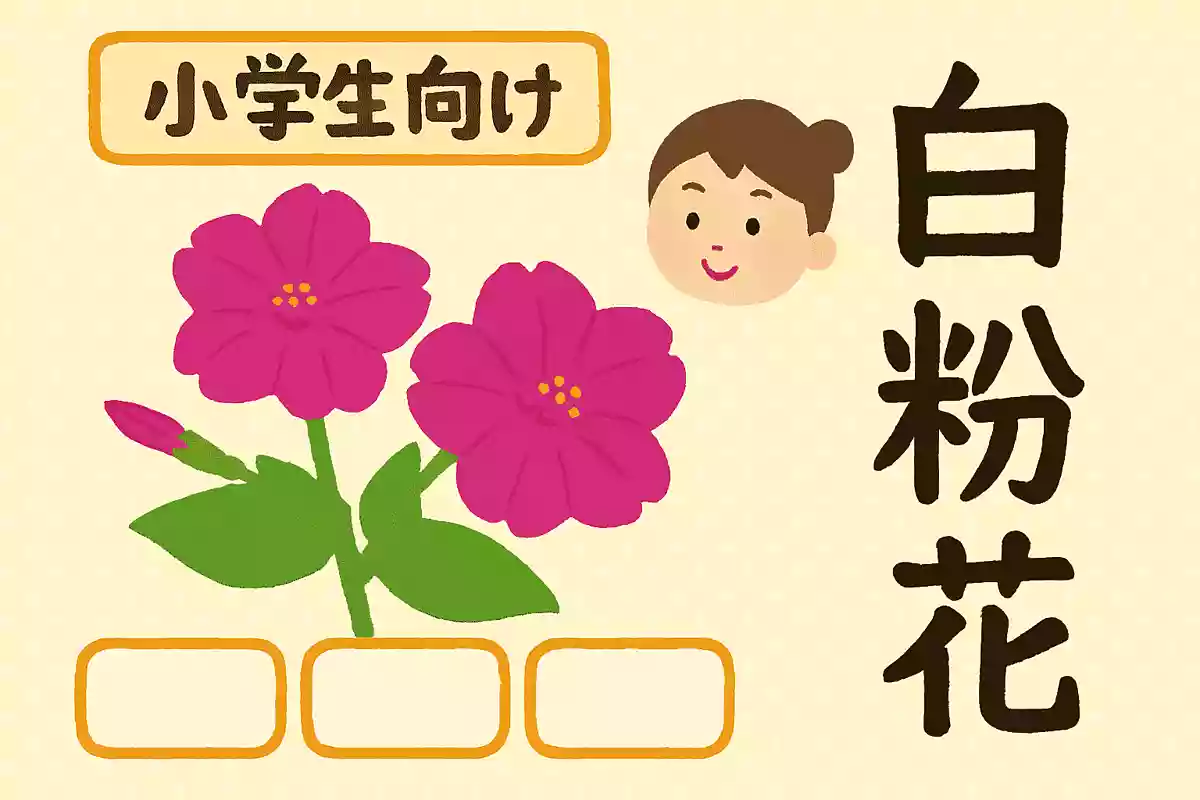
Which of the following is the correct reading of the kanji “白粉花”?
- morning glory
- four o'clock flower
- sunflower
See the answer
four o'clock flower
“白粉花” is read as “oshirōibana.” The name comes from the white powder inside its seeds, which resembles face powder (cosmetics). The oshirōibana bears small pink or yellow flowers that bloom from summer to autumn.

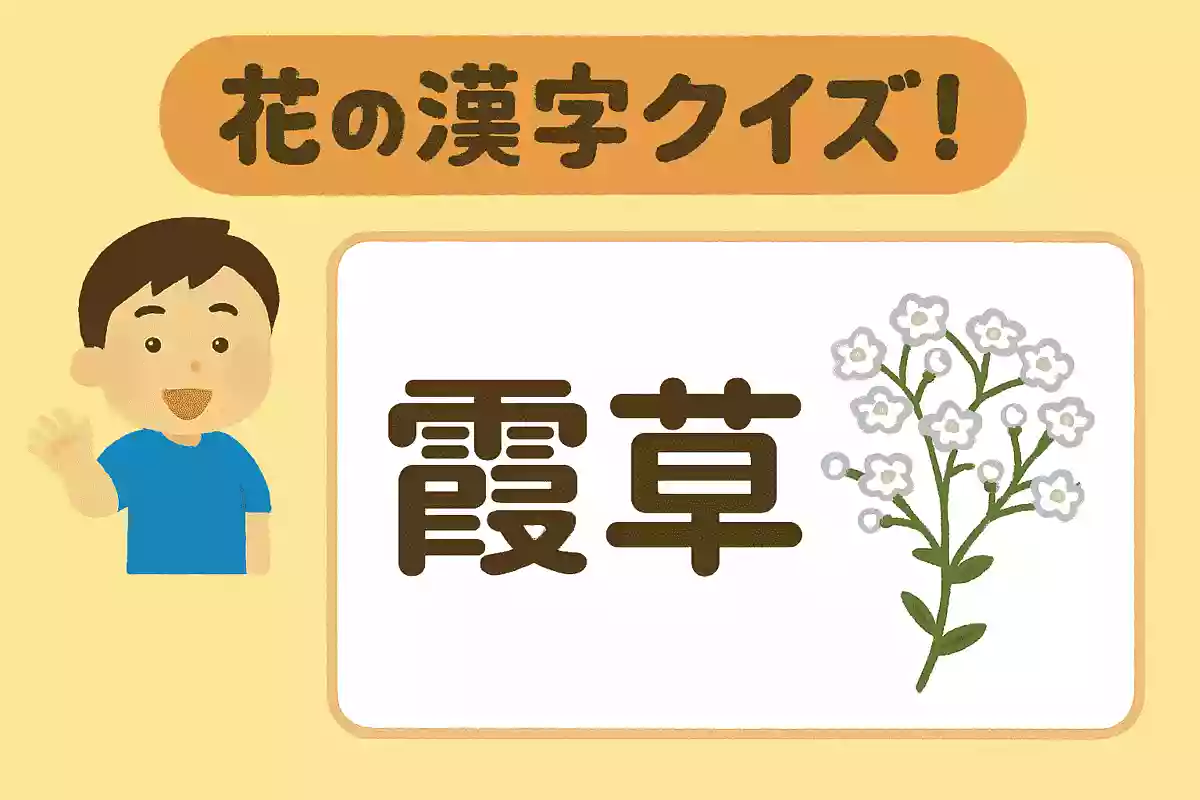
Which of the following is the correct reading for “霞草”?
- baby’s breath
- white clover
- Yamakiku
See the answer
baby’s breath
"霞草" is read as "kasumisou" (baby’s breath). It’s a plant characterized by producing many small white flowers and is commonly used in bouquets and floral arrangements.
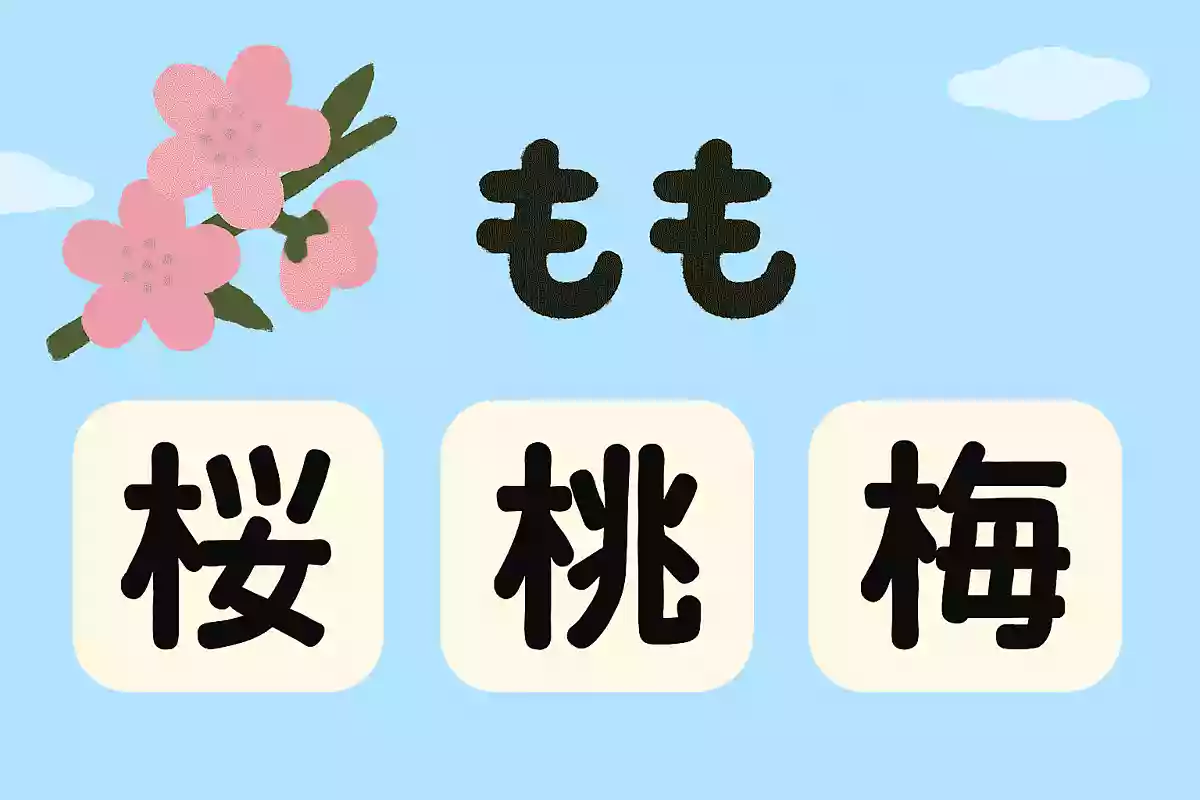
Which of the following is the correct kanji for the flower of “momo” (peach)?
- cherry blossom
- peach
- plum
See the answer
peach
The flower “momo” is written as “桃.” “Sakura” is “桜,” and “ume” is “梅,” so be careful not to mix them up. They bloom with very beautiful flowers in spring.
[For Elementary School Students] Flower Kanji Quiz! How many flowers do you know? (11–20)
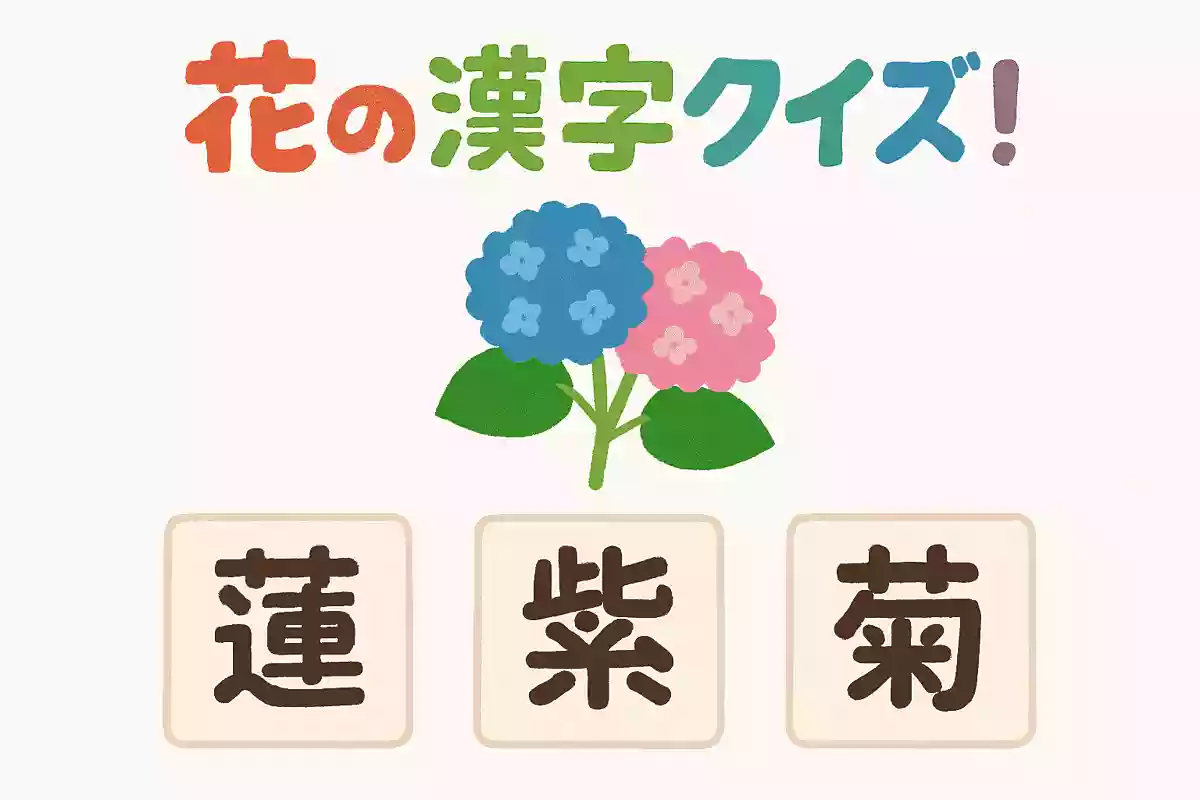
Which of the following is the correct kanji for the flower “ajisai” (hydrangea)?
- hydrangea
- cherry blossom
- chrysanthemum
See the answer
hydrangea
“Ajisai” is written in kanji as “紫陽花.” It’s a beautiful flower made up of clusters of small, colorful blossoms. You often see hydrangeas during the rainy season.
Which of the following is the correct kanji for the flower of “ume” (Japanese plum)?
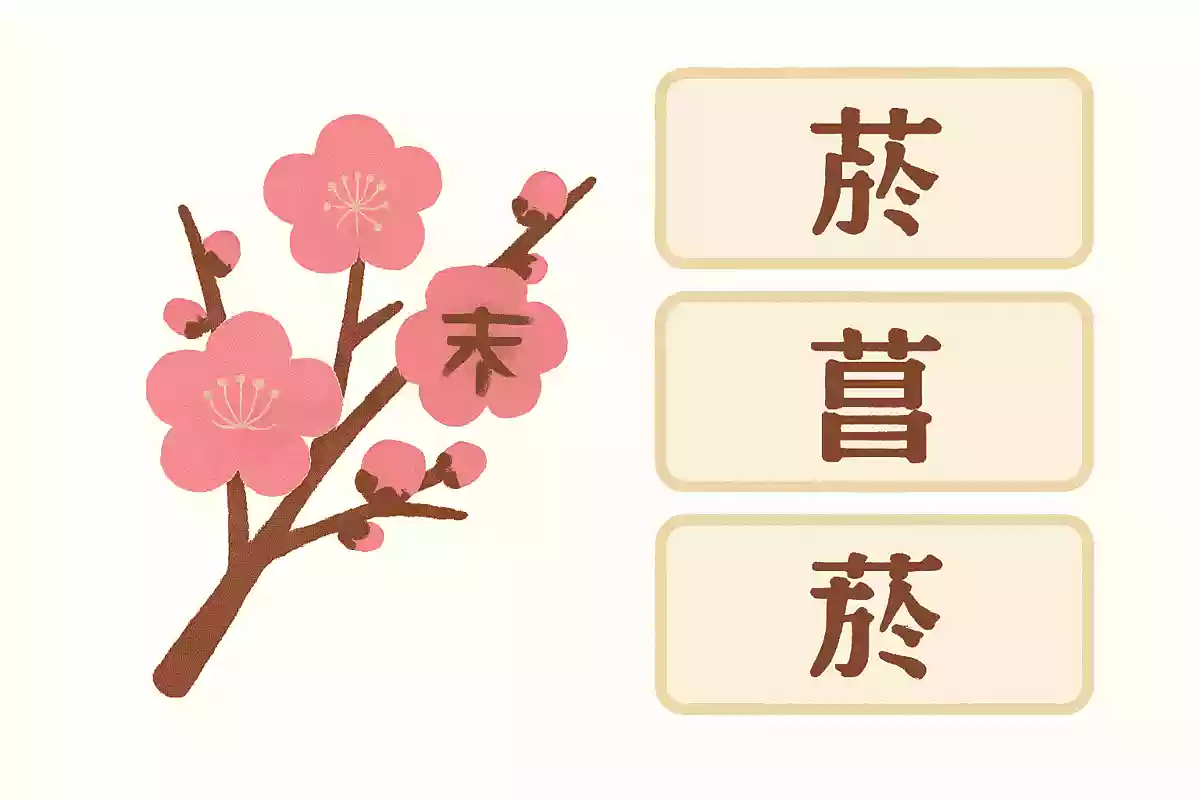
- cherry blossom
- plum
- chrysanthemum
See the answer
plum
Ume is written with the kanji “梅.” Its fruit is used to make umeboshi (pickled plums) and umeshu (plum wine). It blooms in spring and is also the origin of the word tsuyu, the rainy season.
How is the flower “cosmos” written in kanji?
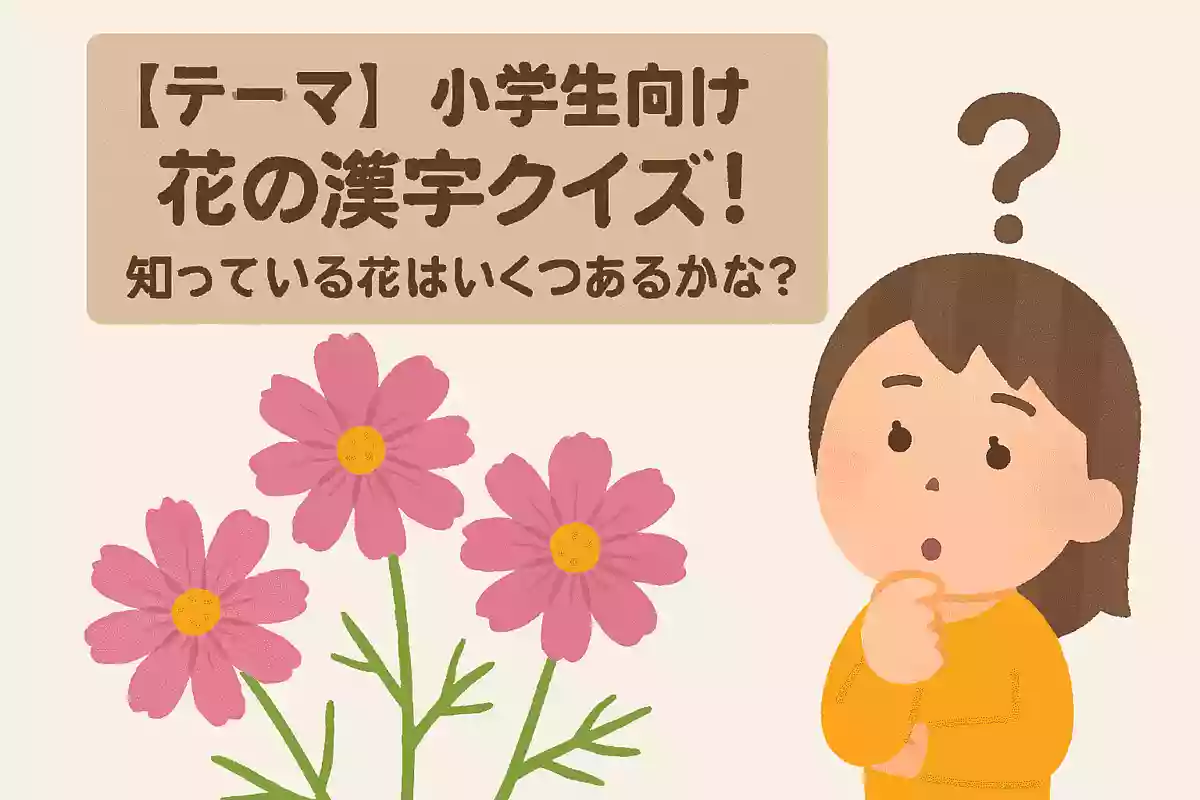
- cosmos (flower)
- garland chrysanthemum
- autumn grasses
See the answer
cosmos (flower)
Cosmos is written in kanji as “秋桜.” These characters are used because it means “a flower like cherry blossoms that blooms in autumn.” That’s why the character for “autumn” (秋) is used.
Which of the following is the correct reading of the flower name “桜桃”?
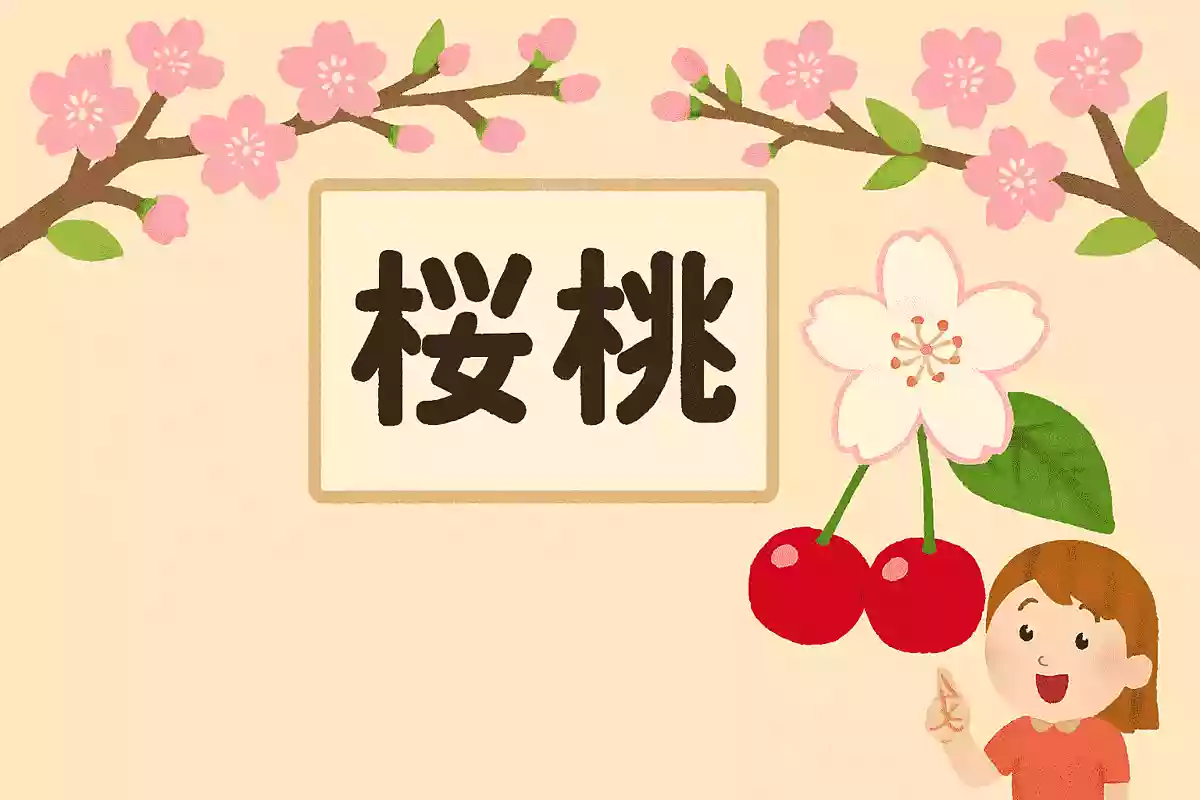
- cherry (sweet cherry; cherry fruit)
- peach
- plum
See the answer
cherry (sweet cherry; cherry fruit)
It’s written as 「桜桃」 and read as “sakuranbo.” 桜桃 refers to cherries. Although the characters for cherry blossom (桜) and peach (桃) are used, the term refers to the tree that bears cherries and to the fruit itself.