

![[For Elementary Students] Flower Kanji Quiz! How many flowers do you know?](https://media.ragnet.co.jp/img/1200__png__https://www.studiorag.com/files/2025/09/0ab43f48accfc29e0b5306da00d45af6.webp)

Hidden within the names of flowers we casually see every day are actually lots of kanji reading quizzes.
For flowers like “kinmokusei” (fragrant olive) and “ajisai” (hydrangea), the kanji often have surprising readings and spellings that make you go, “Really?!” The more you learn, the deeper and more fascinating the world of kanji becomes.
You can also learn about the origins of the flowers themselves.
In this article, we introduce kanji quizzes about flowers that children in elementary school through adults can enjoy.
Discover the fun of kanji alongside seasonal flowers!
- How do you read this? Check your general knowledge with a kanji reading quiz about flowers!
- How many can you read? Test your general knowledge with a spring flower kanji quiz
- [For Elementary School Students] Country Names in Kanji Quiz. A quick, fun quiz
- [For Elementary School Students] Brain Training with Kanji Decomposition Quiz! Guess the Complete Kanji from Its Parts
- Let’s learn more about hydrangeas! Trivia quiz and fun facts about hydrangeas for kids
- A four-character idiom quiz that elementary schoolers will love! Questions become fun once you understand the meanings
- Learn by Playing! Recommended Games with a Kanji Theme
- [Interesting] Summary of Kanji Reading Quiz Questions
- A quiz of interesting obscure kanji: characters that look easy but are hard to read
- [Hard-to-Read Quiz] Single-character difficult kanji — including surprisingly simple ones!
- How many can you read? A quiz on difficult kanji for foods
- Recommended for lower grades! A fun, educational quiz for elementary school students
- [For Elementary School Students] A Collection of Fun, Educational Quiz Ideas for Mother's Day
[For Elementary School Students] Flower Kanji Quiz! How many flowers do you know? (1–10)
次のうち、花の名前「椿」の正しい読みはどれですか。
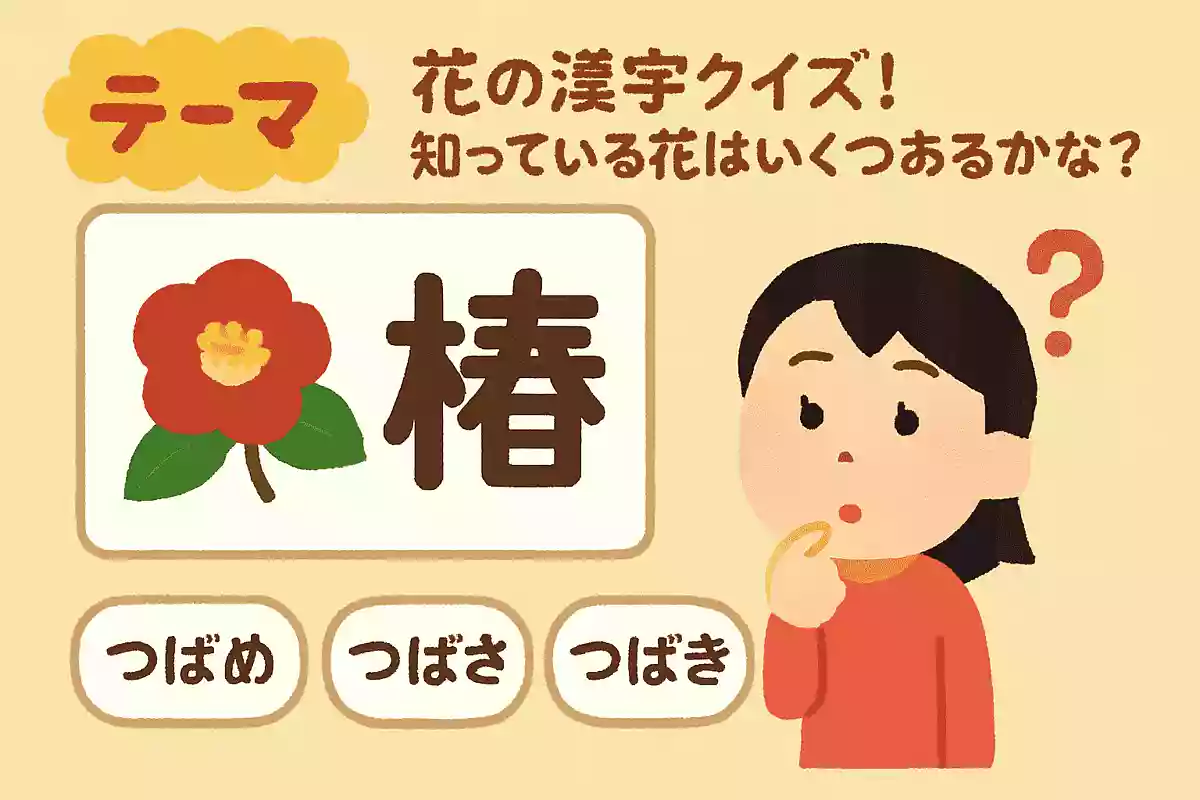
- cherry blossom
- plum
- camellia
See the answer
camellia
“椿” is read as “tsubaki.” It’s a traditional flower long cherished in Japan, blooming with beautiful red or white blossoms from winter to spring.

Which of the following is the correct kanji for the flower “yuri” (lily)?
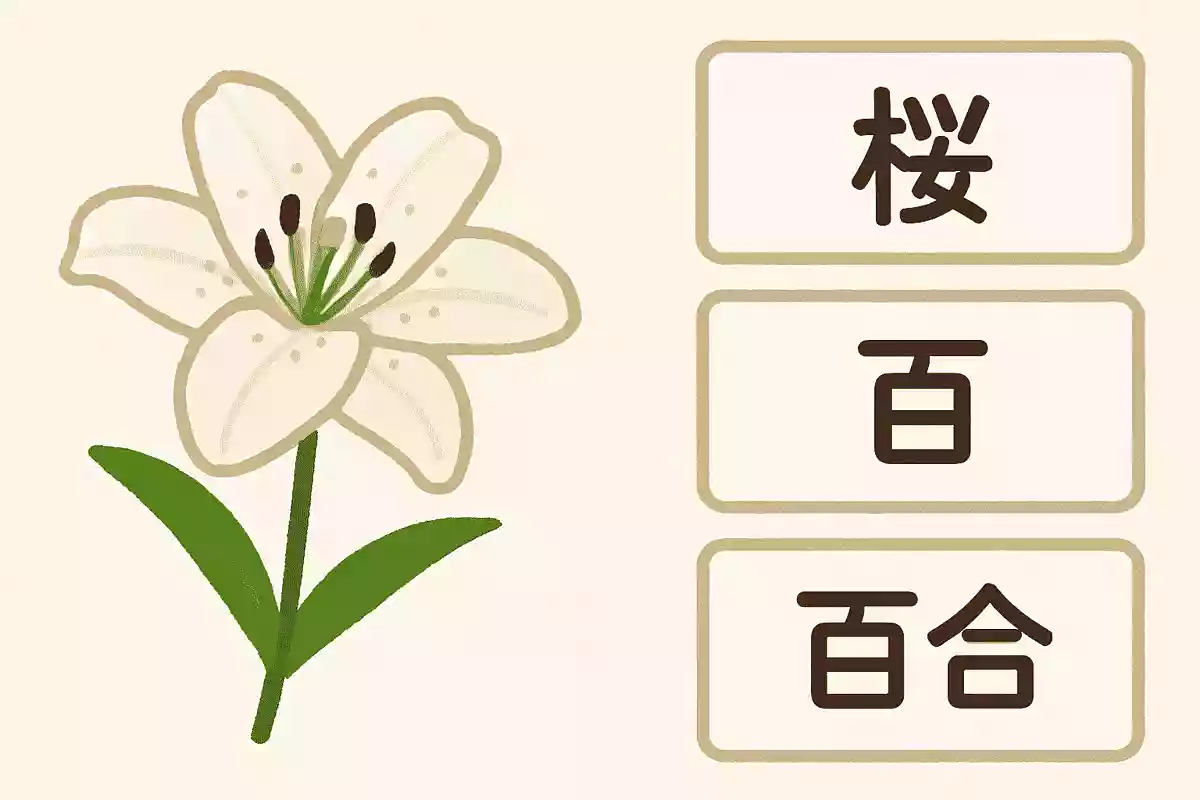
- lily
- cherry blossom
- chrysanthemum
See the answer
lily
The flower “yuri” is written in kanji as 百合. 百 means 100 and 合 means to meet/fit, but together they are read as “yuri.” It is a plant that produces large flowers in colors such as white and pink.
Which of the following is the correct reading of the kanji for the lotus flower, “蓮”?
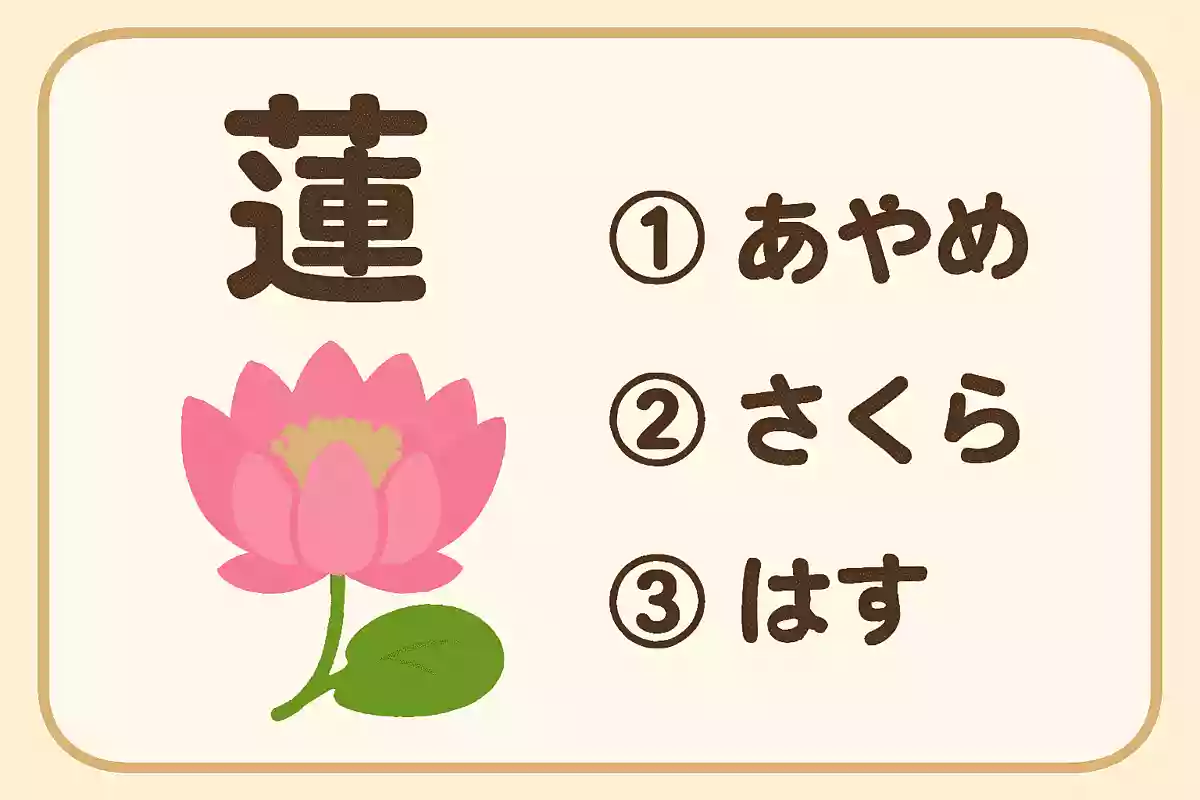
- water lily
- lotus
- shobu
See the answer
lotus
The kanji “蓮” is read as “hasu.” It is a plant characterized by its large leaves and flowers that float on water and is often seen in temple ponds. It’s well known as a large flower that blooms by the water.
Which of the following is the correct reading of the flowers of “kinmokusei” (osmanthus)?
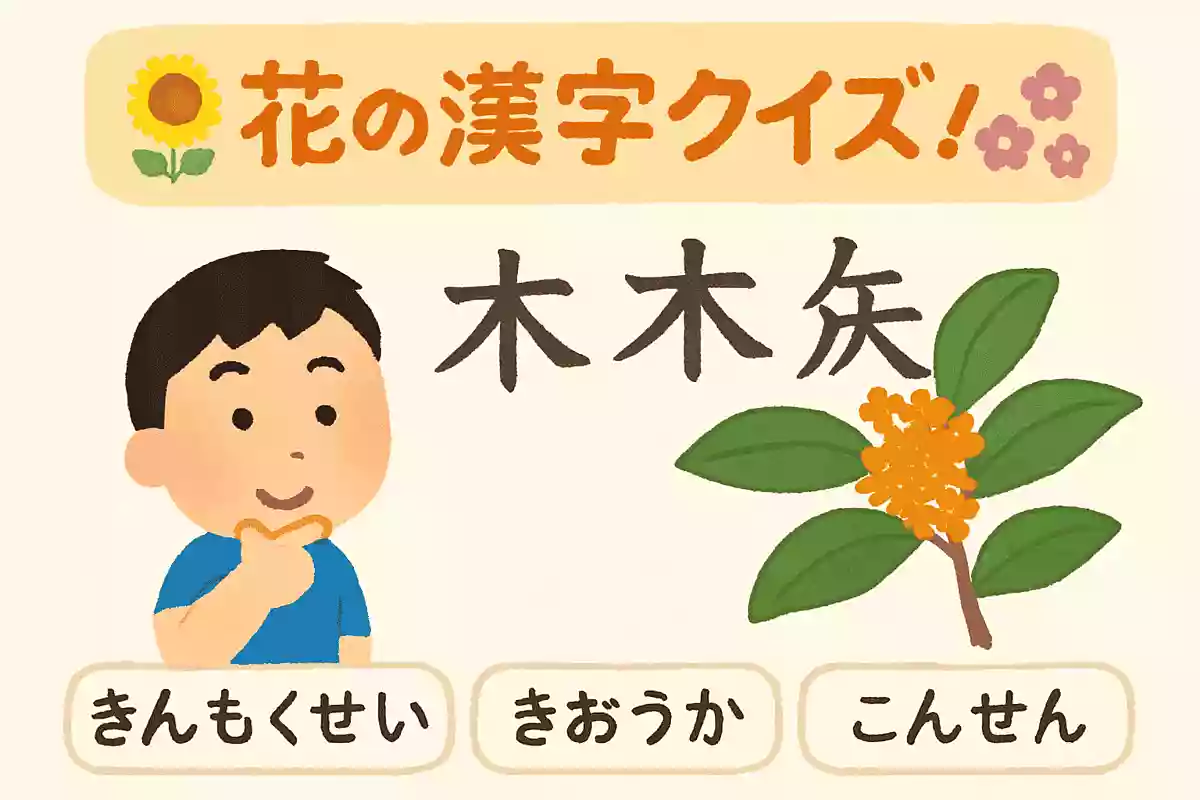
- fragrant olive (osmanthus)
- cherry blossom
- dandelion
See the answer
fragrant olive (osmanthus)
“金木犀” is read as “kinmokusei.” In autumn, it blooms with small orange flowers, and a very pleasant fragrance spreads through the air.
When spring comes, the plant known as “tsukushi” starts to grow. How is it written in kanji?
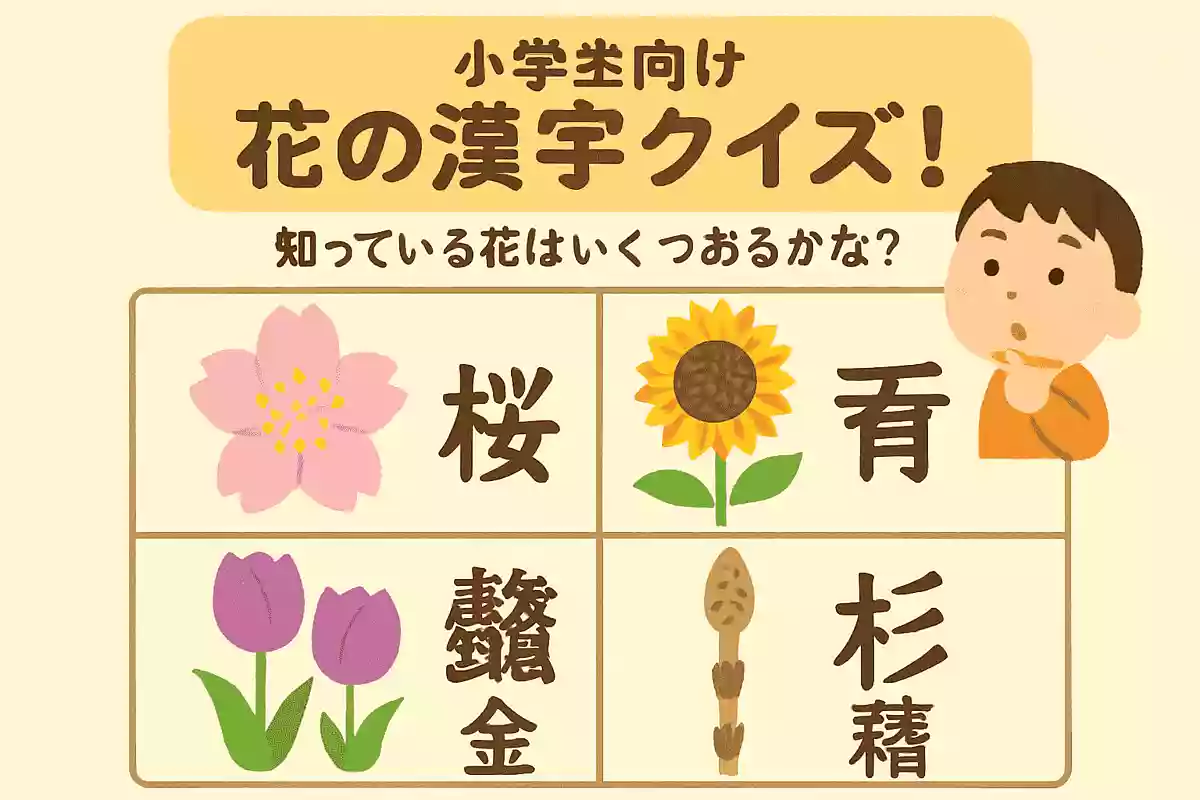
- bamboo
- cedar
- horsetail (field horsetail; tsukushi)
See the answer
horsetail (field horsetail; tsukushi)
Tsukushi is written in kanji as 「土筆」. 「土」 means “earth/soil” and 「筆」 means “brush,” and this kanji is used because it grows from the ground and has a brush-like shape. You often see it in spring in rice fields and along roadsides.
Which of the following is the correct kanji for the flowers of “kinmokusei” (fragrant olive)?
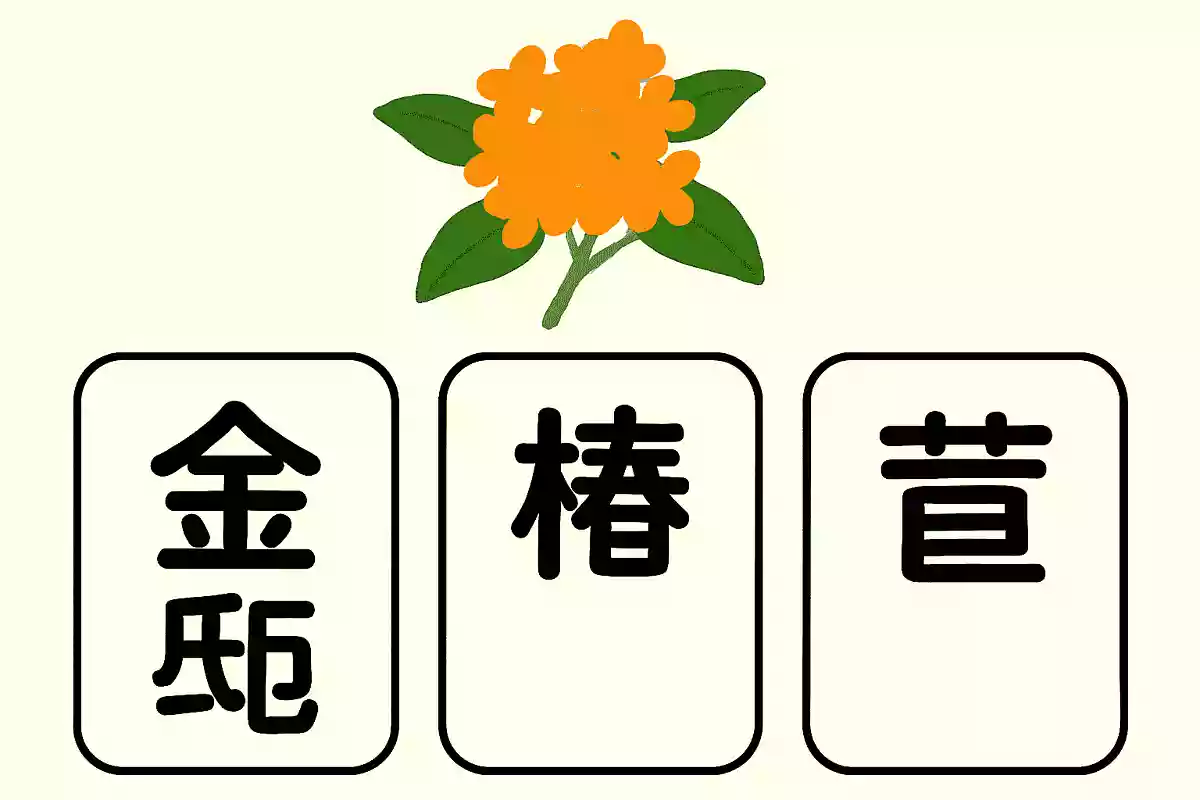
- osmanthus (fragrant orange osmanthus; sweet olive)
- silver osmanthus
- Kaneki Sakura
See the answer
osmanthus (fragrant orange osmanthus; sweet olive)
“Kinmokusei” is written in kanji as 金木犀. It’s a yellow flower that blooms in autumn and has a very pleasant fragrance. “Ginomokusei” is similar, but it’s a different variety with white flowers.
Which of the following is the correct kanji for the flower “botan”?
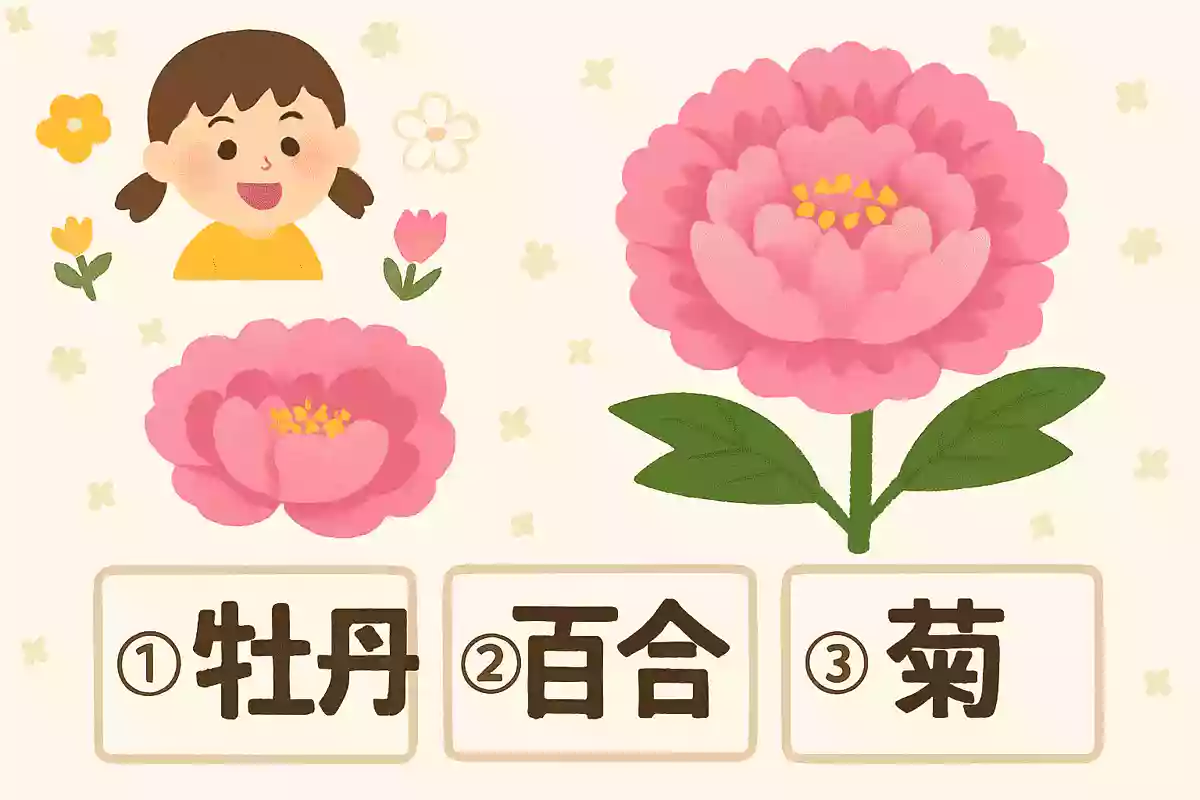
- peony
- chrysanthemum
- cherry blossom
See the answer
peony
"Botan" is written in kanji as "牡丹" (peony). It’s a plant that blooms with large, very beautiful flowers in spring. The other options are read as "kiku" (菊, chrysanthemum) and "sakura" (桜, cherry blossom).