

[For Elementary School Students] A Four-Choice Proverb Quiz Recommended for Kids

Proverbs, which convey lessons and knowledge passed down by our predecessors, are studied in many settings, starting with Japanese class in elementary school.
In this article, we’ve compiled a quiz focused on the proverbs children learn in elementary school.
Since you choose answers from multiple options, you can give it a try even if you don’t understand just from the question text.
When you check the answers, it’s also a good opportunity to deepen your understanding with the explanations of each proverb.
Be sure to try learning proverbs you can enjoy while answering quiz questions!
- [Easy] Quizzes That Elementary School Students Can Solve! A Collection to Nurture Wisdom
- Fun quizzes for elementary school kids: a collection of questions everyone can enjoy together
- Become a trivia master with a multiple-choice quiz for elementary schoolers! A fun problem collection that captivates both kids and adults
- [Playable from lower grades] Japanese language games and activities
- [For Elementary School Students] Trivia About April
- [For Elementary School Students] Cipher Quiz: Fun Puzzle Riddles
- Let's take on a four-choice quiz that everyone can enjoy together!
- [Easy] Quiz for Middle School Students
- [For Kids] November Trivia Quiz & Fun Facts: Let’s Learn While Having Fun!
- [For Kids] December Trivia Quiz & Fun Facts! Learn about seasonal events and traditions!
- So tricky you’ll be fooled! A collection of trick riddles that both adults and kids can enjoy.
- [For Seniors] Enjoyable Brain Training! Proverb Quiz Collection
- [For Elementary School Students] Fun and Effective Prefecture Quiz
[For Elementary School Students] A 4-Choice Proverb Quiz Recommended for Kids (1–10)
Haste makes waste.

- Run
- Turn around
- Walk.
- Stop
See the answer
Turn around
The proverb “More haste, less speed” means that sometimes a detour is necessary if you want to reach your destination as quickly as possible. When you’re in a hurry, you tend to choose the shortest route even if it involves some risk. But the lesson that it’s more reliable to take the safer, even if longer, path applies not only to physical travel but also to work and study—making it a more efficient approach overall. It’s a guideline well worth remembering.

Parent and child who don’t recognize each other

- soul
- love
- heart
- tear(s)
See the answer
heart
The proverb “oya no kokoro ko shirazu” means that a parent’s love and concern for their child often go unappreciated. Parents worry about their children no matter how old they get, while the children themselves, as they grow, naturally seek to live freely. Becoming independent is a joyful milestone, but this saying also conveys a wish for children to recognize the unseen worries and support their parents provide behind the scenes.
Many a little makes a mickle.

- river
- sea
- dream
- mountain
See the answer
mountain
The proverb “Even dust, when piled up, becomes a mountain” means that no matter how small the efforts, given time they can add up to great results. The lesson that continuing to do the same thing builds the foundation of anything helps put the brakes on the urge to quit when things stop going well. It’s a saying I especially want those who are currently working on something and feeling stuck to remember.
[For Elementary School Students] A 4-Option Proverb Quiz Recommended for Kids (11–20)
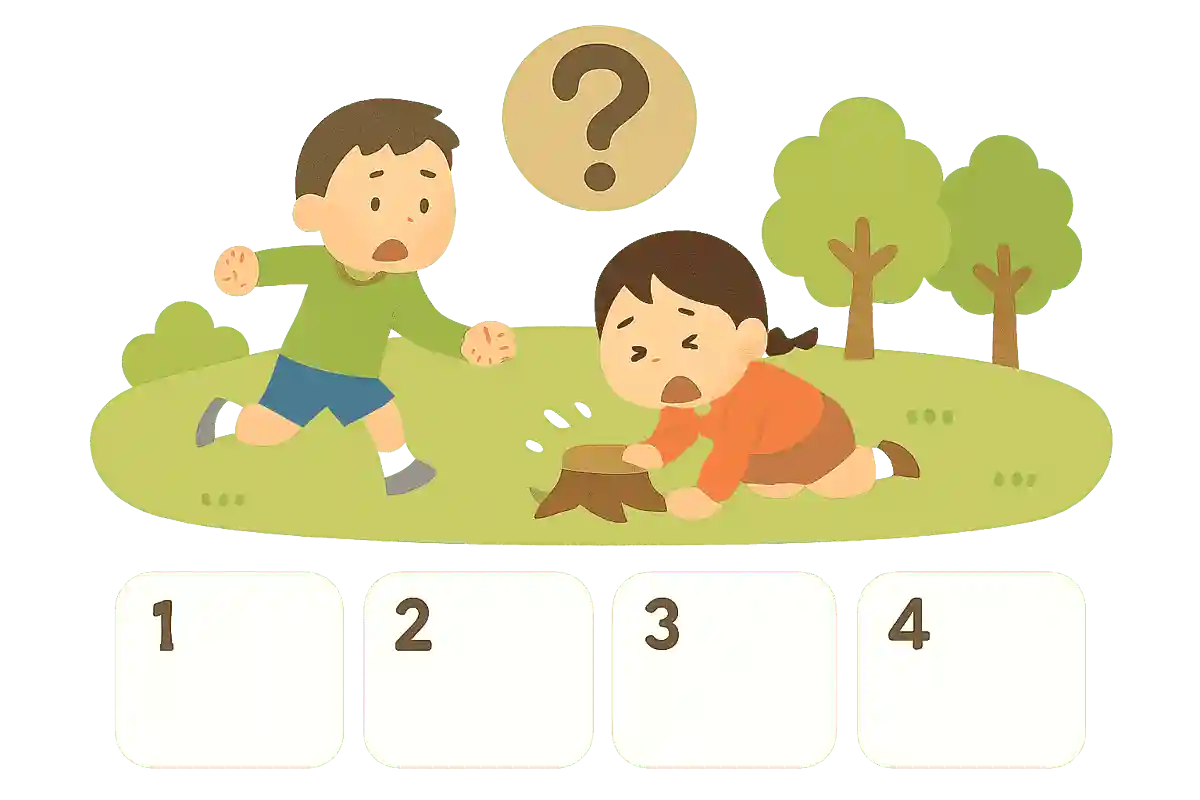
It’s no use crying over spilt milk.
- Worry
- hardship; toil; trouble; difficulties
- regret
- reserve; restraint; holding back; being reserved (polite hesitation)
See the answer
regret
The proverb “Regret does not come first” (literally, “Regret doesn’t come before”) means that once something has already happened, it’s too late to undo it. It teaches us that if we act on impulse without thinking ahead, it will be too late once things become irreversible. Keeping this proverb in mind, let’s make a habit of thinking carefully and acting cautiously, especially about the things we don’t want to regret.
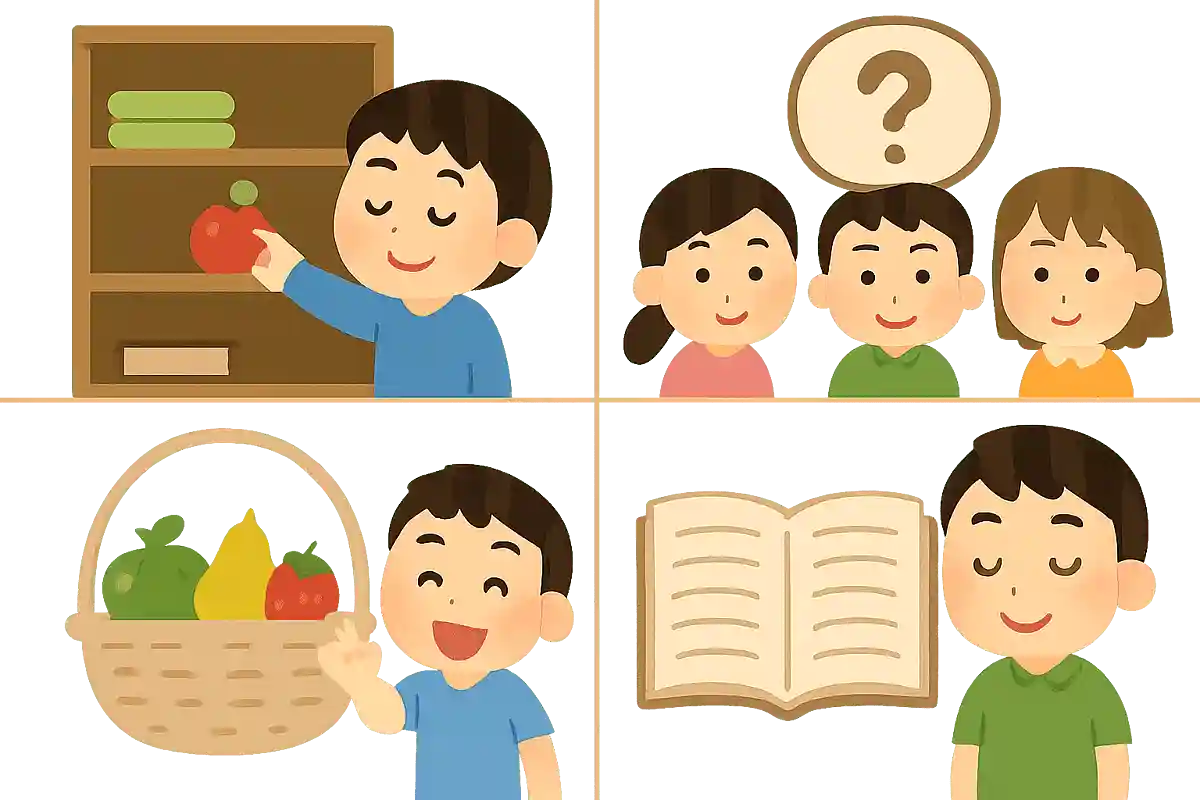
Pearls from the shelf
- mandarin orange
- Apple
- piggy bank
- botamochi (sweet rice cake with red bean paste)
See the answer
botamochi (sweet rice cake with red bean paste)
The Japanese proverb “tana kara botamochi” literally means “rice cakes fall from the shelf,” and refers to gaining unexpected good fortune. It comes from an old tale where someone sleeping under a shelf has a botamochi (a sweet rice cake) accidentally fall into their mouth. The phrase is used when something good is obtained without effort or hardship. A similar proverb is “a duck comes carrying green onions,” but that one involves another party and describes their action, so be mindful of the context when using it.
Two heads are better than one.

- 2
- 3
- 5
- 6
See the answer
3
The proverb “Sannin yoreba Monju no chie” means that when three people gather, good ideas will come. Monju refers to Manjushri, the bodhisattva who presides over wisdom. The lesson is that even ordinary people, by pooling their wisdom, can match a bodhisattva—so let’s cooperate. It teaches that the more people think together, the more objectively and from multiple angles things can be seen. However, be careful: there’s also the proverb “Sendō ōkushite fune yama ni noboru” (“Too many captains steer the boat up a mountain”), meaning that having too many people giving directions can backfire and undermine leadership.
Ignorance is bliss.

- God
- Buddha
- good
- love
See the answer
Buddha
There’s a proverb that means “sometimes you’re happier not knowing”: shiranu ga hotoke, literally “not knowing is Buddha.” It teaches that if you remain unaware, you won’t feel irritated, worried, or unsettled by certain things—an idea most of us can relate to to some extent. The saying advises us not to try to know everything, and to keep our distance from things that, even if we did learn about them, would only make us angry.