

For summer vacation homework! Simple and amazing crafts for elementary school students that you’ll want to make after seeing them


A fun summer vacation homework project for kids: crafts! But as children move into the upper grades, they can run out of ideas and worry about making something that doesn’t end up being the same as their friends’.
So here, we’re introducing craft ideas recommended for elementary school students from lower to upper grades.
Many use materials you already have at home or can buy at a 100-yen shop, so they’re easy to try.
The ideas are designed to help kids discover their own unique projects and express their creativity.
Use these as a reference and make some wonderful summer vacation memories!
- Simple yet amazing crafts: craft ideas that elementary school students will want to make
- Elementary School Students: Simple One-Day Science Project and Craft Ideas
- Simple but awesome! Craft ideas for upper-grade girls
- Recommended for elementary school students! Science fair topics & craft ideas
- DIY science projects that elementary school boys will love: ideas you can make with everyday materials
- For upper-grade boys! Simple yet awesome craft project [Don’t call it lazy]
- Paper cup crafts that elementary school kids will love! A collection of fun project ideas
- Fun crafts using straws
- Toys you can make from cardboard crafts! Authentic ideas you can build and play with
- Simple and cute summer project crafts! A collection of ideas for girls that will make you want to create
- Crafts parents and kids can enjoy together. Recommended craft ideas to keep children entertained.
- [For Adults] Simple yet Impressive Crafts: A Stylish, Eye-Catching Collection
- Craft ideas using plastic bottle caps [for boys]
[For Summer Vacation Homework!] Easy and Amazing Crafts for Elementary School Kids That Make You Want to Create (181–190)
Well-spinning paper cup top
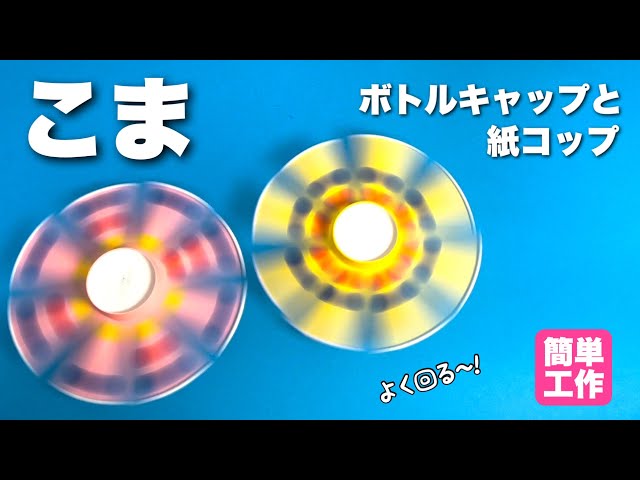
This is a spinning top made with a paper cup that spins well and is fun to watch because of its colorful look.
All you need are a paper cup and two plastic bottle caps.
First, cut slits into the paper cup and spread them out like propeller blades, then attach an axle made by combining the two caps.
That’s enough to complete the basic shape, but it’s recommended to decorate the “propellers” with an eye toward how it will look while spinning.
The impression changes depending on whether you spread the propellers before decorating or decorate first and then cut the slits, so try out various patterns.

[For Summer Vacation Homework!] Simple and Amazing Crafts for Elementary School Students That You’ll Want to Make When You See Them (191–200)
A flying octopus? Tako-copter
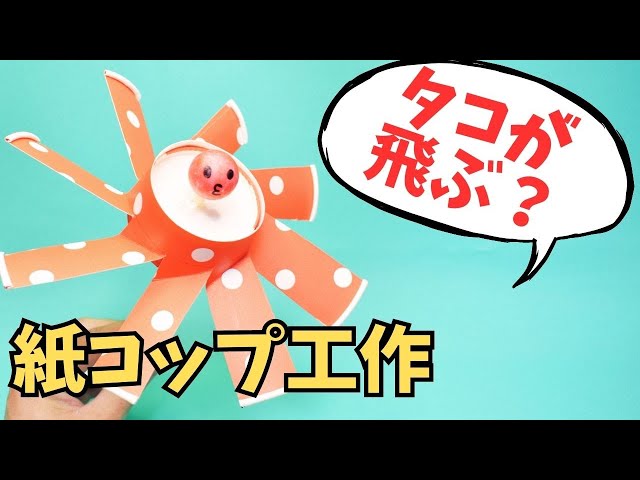
It’s a toy that combines paper cups and a round chopstick to spin like a bamboo-copter and soar into the sky.
By spreading “wings” that catch the wind and coloring it mainly red, it takes on a curious form—a flying octopus.
You’ll use two paper cups and a round chopstick: attach the chopstick and the octopus’s facial parts to a paper cup with only the bottom left to create a launcher.
Then cut slits into the other paper cup, spread it out to form propeller-like blades, and attach it to the launcher to finish.
Fine-tune the propeller angles to make your octopus fly even higher.
water dome pen

Water domes are cute as ornaments, but here’s a version made into a pen.
Let’s create a lovely pen that’s adorable whether you use it or display it.
The contents of the water dome are actually things like liquid glue thinned with water or baby oil.
Put various small items inside and seal the cap.
Each time you write, the items move around and look very pretty.
This craft is suitable for upper elementary grades.

soccer game

Soccer games are popular even among kids! It’s fun twice over: you make it, then you play it.
You can build it using only items you can buy at a 100-yen shop, like a document tray with holes on the sides, clips, wooden sticks, and a small fish net.
For the players, stick drawings onto plastic sheets for the upper body and attach clips for the lower body.
Use a super ball as the ball.
Modify and attach the small fish net to make the goals.
You can finish it in a day, and with help from a guardian, even younger elementary school kids should be able to make it.
A car powered by rubber

Here’s an introduction to building your very own rubber-powered plastic-bottle car! Use a rectangular plastic bottle for the body, and cut four bottoms from cylindrical plastic bottles to make the tires.
As for the power source, it uses rubber bands: connect the rear axle to the front of the car—that is, to the bottle cap.
Just like with a toy car, when you pull back the rear wheels the rubber band stretches, and when you let go, it contracts and propels the car forward.
Tires with a textured surface provide better grip and run more smoothly, so wrap corrugated cardboard (with one wavy side) around them.

Candy Magnet

Let’s make a magnet that looks like a candy with twisted ends.
The materials and steps are very simple, so it’s highly recommended.
First, prepare strong magnets from a 100-yen shop, a plastic bottle cap, and a fabric scrap with a pattern you like.
Start by gluing the magnet to the back of the bottle cap.
Next, cut the fabric scrap to 14 cm by 10 cm, then fold back and glue three sides, leaving just one of the short sides unfolded.
Once the glue is dry, wrap the bottle cap with the fabric and secure it with glue.
Finally, to create the candy shape, gather and stitch the fabric at both ends with thread.
You’re done! Try making lots in different colors and patterns.

Bird call making

As a craft project perfect for children who love nature observation, I recommend making a bird call.
Prepare a hand-sized wooden branch and drill a small hole in the center.
Screw in a metal part called an eye nut, and when you twist it so the wood and metal rub against each other, it produces a sound like birdsong.
Real birds may sometimes respond to this sound, so trying it out in a park after making it is part of the fun.
The volume and pitch change depending on the type of wood and the depth of the hole, so by experimenting and recording the differences, you can enhance the quality of the project as an independent study.
It’s a hands-on idea that lets kids connect with nature while sparking curiosity about how sound works.
