

[Advanced] Super cool if you can play it! Selection of famous piano pieces


When you think of classical piano pieces, many people probably imagine graceful melodies and gentle, soothing works.
However, in this article we’re introducing pieces that overturn that image: fiercely beautiful, dynamic, and cool classical piano works by various composers—aspirational, advanced-level repertoire for learners who dream of becoming top pianists.
These cool classical pieces have great performance impact, so they’re guaranteed to shine at recitals and studio concerts!
If you’re looking for technically challenging and dazzling piano works, don’t miss this!
- [For Advanced Players] A Curated Selection of Classical Masterpieces to Tackle at Piano Recitals
- It’s so cool if you can play these on the piano! A selection of irresistibly charming masterpieces.
- For Advanced Players: Showstopping Classics to Play at a Piano Recital
- [Intermediate Level] Cool Piano Pieces You Can Play [Great for Recitals Too]
- [For Adults] Recommended for Piano Recitals! A Curated Selection of Impressively Sounding Masterpieces
- [Intermediate Level] A curated selection of piano masterpieces featuring strikingly brilliant melodies!
- Piano Masterpieces: Surprisingly Easy Despite Sounding Difficult!? A Curated Selection Perfect for Recitals
- [Piano Recital] Perfect Pieces for Middle Schoolers! A Curated Selection of Impressive, Audience-Pleasing Works
- Difficult Piano Pieces | Even Pros Can't Play Them!? Classical Works Requiring Virtuosic Technique
- Masterpieces of classical piano that are too beautiful for words. A gathering of delicate tones that cleanse the soul.
- Beginner to Intermediate: Chopin pieces with relatively low difficulty. Recommended works by Chopin.
- [Piano Duets] Guaranteed to get the crowd excited! A roundup of recommended pieces
- [For Piano Recitals] Simple yet Cool Classical Pieces
[Advanced] If you can play these, you'll look insanely cool! Selection of Famous Piano Pieces (21–30)
Nocturne No. 8, Op. 27 No. 2Frederic Chopin

Among Chopin’s many challenging works, one I especially recommend is the Nocturne No.
8, Op.
27 No.
2.
Chopin is known for the difficulty of his left-hand accompaniment patterns, and this piece is no exception: it employs an accompaniment of broken chords with large leaps.
The ornamental variations in the right-hand single-line melody are also striking, featuring improvisatory passages enriched with nonchord tones.
Moreover, as the performance progresses, these elements appear with increasing frequency, making it a highly demanding piece that requires considerable stamina.

Rondo Capriccioso, Op. 14, U 67, E majorFelix Mendelssohn
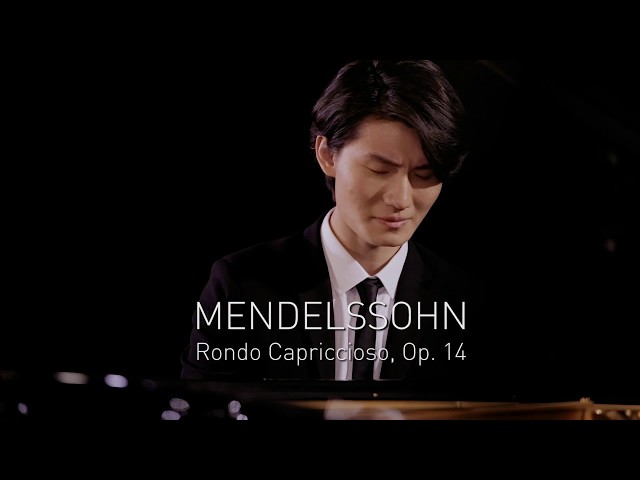
Among the piano works of the German composer Felix Mendelssohn, the Rondo Capriccioso in E major, Op.
14 (U 67), is one of the most beloved pieces.
It is said to be the result of adding a gentle introductory section to his Étude in E major, which he wrote for his first love.
While it is not of the highest technical difficulty, it requires delicate touch and a wide expressive range.
Play it with ample nuance—romantically and passionately.

Play of WaterMaurice Ravel

Maurice Ravel, a great composer whose avant-garde works influenced many others.
Jeux d’eau is one of his most famous pieces.
Measures 46 and 47 are particularly challenging; for the right hand, you must produce quick, focused tones while moving in octaves.
Although it’s a beautiful work that evokes a calm water surface, it is by no means a piece you can dash off easily.
There are many recordings by renowned pianists, so try practicing while referring to these masterful performances.
Two Rhapsodies, Op. 79 No. 1Johannes Brahms

This celebrated piece by Johannes Brahms, a leading composer of the German Romantic tradition, captivates with its passionate and powerful musical character.
Composed in 1879, it stands as a masterpiece from Brahms’s mature period.
The striking contrast between the intensely emotional outer sections and the serene middle section allows listeners to savor its rich sonority and grandeur.
As a solo piano work, it deftly fuses expressively lyrical melodies with virtuosic elements, stirring the listener’s heart.
It’s recommended for intermediate players who have a solid command of basic technique; with careful, patient practice, it should prove less difficult to perform than it sounds.
Piano Sonata No. 23, Op. 57 “Appassionata,” Third MovementLudwig van Beethoven

Ludwig van Beethoven’s masterpiece Piano Sonata No.
23, Op.
57 “Appassionata,” Third Movement.
Alongside the “Pathétique” and “Moonlight,” it is one of his most popular and well-known sonatas and is frequently featured in concert programs.
This work can be considered a prototype of Beethoven’s most famous piece, the “Fate” Symphony, and it contains many of his characteristic emotional expressions.
Naturally, the performance difficulty rises accordingly, but it is unquestionably a highly compelling work to listen to, so be sure to check it out.
12 Etudes, Op. 25 No. 11 “Winter Wind”Frederic Chopin

Alongside Étude Op.
25 No.
6, Chopin’s Étude Op.
25 No.
11 “Winter Wind” ranks among his most technically demanding works.
Also known as the “Winter Wind Étude,” its difficulty is quite straightforward: the relentless rapid sixteenth notes make it hard to play.
For those who struggle with finger independence, it may feel extraordinarily difficult; however, for others, the frequent repetition means it may not seem as challenging as Op.
25 No.
6.
Andante spianato and Grand Polonaise brillante, Op. 22Frederic Chopin

A concerto-like work for orchestra and piano, Andante spianato and Grande Polonaise brillante, Op.
22.
Later arranged as a solo piano version, this piece is known as one of Chopin’s most difficult works.
Its key feature is the ternary form with a coda.
Because the right hand’s ornamentation demands advanced technique, performers who struggle with delicate touch tend to avoid it.
If you enjoy music that is brilliant, bright, and refined, be sure to check it out.