

Karaoke songs that are easy to sing even for tone-deaf beginners, recommended for women in their 60s


Even if you’re not confident at singing, there are times when you want to belt out a song at karaoke and feel great.
This time, we’ve put together a selection of songs for women in their 60s that are both nostalgic and easy to sing.
People often assume that enka or kayōkyoku suit those in their 60s, but we’ve also included many folk and pop songs from the 1970s—the era when today’s sixty-somethings likely spent their youth.
We’ve focused on songs with melodies that seem easy to sing, and some articles include tips on how to sing them well.
Find your favorite tune and enjoy singing!
- Recommended for women in their 60s! Easy-to-sing Japanese karaoke songs
- Recommended for women in their 60s! Songs that get the crowd going at karaoke
- Easy-to-sing songs recommended for women in their 70s: A collection of classic hits perfect for karaoke
- [For People in Their 60s] Ranking of Easy-to-Sing Karaoke Songs [2026]
- Karaoke songs that are easy to sing even if you’re not confident in your pitch (for women in their 50s)
- [For women in their 70s] A collection of songs that are easy to sing even for people who are tone-deaf
- A must-see for low-voiced women! Popular songs that are easy to sing at karaoke
- Love songs that resonate with women in their 60s: gem-like romance tunes that revive memories of youth.
- Recommended for millennial women who aren't confident singers: easy-to-sing karaoke songs
- Upbeat Japanese songs recommended for women in their 60s
- [Calling all low-voiced women in their 40s!] Songs that are easy to sing at karaoke
- [Men in their 60s] Even if you're not good at singing, it's okay! Easy-to-sing songs for karaoke
- [Even If You're Tone-Deaf, It's Okay!] Easy-to-Sing Karaoke Songs and Practice Tracks
Karaoke songs recommended for women in their 60s that are easy to sing even for those who are tone-deaf (71–80)
Let me stay for the night.Kobayashi Sachiko

It’s a classic Showa-era kayokyoku that has an enka flavor, with striking rock-style guitar solos and riffs.
“Hitoban Tometene,” released by Sachiko Kobayashi in 1985, was composed by Katsuhiko Miki, who also worked on one of Kobayashi’s signature songs, “Moshikashite.” The overall key is on the lower side, and it’s the kind of song that expresses a sultry melody through the appeal of the low register, so it’s perfect for those who struggle with high notes.
The enka-style kobushi (ornamental turns) and vibrato are kept to a minimum, making it a great piece for beginners to enka to try!

TouchIwasaki Yoshimi

A gem of a masterpiece that beautifully captures the bittersweetness of youthful love.
Told from the perspective of a female protagonist, its lyrical story vividly conveys the feelings of a girl in love.
Yoshimi Iwasaki’s clear, luminous vocals make the emotions of pure love all the more enchanting.
Released in March 1985, the song achieved remarkable success as the theme for the anime Touch, reaching No.
12 on the Oricon Weekly Chart and No.
39 on the Year-End Ranking.
With its gentle melody and relaxed tempo, it’s a song that’s easy to sing calmly.
Share it at karaoke with close friends, and it’s sure to become a wonderful memory.
Two-person sakekawanaka miyuki

Miyuki Kawanaka’s classic “Futari Sake” is distinguished by its warm, memorable melody.
It’s an orthodox enka piece imbued with a sense of melancholy.
As with typical enka, the challenging kobushi ornament appears multiple times; however, roughly a third of these are not pitch-bending turns so much as kobushi that apply vibrato.
Because this type of kobushi is far easier than the regular kind, the song can definitely be considered an easy one.
Do add it to your repertoire.

Recommended karaoke songs for women in their 60s that are easy to sing even for those who are tone-deaf (81–90)
Scorpio womanMikawa Ken’ichi

A signature song by Kenichi Mikawa that portrays the strength and poignancy of a passionate woman who lives for love.
Released in December 1972, this memorable enka number expresses straightforward affection and the sorrow of betrayal.
Mikawa’s powerful vocals blend beautifully with a distinctive worldview inspired by Scorpio, one of the twelve zodiac signs, and the song sold about 97,000 copies on the Oricon charts.
It was performed on NHK’s Kōhaku Uta Gassen for four consecutive years from 2006 to 2009, revealing new charms through various arrangements, including operatic and samba styles.
With its relaxed tempo and gentle melodic contours, it’s also easy to sing—another part of its appeal.
Why not sing it with a sense of nostalgia as a treasured song tied to precious memories?
EnchantedJudi Ongu
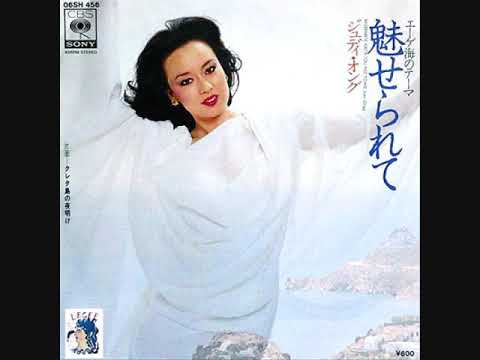
It was released in 1979 as Judy Ongg’s 28th single.
According to Oricon’s tally, it sold 1.23 million copies and became one of her signature songs.
The white dress that spread like a fan from hem to wrist when she extended her arms became a hot topic, and the song won the Grand Prize at the 21st Japan Record Awards.
It has also been covered by many artists and is frequently sung at karaoke.
lover; mistress; extramarital partnerTeresa Ten

Teresa Teng has many songs with adult themes, and among them the classic “Lover” is especially known for its mature, bittersweet character.
As one of her signature works, it’s still frequently sung at karaoke today.
While the song features a richly expressive vocal line, its range is surprisingly narrow, staying mostly in the mid or mid-high register.
The development of the melody is also typical of kayōkyoku (Japanese popular songs), making it a very singable piece, especially for those of a certain age.
Second LoveNakamori Akina

A heartrending love ballad released in November 1982 that delicately portrays the feelings of a girl inexperienced in romance.
Within its gently enveloping, warm melody, the bashfulness and bittersweet longing of a girl in love are woven.
The song earned Ms.
Nakamori her first-ever No.
1 on the Oricon Weekly Chart and is regarded as one of her signature works.
Since June 2024, it has also been used as the departure melody at Seibu Ikebukuro Line’s Kiyose Station, continuing to be cherished across generations.
With its relaxed tempo and tender melodic line, this piece is also an easy, soothing choice to sing at karaoke.