

![[Snake Trivia] Things you actually don’t know about snakes. Packed with astonishing facts!](https://media.ragnet.co.jp/img/1200__png__https://www.studiorag.com/files/2025/04/7c7f72d00661fd051caa67f417a5ec19.webp)

Snakes, with their slithery and amusing movements, are hugely popular with children! Since some snakes are venomous, adults probably avoid approaching them carelessly, but I imagine there are both kids and adults who feel, “I want to learn more about snakes!” In this article, we’ll share trivia and fun facts about snakes.
We cover their ecology from various angles, so please take a look if you’re interested.
You’ll likely discover many surprising facts about snakes!
- [Snake Quiz] Surprisingly fascinating once you know! Snake ecology & characteristics
- Trivia quiz with useful tips to know: fun facts that come in handy at school or at home [for kids]
- [For Kids] January Trivia Quiz & Fun Facts: Learn About the New Year in a Fun Way
- Didn't want to know?! Fascinating and scary trivia & fun facts
- [Trivia] Do you know the answers? A roundup of animal quizzes
- Handmade snake toy. A fun idea you can move and play with!
- Trivia you think you know but surprisingly don’t? August trivia and fun facts quiz!
- A quiz of fun trivia: bite-sized knowledge that leads to new insights.
- [For Elementary School Students] Animal Quiz to Learn Knowledge and Fun Facts
- A roundup of insect trivia: fun facts you'll want to share
- English will become more fun! A collection of trivia and fun facts about the English language.
- Insect trivia quiz: A collection of fun facts and questions about bugs for children.
- Fun facts you’ll want to share! January trivia and tidbits special
[Snake Trivia] Things about snakes you actually didn't know. Packed with surprising facts! (1–10)
A snake yawns after eating to reset its jaw back into position.
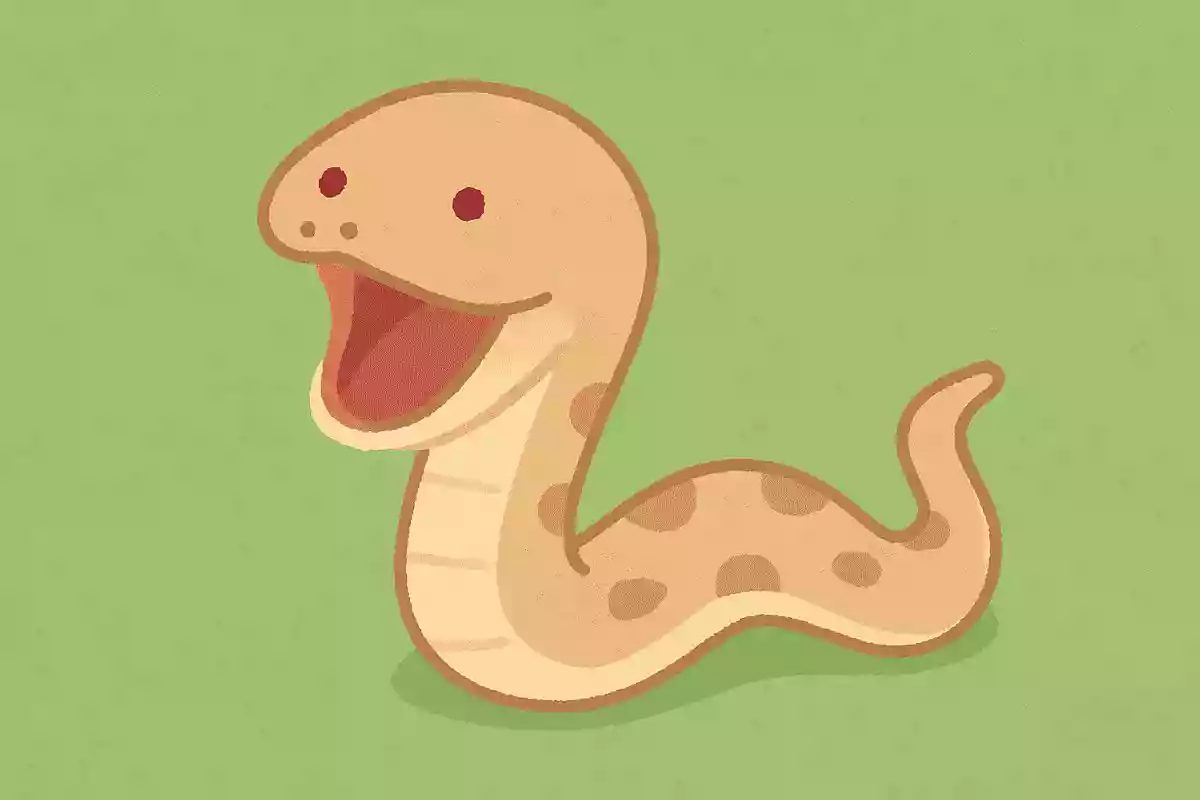
After eating, snakes sometimes open their mouths wide in a behavior that looks like yawning.
In fact, unlike human yawns, they’re not inhaling air; they’re adjusting their jaw joints.
A snake’s lower jaw can move the left and right sides independently so it can swallow large prey.
This allows the snake’s mouth to open very wide both vertically and horizontally.
After a meal, they display this yawn-like behavior to return the joints they moved so far to their original position.

Snakes cannot regulate their body temperature on their own.

As cold-blooded animals, snakes cannot regulate their body temperature on their own.
Therefore, they live under the influence of the surrounding environmental temperature.
On cold days, they warm themselves in the sun, while on hot days they move to cooler places to release heat.
Diurnal snakes are active in the morning or evening because these times prevent their body temperature from rising too high or dropping too low.
Snakes are often found in regions with mild climates, and their active hours are said to be easily affected by temperature.
Flexibly changing their behavior according to the season and weather is a survival strategy snakes use in the natural world.

Snakes don’t have very good eyesight.

Snakes’ vision is not highly developed, and they are particularly poor at seeing over long distances.
However, they excel at detecting movement, which helps them locate prey.
A major characteristic is that they rely less on sight and instead use the Jacobson’s organ, flicking their tongue to sense airborne chemicals.
In some species, infrared-sensing abilities are well developed, allowing them to detect changes in ambient temperature and pinpoint the location of prey or threats.
Even with limited vision, snakes perceive their surroundings through a unique combination of smell and thermoreception—one of their key survival strategies.
This trait explains why they can thrive in dark or complex environments.
Snakes, which have no ears and cannot hear sounds, listen through their jaws to vibrations transmitted through the ground.
Sudden question: do you know where a snake’s ears are? If you picture a snake’s face, it’s smooth from head to body with nothing that looks like ears, right? In fact, that image is accurate—snakes don’t have external ears or ear openings.
However, they do have inner ears inside their bodies, and they are highly sensitive to vibrations that travel through the lower jaw bones and along the body’s surface.
So, even though they lack ears, they possess the curious ability of having very keen hearing.
Snakes shed their skin in order to grow.

One characteristic of snakes is that they shed their skin regularly in order to grow.
Shedding not only removes the old skin but also helps get rid of dirt and parasites attached to the body.
Young snakes shed more frequently because they grow faster, while adults shed less often as their growth slows.
A snake begins by rubbing its body against rocks or branches to loosen the skin, then sheds it in a single piece from head to tail.
The process feels almost mystical, leaving a strong impression as if the snake is being reborn in a new form.
After shedding, a snake’s skin appears more vibrant, its eyes become clearer, and it is said to move more actively.
Snakes, which lack a diaphragm, breathe by moving their ribs.
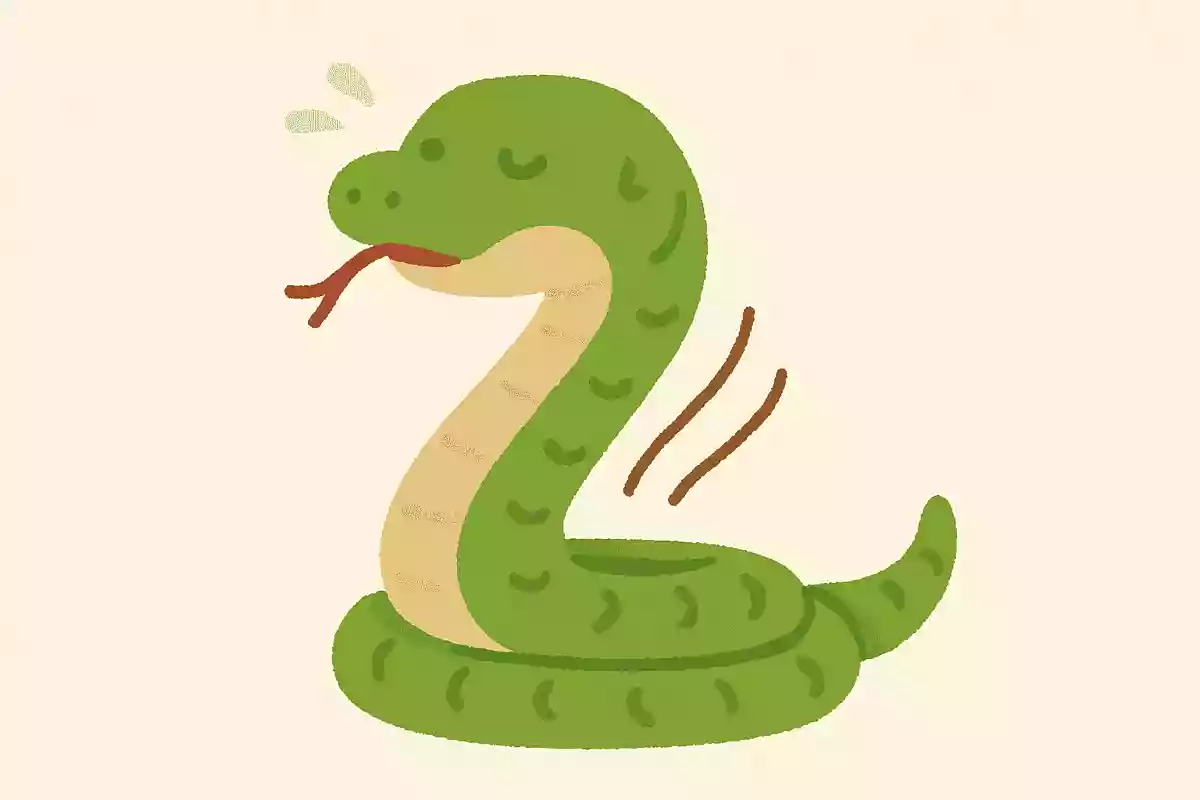
Snakes do not have a diaphragm like mammals and instead use their ribs to draw in air when they breathe.
By moving their ribs forward and backward, they expand the rib cage and push air into the lungs—a distinctive mechanism of snakes.
This is an adaptation to their elongated body shape, having evolved to breathe smoothly without a diaphragm.
In some species, one lung is reduced in size, reflecting an overall body design optimized for efficiency.
Watching their ribs move with each breath is quite unique and helps us understand this snake-specific physiological phenomenon.
Snakes smell by flicking their tongues.

When you picture a snake in motion, most people probably imagine it flicking its tongue in and out, right? Snakes really do move their tongues that frequently, but in fact, they’re doing it to collect scent particles on the tongue and sense them with a structure on the roof of the mouth called the Jacobson’s organ (the vomeronasal organ).
By the way, snakes also have noses like humans, so they detect smells with both the Jacobson’s organ and their noses.
That’s why they’re extremely sensitive to odors.