

[Tanabata Quiz] Three-choice questions to enjoy trivia and fun facts


Tanabata is a festival where a romantic story unfolds about Orihime and Hikoboshi, who can meet only once a year on a special night.
It’s also cherished as a traditional celebration, with a bittersweet yet heartwarming tale passed down through generations.
Some of you may want to delve deeper into the romantically tinged atmosphere of Tanabata.
In this article, we’ve compiled a quiz themed around the history and trivia of Tanabata.
We’ll present many questions that teach fun facts, such as why we write wishes on tanzaku strips and decorate bamboo.
Give these quizzes a try to make your Tanabata festivities even more enjoyable!
- Surprisingly unknown? Trivia Quiz [Multiple Choice: 3 Options]
- Collection of trivia and fun facts about stars shining in the night sky
- Fun facts about the Moon. A rapid-fire quiz!
- Become a trivia master with a multiple-choice quiz for elementary schoolers! A fun problem collection that captivates both kids and adults
- Trivia and fun facts about July, including tidbits about Tanabata.
- [For Elementary School Kids] A New Year’s Quiz Everyone Can Enjoy! Learn surprising fun facts with multiple-choice questions
- Make your summer festival even more fun! Trivia quizzes and fun facts for kids
- Space trivia quiz: Multiple-choice questions about the planets of the solar system and astronauts
- How many can you get right? A tricky 3-choice trivia quiz you'll want to tell someone about
- Enjoy summer festivals even more! Trivia quiz & fun facts collection
- February trivia quiz: three-choice questions on seasonal fun facts like Setsubun and Valentine’s Day
- How many can you solve? A three-choice trivia quiz about Halloween
- A multiple-choice quiz with three options for upper elementary students. Fun questions that build thinking skills.
[Tanabata Quiz] 3-Choice Questions to Enjoy Fun Facts and Trivia (1–10)
What is the third star of the Summer Triangle along with Deneb and Vega?
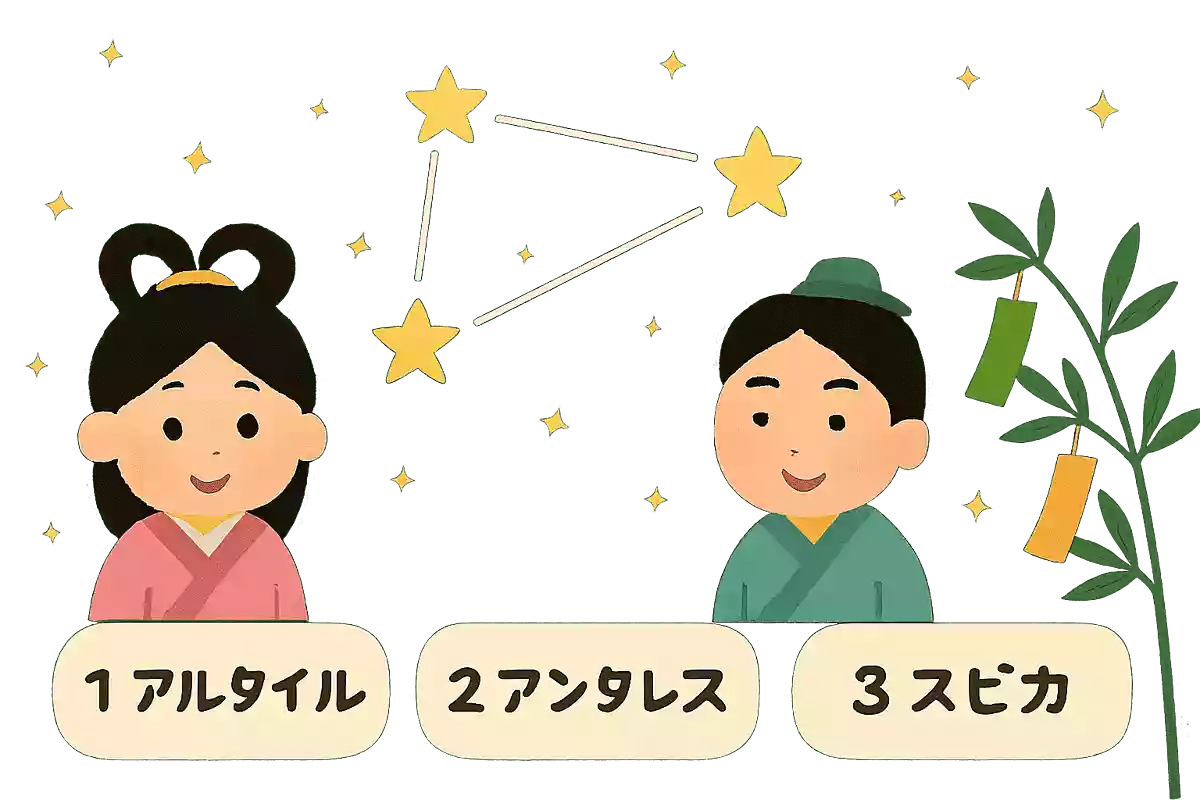
- Aldebaran
- Altair
- Rigel
See the answer
Altair
The final corner that forms the Summer Triangle is Altair. Altair is the alpha star of Aquila and is one of the stars that appears very bright in the summer night sky. The Weaver Star is Vega in the constellation Lyra, and the Cowherd Star, Hikoboshi, refers to Altair in the constellation Aquila.

What festive food is eaten on Tanabata?
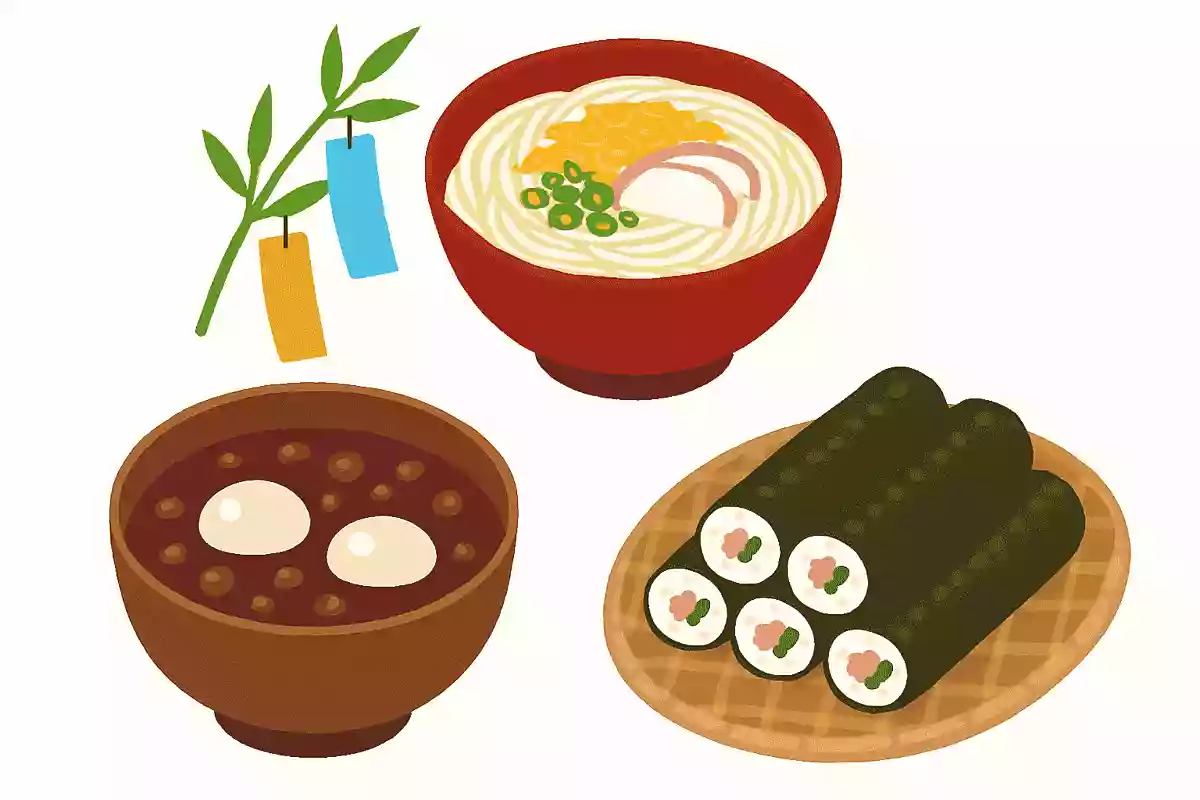
- ohagi (sweet rice balls coated with red bean paste)
- Chirashi sushi
- somen (thin Japanese wheat noodles)
See the answer
somen (thin Japanese wheat noodles)
The traditional food said to be eaten on Tanabata is somen noodles. This custom is believed to originate from likening the slender shape of somen to the image of Orihime weaving at her loom. In addition, somen is popular as a summer festive dish because its delicate, smooth texture makes it easy to eat during the coming hot season.
Why do we decorate bamboo branches for Tanabata?

- Because it inherits ancient Chinese customs
- Because it was used for Shinto rituals.
- Because bamboo leaves were believed to have the power to ward off illness.
See the answer
Because it was used for Shinto rituals.
The custom of decorating with bamboo grass during Tanabata originates from its use in Shinto rituals. Because bamboo leaves grow in a way that keeps them from moving, they came to be seen as symbols of purification that ward off impurity, and were used to sanctify sacred spaces. On the night of Tanabata, people began attaching paper strips and ornaments to bamboo leaves with wishes that Orihime and Hikoboshi would safely cross the Milky Way to meet, and that people’s own wishes would be conveyed.
[Tanabata Quiz] 3-choice questions to enjoy trivia and fun facts (11–20)
When is the traditional Japanese festival, the Sendai Tanabata Festival, held?

- July 6–July 8
- August 6–August 8
- December 24–25
See the answer
August 6–August 8
The Sendai Tanabata Festival is held every year from August 6 to August 8. It originally took place on the 7th day of the 7th month of the lunar calendar, but nowadays it is often held in August according to the Gregorian calendar, and the Sendai Tanabata in particular is known for being celebrated on a grand scale during this period.
What animal is Hikoboshi raising?
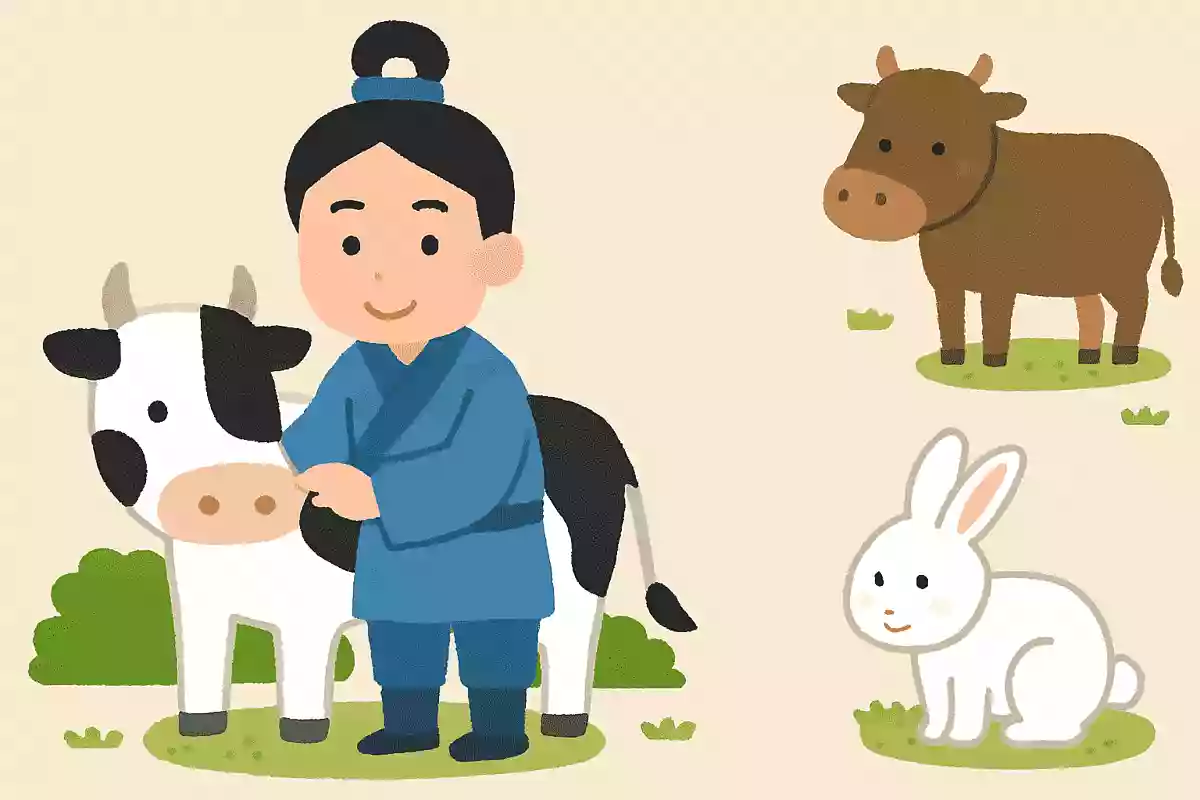
- horse
- sheep
- cow
See the answer
cow
In the Tanabata legend, Hikoboshi is said to work as a cowherd on the eastern side of the Milky Way, raising cattle. As another name for Altair, he is also called the Cowherd Star (Kengyūsei), and the story was devised based on a tale passed down in China.
Why do we write our wishes on tanzaku?

- To convey a wish to the stars
- To show gratitude to God
- To emulate the weaving skills of the Weaver Princess (Orihime)
See the answer
To emulate the weaving skills of the Weaver Princess (Orihime)
The reason people write their wishes on tanzaku, a custom of Tanabata, is linked to the legend in which Orihime is an exceptionally skilled weaver. Hoping that their own skills will improve and their wishes will come true like Orihime’s, people began writing their wishes on tanzaku.
What wish does the Tanabata streamer decoration represent?
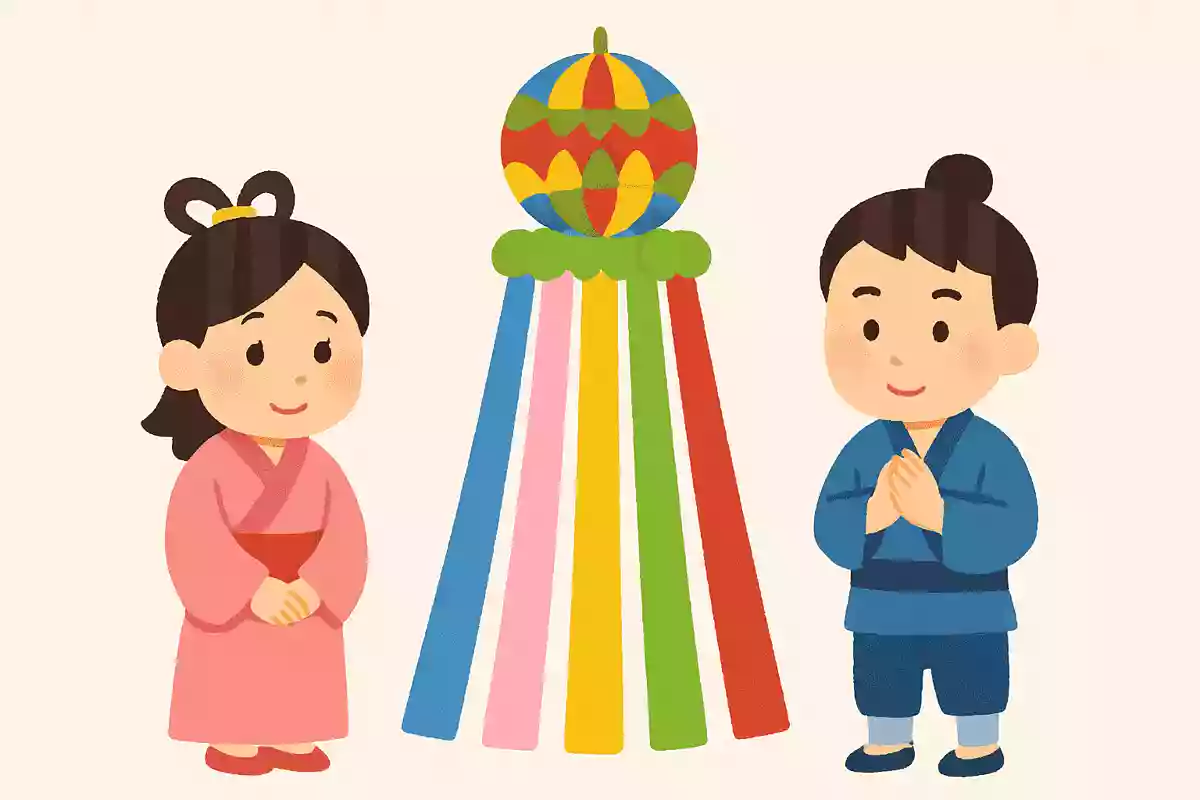
- So that I can get better at cooking
- So that I get better at sewing
- So that I get better at cleaning
See the answer
So that I get better at sewing
The decoration hung to wish for improvement in sewing is the streamers. Why sewing? Because the streamers symbolize Orihime, who is said to be skilled at sewing. In the past, they would prepare five-colored threads, thread them through a needle, and display them.
