

[Tanabata Quiz] Three-choice questions to enjoy trivia and fun facts


Tanabata is a festival where a romantic story unfolds about Orihime and Hikoboshi, who can meet only once a year on a special night.
It’s also cherished as a traditional celebration, with a bittersweet yet heartwarming tale passed down through generations.
Some of you may want to delve deeper into the romantically tinged atmosphere of Tanabata.
In this article, we’ve compiled a quiz themed around the history and trivia of Tanabata.
We’ll present many questions that teach fun facts, such as why we write wishes on tanzaku strips and decorate bamboo.
Give these quizzes a try to make your Tanabata festivities even more enjoyable!
- Surprisingly unknown? Trivia Quiz [Multiple Choice: 3 Options]
- Collection of trivia and fun facts about stars shining in the night sky
- Fun facts about the Moon. A rapid-fire quiz!
- Become a trivia master with a multiple-choice quiz for elementary schoolers! A fun problem collection that captivates both kids and adults
- Trivia and fun facts about July, including tidbits about Tanabata.
- [For Elementary School Kids] A New Year’s Quiz Everyone Can Enjoy! Learn surprising fun facts with multiple-choice questions
- Make your summer festival even more fun! Trivia quizzes and fun facts for kids
- Space trivia quiz: Multiple-choice questions about the planets of the solar system and astronauts
- How many can you get right? A tricky 3-choice trivia quiz you'll want to tell someone about
- Enjoy summer festivals even more! Trivia quiz & fun facts collection
- February trivia quiz: three-choice questions on seasonal fun facts like Setsubun and Valentine’s Day
- How many can you solve? A three-choice trivia quiz about Halloween
- A multiple-choice quiz with three options for upper elementary students. Fun questions that build thinking skills.
[Tanabata Quiz] 3-choice questions to enjoy trivia and fun facts (11–20)
When do you take down Tanabata decorations?
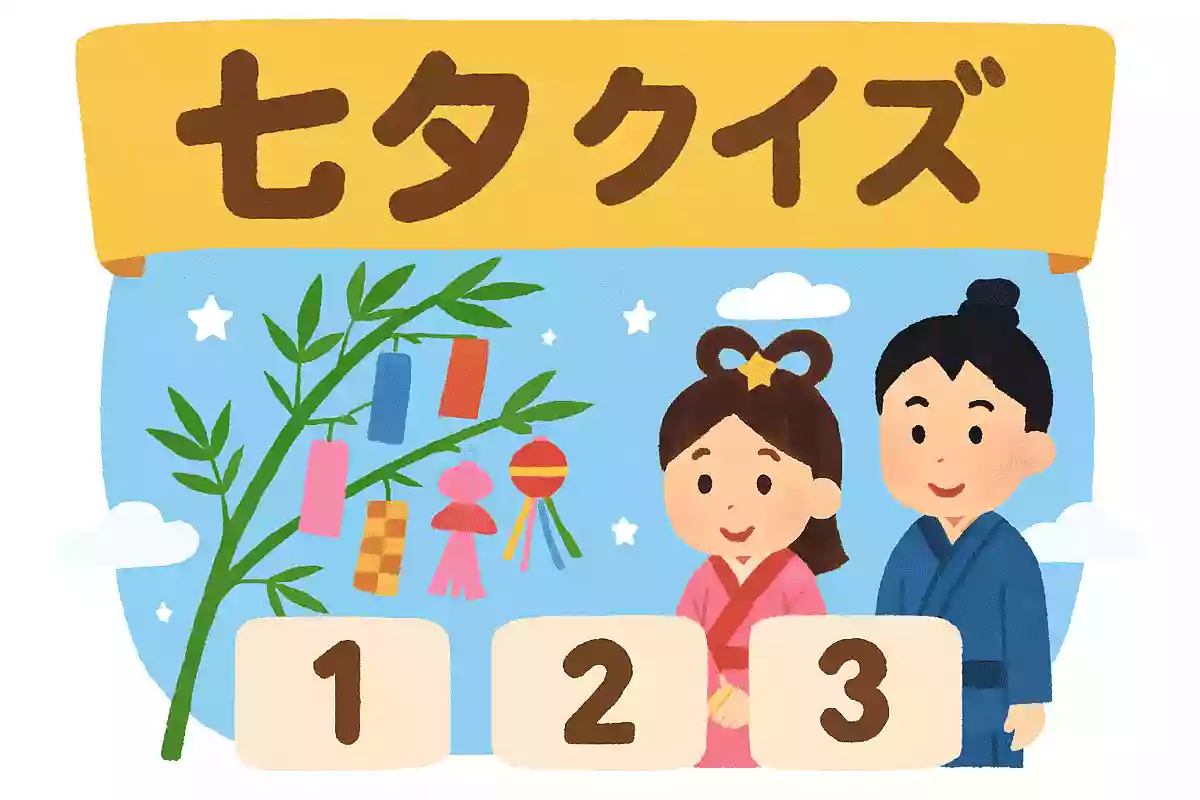
- by July 7
- A week after Tanabata
- July 31
See the answer
by July 7
Many people may not know when to take down Tanabata decorations. You want to keep them up forever since they hold everyone’s wishes, right? However, Tanabata decorations are basically meant to be displayed for one night only. Put them up on the evening of July 6 and take them down sometime on July 7.

What kind of weather is believed to occur on Tanabata in Korea?
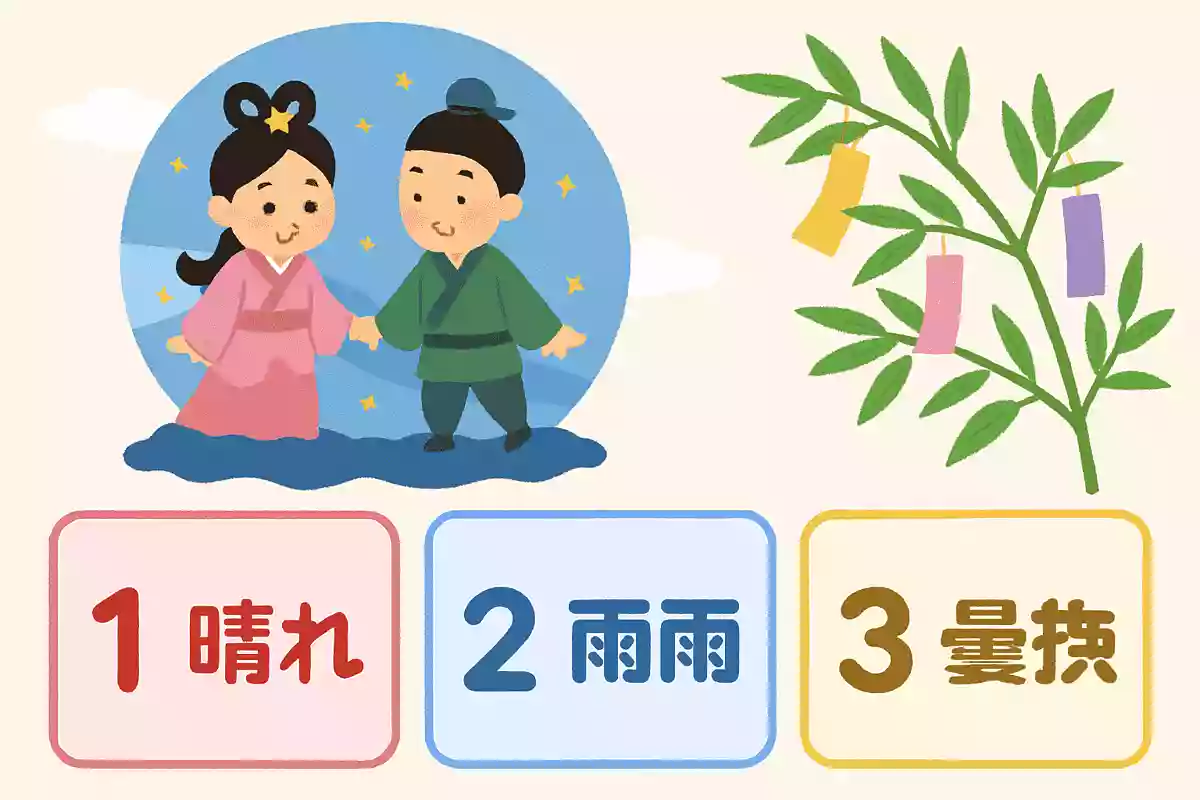
- to clear up; to become sunny
- It rains.
- gloomily overcast
See the answer
It rains.
In Japan, I think many people believe that if it rains on Tanabata, it means Hikoboshi and Orihime weren’t able to meet. But in fact, in Korea it’s the opposite. In Korea, if it rains on Tanabata, it’s seen as tears of joy because the two lovers were able to meet for the first time in a year. That’s why people there even hope for rain.
What do the net-shaped Tanabata decorations wish for?
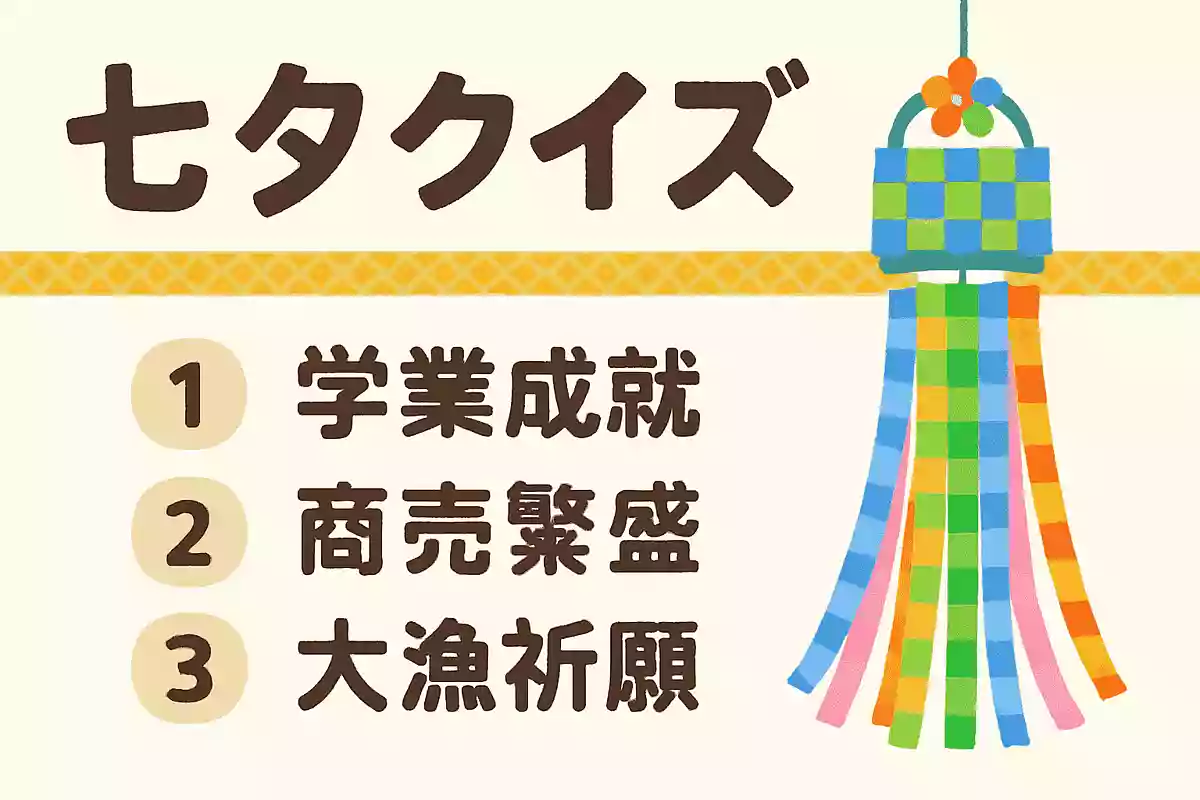
- Big catch
- child blessing; being blessed with children (fertility; treasure of children)
- longevity
See the answer
Big catch
Some of you may have recognized it by its shape. Yes, the Tanabata net decoration is a charm for a good catch. It’s modeled after fishing nets and carries a wish for an abundant haul of fish. It’s also said to attract good fortune.
What do you call the rain that falls on the day before Tanabata?
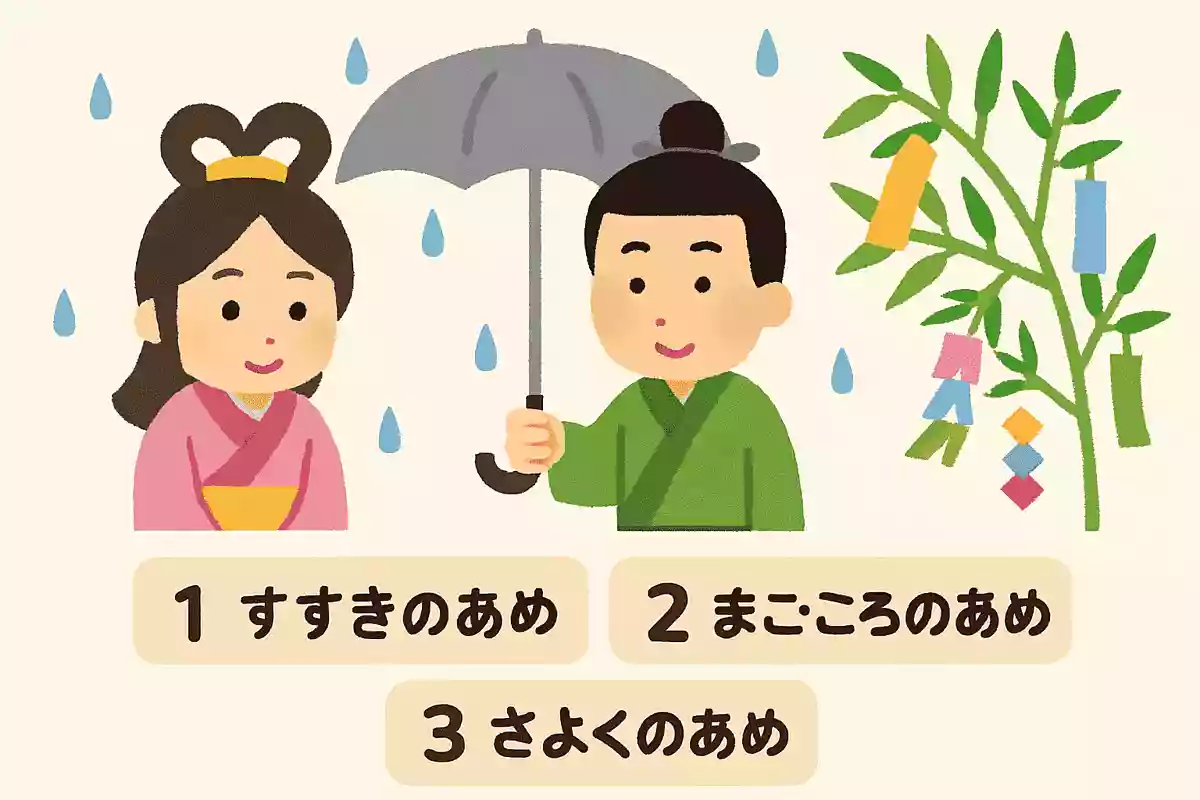
- rain after car wash
- rainy day for doing laundry
- Cleansing Rain
See the answer
rain after car wash
The rain that falls on the day before Tanabata is called “senshau,” or “car-washing rain.” It’s said to have this name because Hikoboshi washes his ox cart to go meet Orihime, and the water from washing becomes the rain. It’s a legend that echoes the saying, “If you wash your vehicle, it will rain.”
What wish does the Tanabata decoration of an origami crane represent?
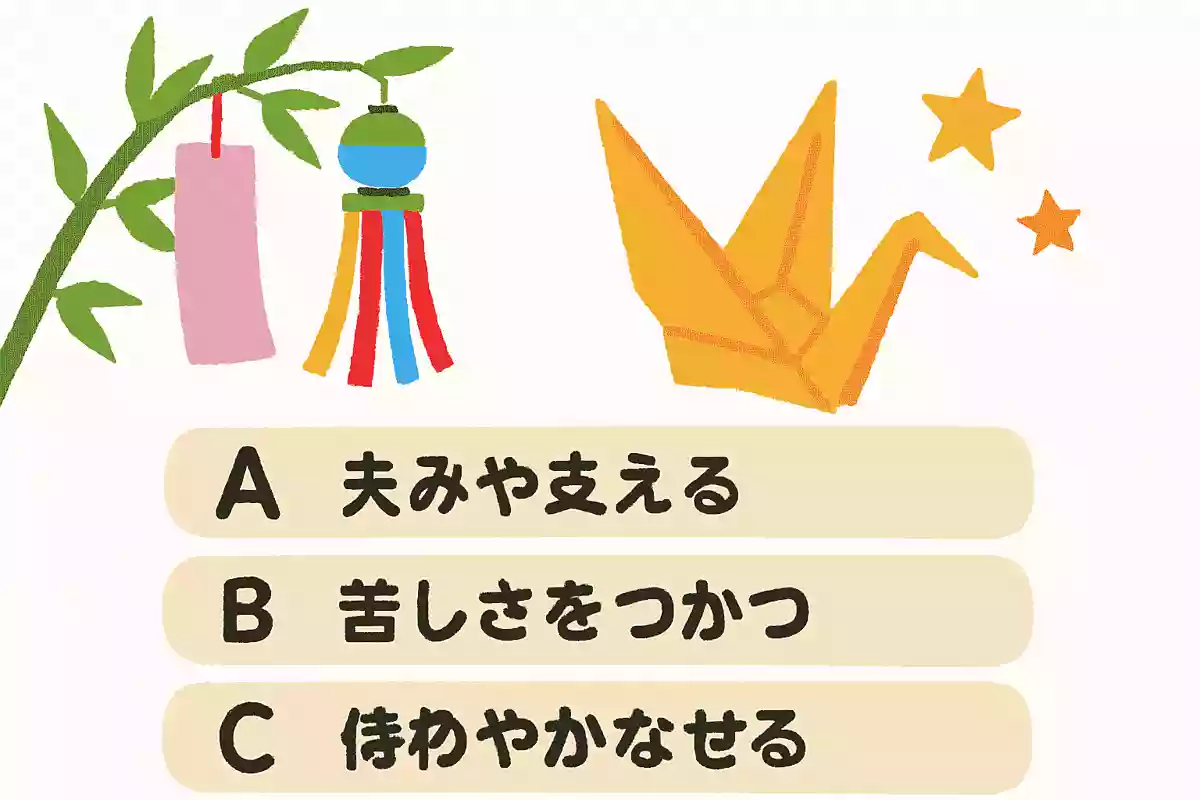
- Fulfillment of love
- longevity
- financial luck
See the answer
longevity
Some people might wonder, “Cranes as Tanabata decorations?” but in fact, origami cranes are a classic for Tanabata. They’re displayed with a wish for longevity. If you know the saying, “Cranes live a thousand years, turtles ten thousand,” you probably guessed it.
What is another name for Tanabata?

- Ushiwaka Festival
- Star Festival
- Orihime Festival
See the answer
Star Festival
Tanabata is also known by another name, Hoshi Matsuri (Star Festival). This name comes from the fact that Tanabata is an event related to the stars, and it is a festival that venerates the legend of Orihime (Vega) and Hikoboshi (Altair).

[Tanabata Quiz] 3-choice questions to enjoy trivia and fun facts (21–30)
What is the distance between Orihime and Hikoboshi?

- 4.4 light-years
- 14.4 light-years
- 44 light-years
See the answer
14.4 light-years
The two stars known as Orihime (Vega) and Hikoboshi (Altair), which are separated by the Milky Way, are about 14.4 light-years apart in actual space. Although from Earth they appear so close that they are indistinguishable to the naked eye, this distance is quite large on a cosmic scale.