

Recommended for elementary school students! Science fair topics & craft ideas
Speaking of summer vacation, choosing a topic for the independent research project can often be tough.
Science experiments and crafts are both fun! If your child is good at crafts, we recommend crafts because they can enjoy the process as they go.
When they get absorbed in it, they might even finish in just a few days.
Here, we’ll introduce a variety of ideas for independent research and crafts! If you’re struggling to pick a theme, please use these as a reference.
To create fun summer memories, make a one-of-a-kind project of your own!
- For summer vacation homework! Simple and amazing crafts for elementary school students that you’ll want to make after seeing them
- Simple yet amazing crafts: craft ideas that elementary school students will want to make
- Elementary School Students: Simple One-Day Science Project and Craft Ideas
- DIY science projects that elementary school boys will love: ideas you can make with everyday materials
- [For Upper Elementary Students] Simple but Awesome! A Collection of Summer Vacation Craft Ideas
- For upper-grade boys! Simple yet awesome craft project [Don’t call it lazy]
- Fun crafts using straws
- Recommended for lower elementary school students! A collection of plastic bottle craft ideas made with everyday materials.
- Simple and cute summer project crafts! A collection of ideas for girls that will make you want to create
- [Middle School Students] Easy One-Day Science Projects and Crafts Ideas
- Toys you can make from cardboard crafts! Authentic ideas you can build and play with
- Simple but awesome! Craft ideas for upper-grade girls
- Crafts parents and kids can enjoy together. Recommended craft ideas to keep children entertained.
For lower grades (71–80)
strap

Here’s a how-to for making adorable cat charms that cat lovers won’t be able to resist.
Use a cat-shaped chocolate mold you can find at 100-yen shops, and give it a try.
Press paper clay into the mold, let it dry, then paint it and add patterns and facial features.
Try drawing your favorite cats, like calico or black cats.
Adding a tail on the back makes it even cuter.
It’s perfect as a summer vacation project if you make it with your child.
You can also turn it straight into a keychain, so give it a go!

Let’s make a tornado bottle
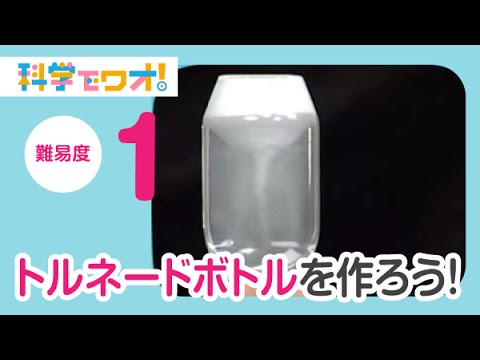
The tornado bottle is a perfect science project for boys who don’t just want to make something, but also want to write a proper report.
You can try many variations, so it’s recommended for anyone who wants to dive deep into tornadoes.
First, prepare a 500 mL plastic bottle.
Fill it up to about four-fifths with water, then add around 10 drops of dish soap.
Close the cap and secure it with tape, and you’re done.
If you’re just making it, 10 minutes is plenty.
Hold the bottle upside down and spin it quickly to create a tornado.
You’ll see differences in the tornado depending on how long and how strongly you spin it.
Observe carefully! It’s quick to make, so it’s suitable even for upper elementary grades.
Skeleton Egg

Here’s how to make a “skeleton egg.” Wash the egg and gently dry it, being careful not to crack it.
Place the egg in a glass and pour in vinegar until the egg is fully submerged, then cover the top with a piece of paper towel.
Leave it for about two days.
You’ll end up with a skeleton egg that’s a size larger and jiggly! If you poke the softened egg with a toothpick, it will pop and burst.
This experiment explores the action of acids, and it’s relatively safe and hard to mess up, so it’s a great science project for younger elementary school children.

For lower grades (81–90)
Insect Battle

These days, it seems many people aren’t good with bugs, but I’d like to introduce a classic independent-study project from the old days: insect battles.
It’s simple—set up a ring where insects can fight, then put two insects you want to face off into the ring.
You can set the rules however you like.
Matches can be decided by a pin, a ring-out, loss of fighting spirit, and so on.
You can match weight classes, or an open-weight division might be fun too.
Then just let them fight freely, record the results, and submit the match records.
The thrilling developments are sure to have parents’ hearts pounding as well.
Origami diary

Summer vacation is exciting, but homework is a bit… you know.
If you think of it as something you’re being forced to do, homework can feel endlessly painful and boring.
So why not make it fun? How about turning the drawing part of your summer diary into origami to give it an original touch? Even lower graders could handle this.
If you went fishing, make fish out of origami; if you went to a fireworks festival, try making fireworks with patterned chiyogami.
You’d be surprised how many memories can be recreated with origami! Creating a big ocean scene across a two-page spread would also be really impressive.
If you rush, it stops being fun, so give yourself plenty of time to make it.
Let’s make a lens with a 5-yen coin!

This is an experiment to make a lens using a 5-yen coin and water.
Depending on the amount of water, it changes between a concave lens and a convex lens, so the way things look changes, letting you study while having fun.
It also seems enjoyable to sketch the different ways various objects appear.
It might be interesting to look at plant leaves and large petals, too.
Slime that moves with magnets

This experiment involves making “magnet-responsive slime” by mixing iron sand into a gel-like substance called slime.
Prepare two samples—one with iron sand mixed in and one without—and summarize the differences in their reactions when a magnet is brought close.