

Recommended games for team building: How to create a team that can perform at its best

Even though each employee is talented, things just don’t go well as a team…
Many of you may share this concern.
In this article, we introduce “team building” as an initiative to solve that problem.
Team building is the practice of creating the best team—one that can achieve its goals—by leveraging each individual’s strengths.
Through games and activities, you can learn how to understand and appreciate your teammates, collaborate, and accomplish objectives together.
Recommended games for team building. How to build a team that can perform at its best (1–10)
A game where you create a map based on information
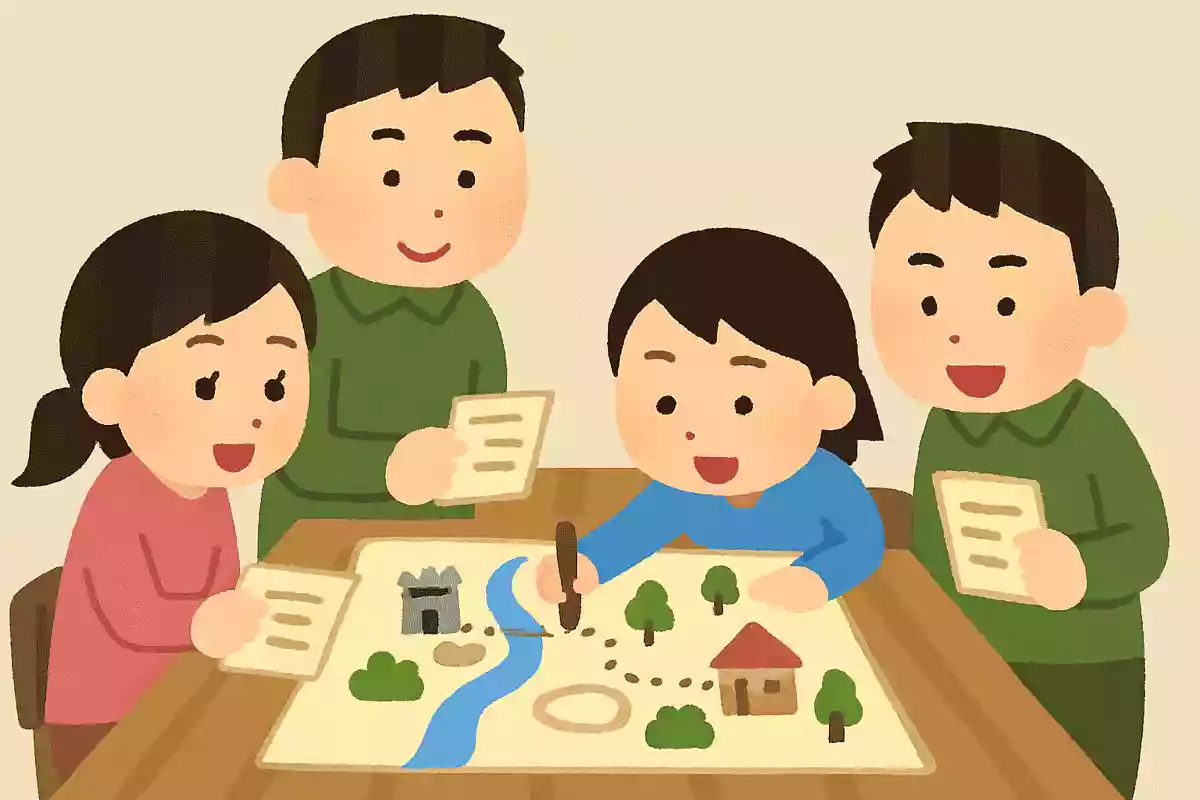
Group-based map-making is especially useful for departments in charge of outside work, such as sales and retail.
You might remember creating a map of your neighborhood as part of social studies in elementary school, actually walking around to draw it.
Think of this as the grown-up version.
Map-making brings together many skills: the ability to move without consciously worrying about north, south, east, and west; the ability to remember a scene after seeing it once; and the ability to infer the people who live in an area from similar-looking cityscapes.
By focusing everyone’s abilities on creating a single map, teamwork develops naturally.
Marshmallow Challenge

Using specified materials—marshmallows, dry pasta, tape, string, and scissors—you build a marshmallow tower.
A key feature of this game is that you build the tower twice.
In the first attempt, you’re given a set time and aim to make the tower as tall as possible.
What’s crucial comes next: feedback.
The team discusses how to build a taller tower in the second attempt than in the first.
When you start building the second tower based on that strategy, people’s expressions often change, becoming more focused and serious.
This activity helps teams discover challenges and develop the ability to overcome them, and you’ll likely feel a strong sense of satisfaction after the challenge.
Baseball Position Guessing Game
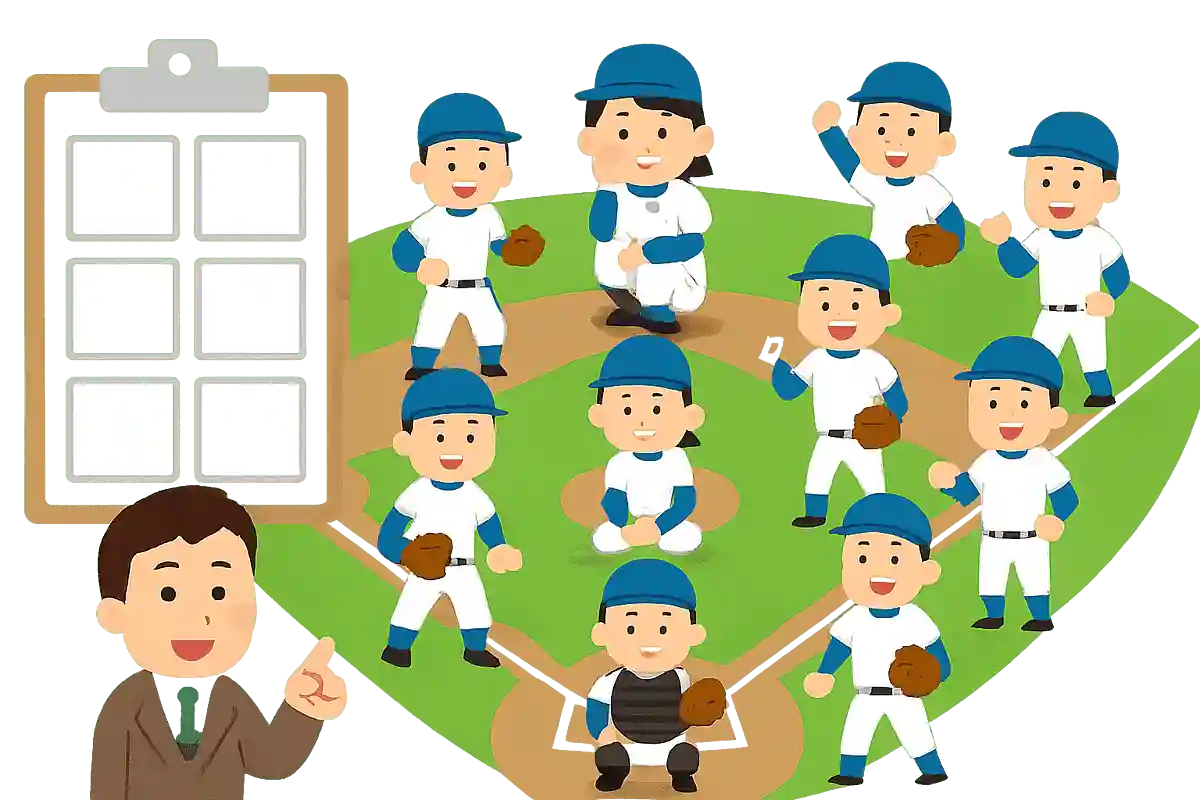
In this game, each player holds partial information, and by sharing it, they work together to uncover the answer.
It fosters logical thinking about the collected information as well as communication skills.
Because everyone has an equal opportunity to speak, it can build a sense of unity and help form teams more quickly.
By combining everyone’s efforts, when all positions are finally revealed, players will feel a deep sense of satisfaction and achievement.
Using cards also makes it easy to approach in a casual way.
Helium ring

It’s a classic team-building activity.
All you need is a hula hoop.
Since many people can participate at once, a larger one works best.
Six to ten people stand around the hula hoop.
Each participant supports the hoop using only their index fingers.
Once the hoop is kept level, the challenge begins.
Without anyone’s finger leaving the hoop, lower it all the way to the ground and then bring it back up to the original height to finish.
Differences in height mean people will crouch to different degrees, and variations in how quickly they respond to the leader’s cues can cause fingers to slip off.
It’s an activity packed with observation, coordination, balance, and more.
paper tower

This is a game that effectively fosters team-building even in a short span of about two minutes.
All you need to prepare is A4 paper.
In a team competition, each group builds a paper tower.
The team that stacks theirs the highest wins.
There are no rules for how to fold or stack the paper.
Communication naturally emerges within each team, creating a sense of unity from working toward a single goal.
Each person proactively senses others’ movements and is naturally given opportunities to fulfill a role.
2030SDGs

The SDGs are goals adopted by the United Nations that the world aims to achieve by 2030.
The SDGs card game, which is also used as a platform for raising awareness and promoting the SDGs, lets participants simulate a “small world” using cards.
In that world, players aim to reach goals by respecting and supporting one another so that major categories—“economy,” “environment,” and “society”—can be stably maintained.
As these topics are widely discussed in society, the game helps deepen understanding of the SDGs and supports team building.
NASA game

Everyone has their own set of values shaped by their past experiences.
No one has the right to deny any set of values, but when people hold different values, it’s natural for their opinions to clash.
To build better teams, it’s important to understand and respect each other’s values.
In this game, you first determine priorities based on your own values and share them with others.
From there, you’re encouraged to find common ground by making mutual concessions and developing compromises or blended solutions.