

A famous piece by Georg Philipp Telemann. Popular classical music.

Let me introduce Georg Philipp Telemann, a German Baroque composer who holds a Guinness World Record and is synonymous with the dining-music style Tafelmusik.
Telemann is said to have composed over 4,000 works and left behind many masterpieces.
Though active in Germany, he was also popular in France.
Telemann himself was a superb musician who played many instruments, including the violin, organ, harpsichord, recorder, and lute, and he was such a master that top-tier musicians invited him to perform with them.
It is very difficult to choose from among Telemann’s many great works, but I have selected some representative masterpieces and outstanding performances, and I hope you will give them a listen.
- [Masterpiece Classics] A special showcase of gem-like masterpieces so beautiful they’ll move you to tears
- Jean-Philippe Rameau Popular Songs Ranking [2026]
- Handel’s Masterpieces | A Comprehensive Introduction to His Popular Works
- Arcangelo Corelli’s Masterpieces and Popular Works: A Collection of Beautiful and Elegant Melodies
- George Frideric Handel Popular Songs Ranking [2026]
- Timelessly beautiful classical masterpieces. Recommended classical music.
- A masterpiece by Jean-Philippe Rameau. Popular classical music.
- [Baroque Music] A Curated Selection of Timeless Masterpieces and Famous Works
- [Scarlatti] Introducing masterpieces and signature works from his many keyboard compositions!
- Vivaldi’s masterpiece. Popular classical music.
- [François Couperin] Introducing famous and popular pieces by the composer who loved the harpsichord
- Mendelssohn’s Masterpieces | Popular Classical Music
- [Orchestra] Introducing famous and popular pieces
Masterpieces by Georg Philipp Telemann. Popular classical music (1–10)
Oboe Concerto in C minor, TWV 51:c1Georg Philipp Telemann
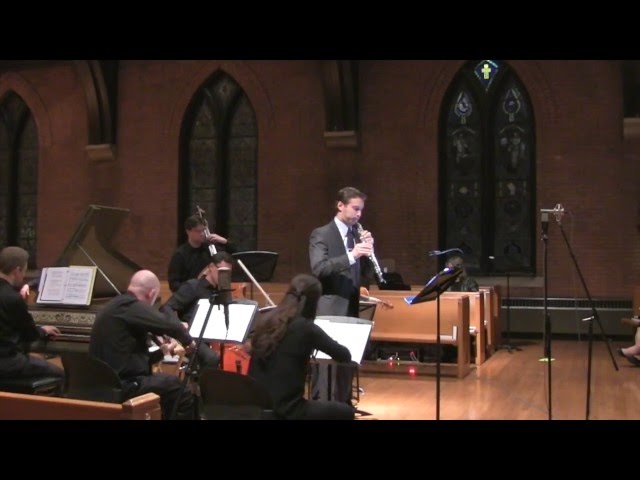
Let me introduce a piece by Georg Philipp Telemann that features the oboe as the main instrument.
The work consists of four movements and is characterized by a dynamic development that alternates between slow and fast sections.
The oboe’s beautiful melodies and its dialogue with the supporting strings captivate the listener.
Telemann’s delicate yet richly expressive musicality is on full display here, offering a full taste of the charm of Baroque music.
Although Telemann composed more than 3,000 works, this piece stands as one of his most representative and remains beloved by many today.
It’s a recommended choice not only for those interested in Baroque music, but also as an introduction to classical music.
Sonata in E minor, TWV 41:e5, for Viola da Gamba and Basso ContinuoGeorg Philipp Telemann

Telemann’s works brilliantly fuse the national styles of France, Italy, and Germany.
This piece is a sonata for viola da gamba and basso continuo, consisting of four movements.
Showcasing Telemann’s musical talents to the fullest, it offers a rich taste of the allure of Baroque music.
First published in 1739–40, this piece stands out even among Telemann’s prolific output.
Its elegant, emotionally expressive melodic lines and finely wrought harmonic structure create a musical world that captivates listeners and won’t let go.
Highly recommended for those interested in Baroque music or anyone wishing to explore the depth of classical music.
Trio Sonata in D minor, TWV 42:d4, for Flute, Oboe, and Basso ContinuoGeorg Philipp Telemann

This is a lovely duo piece for flute and oboe.
The beautiful melodies woven by the flute and oboe are striking, gracefully supported by the continuo.
Each of the four movements has its own character, offering plenty to enjoy—from the relaxed first movement to the lively finale.
Telemann’s delicate musicality shines throughout, making it an ideal piece not only for Baroque enthusiasts but also as an introduction to classical music.
Composed while Telemann was serving as music director in Hamburg in 1721, it is a masterpiece that fully showcases his talent—well worth a listen.
Masterpieces by Georg Philipp Telemann. Popular classical music (11–20)
Tafelmusik Overture (Suite) in E minor – 1. Ouverture: Lentement – Vite – LentementGeorg Philipp Telemann

I would like to introduce a work by Georg Philipp Telemann, a German composer who epitomizes the late Baroque and is indispensable when discussing the genre of Tafelmusik.
Tafelmusik refers to a form of music intended to be performed at banquets and feasts.
Telemann composed three collections of chamber music that were favored at courtly banquets; each collection includes different types of instrumental ensemble pieces such as orchestral suites, concertos, quatuors, trio sonatas, and solo sonatas.
This Overture (Suite) in E minor from Tafelmusik is one of those pieces.
Among the many works, this piece serves as the opening overture—like the title screen music in a video game—and acts as a tutorial for understanding Tafelmusik.
If you’re unsure where to start because there are so many pieces, why not begin with this overture and step into Telemann’s world of Tafelmusik?

Trumpet Concerto in D major, TWV 51:D7Georg Philipp Telemann

When it comes to the most prolific composer in the classical world, Georg Philipp Telemann is often cited, with estimates of over 4,000 works.
Among them is a piece that spotlights the trumpet: the Trumpet Concerto in D major, TWV 51:D7, one of the great solo trumpet works of the Baroque era.
Trumpets of the time could not change pitch as freely as modern instruments and were still undergoing improvements.
This piece emerged during the period when it finally became possible to alter pitch to some degree.
The high-register trumpet then was an instrument called the tromba, and this concerto makes full use of it as a solo instrument.
Watching performances, you can see the instrument is longer than today’s trumpet and is played in a higher register.
Its beautiful tone is wonderfully bright and soothing.
Flute Concerto in G major, TWV 51:G2Georg Philipp Telemann

This work is packed with the allure of Baroque music.
The harmony between flute and strings is beautiful, showcasing Telemann’s brilliance.
Comprising four movements, the piece is accessible and direct, yet never superficial.
It incorporates elements of Italian and French musical styles, as well as traditional Polish influences, appealing to a wide audience.
With remarkable balance and beauty, its melodic severity is tempered by elegance.
It is recommended not only for lovers of Baroque music but also for those interested in classical music.
Through this work, you can fully savor Telemann’s musical world.
Paris QuartetsGeorg Philipp Telemann

Georg Philipp Telemann, who enjoyed great popularity and fame in early 18th-century Germany, was also a highly popular composer in France.
In 1704, when he became Kapellmeister to Count Promnitz in Poland, Telemann studied the French style favored by the count and reportedly composed as many as 200 French-style orchestral suites over the course of two years.
Although Telemann was very popular in France, his busy schedule meant he did not actually visit until 1737, when he traveled to Paris for eight months.
A collection of quartets published in 1730 under the title “Quadori” became a hit, and leading French musicians who admired the works wished to perform with Master Telemann, making this collaboration a reality.
The pieces he wrote in the French manner specifically for this trip are the “Nouveaux quatuors en six suites,” which are now known as the celebrated “Paris Quartets.” Please enjoy Telemann’s masterpieces shaped by French influence while comparing them with his earlier works.