


Total lunar eclipses have long captivated humanity as a mysterious celestial show.
People have found many meanings in the moon glowing red, but behind this curious phenomenon lie fascinating history and scientific mechanisms.
So here, we present fun facts about total lunar eclipses in a quiz format! From the true nature of the blood moon to the mystery of the Saros cycle, we invite both astronomy fans and beginners to a world of trivia you can enjoy.
Try it with family and friends and rediscover the moon’s allure!
- Fun facts about the Moon. A rapid-fire quiz!
- How many can you solve? An Otsukimi trivia quiz from general knowledge to surprising fun facts
- Think you know it, but maybe you don’t? Fun trivia quiz about the Sun!
- Solar trivia quiz! Try your hand at little-known facts
- Fun to Know! A Collection of Space Trivia [Rec]
- How many can you solve? Fascinating history trivia quizzes that spark intellectual curiosity
- Space trivia quiz: Multiple-choice questions about the planets of the solar system and astronauts
- A collection of trivia and fun facts about space, brimming with dreams and romance
- How many questions can you get right? Introducing trivia quizzes and fun facts about solar panels
- [Space] Did you know? Saturn Trivia Quiz
- Take on a comet trivia quiz! Space fun facts you’ll want to share once you know them
- How many can you get right? Check your general knowledge with a heatstroke trivia and fun facts quiz.
- How many can you solve? Test your spring knowledge with a trivia quiz about March!
How many can you solve? Surprising trivia & fun facts quiz about total lunar eclipses (1–10)
When a total lunar eclipse occurs at the time the Moon is closest to Earth, the Moon appears especially large and red. What is this called?
- Blue Moon
- Blood Moon
- Super Blood Moon
See the answer
Super Blood Moon
The phenomenon in which the Moon comes closest to Earth and appears larger is called a “supermoon.” The red Moon during a total lunar eclipse is called a “blood moon.” When these two occur simultaneously, it is called a “super blood moon,” during which the Moon appears especially large and red.

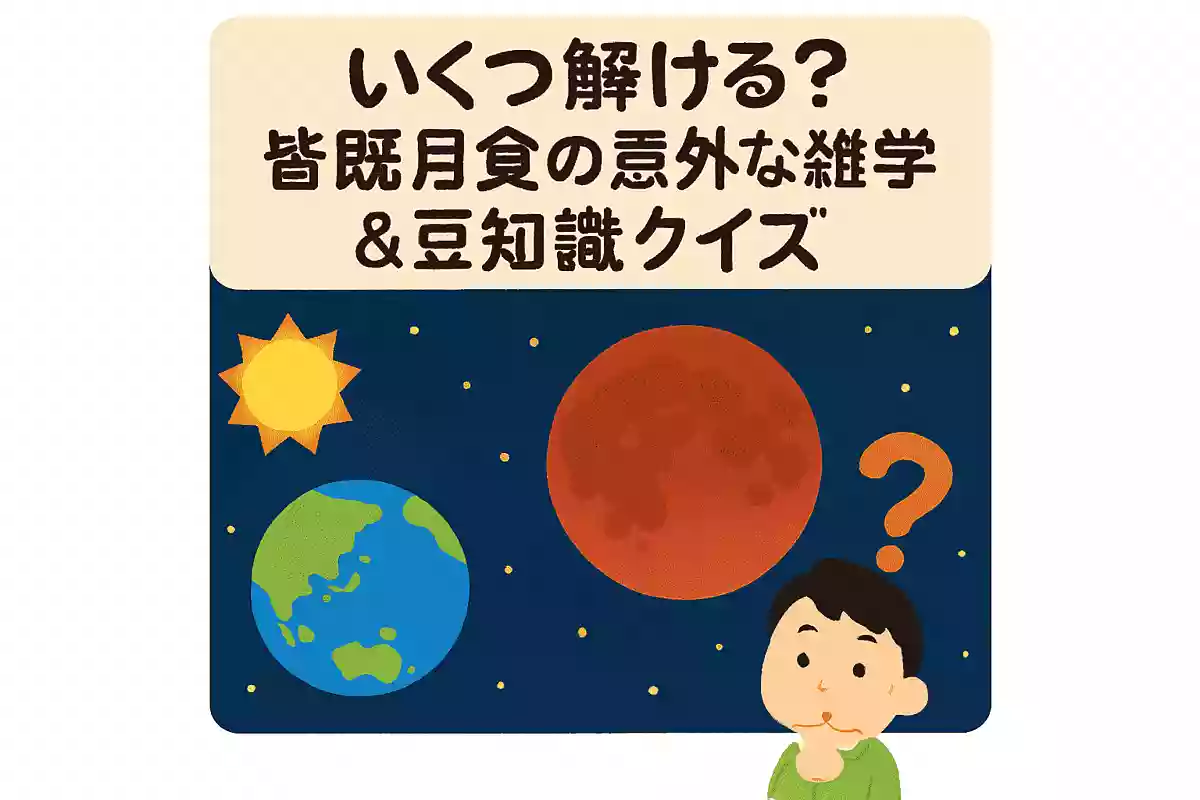
Lunar and solar eclipses repeat under similar conditions in a cycle of about 18 years and 11 days. What is this cycle called?
- Saros cycle
- spectral period
- precession period
See the answer
Saros cycle
The Saros cycle is a period of about 18 years and 11 days during which lunar and solar eclipses recur under nearly the same conditions, and it has been known since ancient times. This eclipse cycle, known since antiquity, has been used to predict when the next similar eclipse will occur.
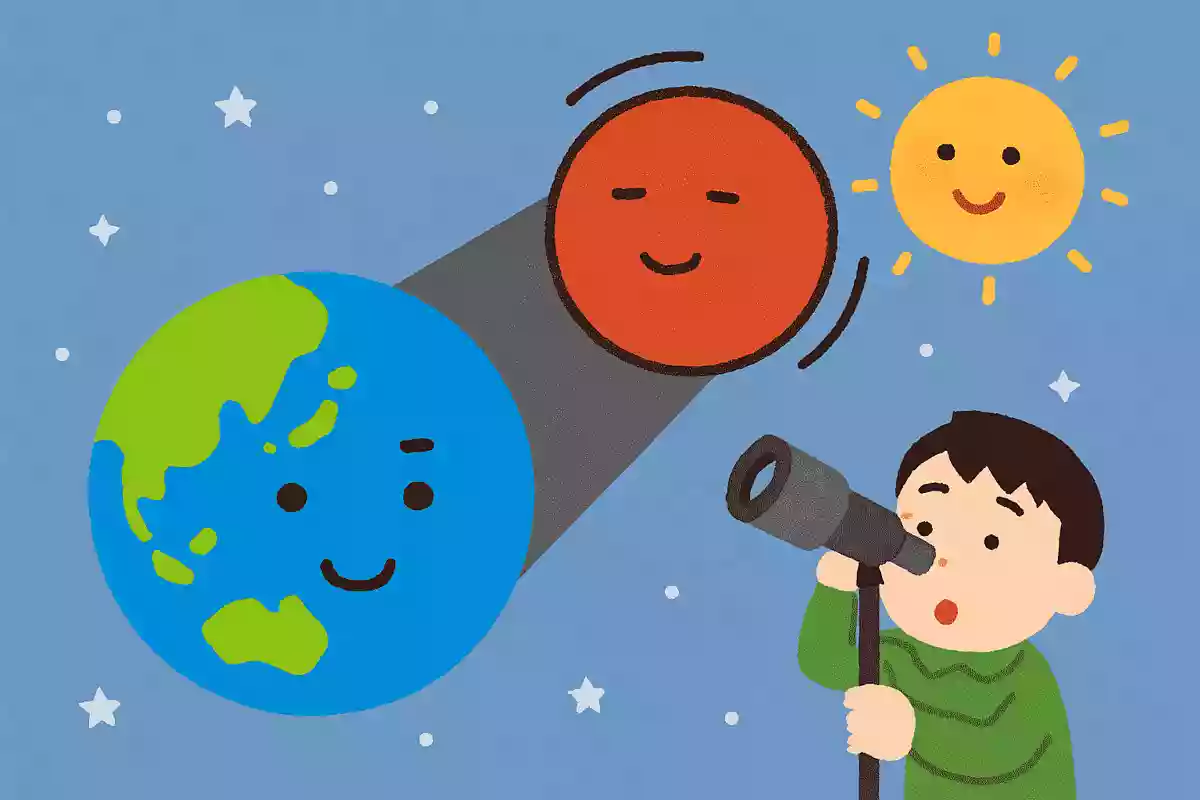
Why does a total lunar eclipse appear red?
- Because the Earth's shadow is red
- Because sunlight is scattered in Earth’s atmosphere, and only the red light reaches the Moon.
- Because magma is flowing on the Moon.
See the answer
Because sunlight is scattered in Earth’s atmosphere, and only the red light reaches the Moon.
Many people wonder why the Moon looks reddish during a total lunar eclipse. Earth’s atmosphere scatters blue light more easily, and only the red light bends around Earth and reaches the Moon, making it appear red during the eclipse. Knowing the secret makes watching a total lunar eclipse even more fun.
How often can a total lunar eclipse be observed?
- about once every half year
- About once every two years
- About once every 10 years
See the answer
about once every half year
In a total lunar eclipse, the Moon is completely within Earth’s umbra. When conditions are right, the period during which the Moon is entirely hidden in Earth’s shadow can last up to about 1 hour and 40 minutes. This duration varies depending on the relative positions of Earth, the Moon, and the Sun during the eclipse, as well as the Moon’s orbit.
Full moons happen often, so why don’t we have a lunar eclipse every month?

- Because sometimes Earth's shadow doesn't reach the Moon
- Because the Moon’s orbit is slightly tilted relative to Earth’s orbital plane
- Because the angle at which the Sun illuminates the Earth changes.
See the answer
Because the Moon’s orbit is slightly tilted relative to Earth’s orbital plane
The Moon orbits the Earth, but its orbit is tilted by about 5 degrees relative to Earth’s orbital plane (the ecliptic). As a result, even at full moon it’s very rare for the Moon, Earth, and Sun to line up perfectly, so a lunar eclipse does not occur every month.
When can a total lunar eclipse be seen?
- At the new moon
- At the full moon
- When it is a first quarter moon
See the answer
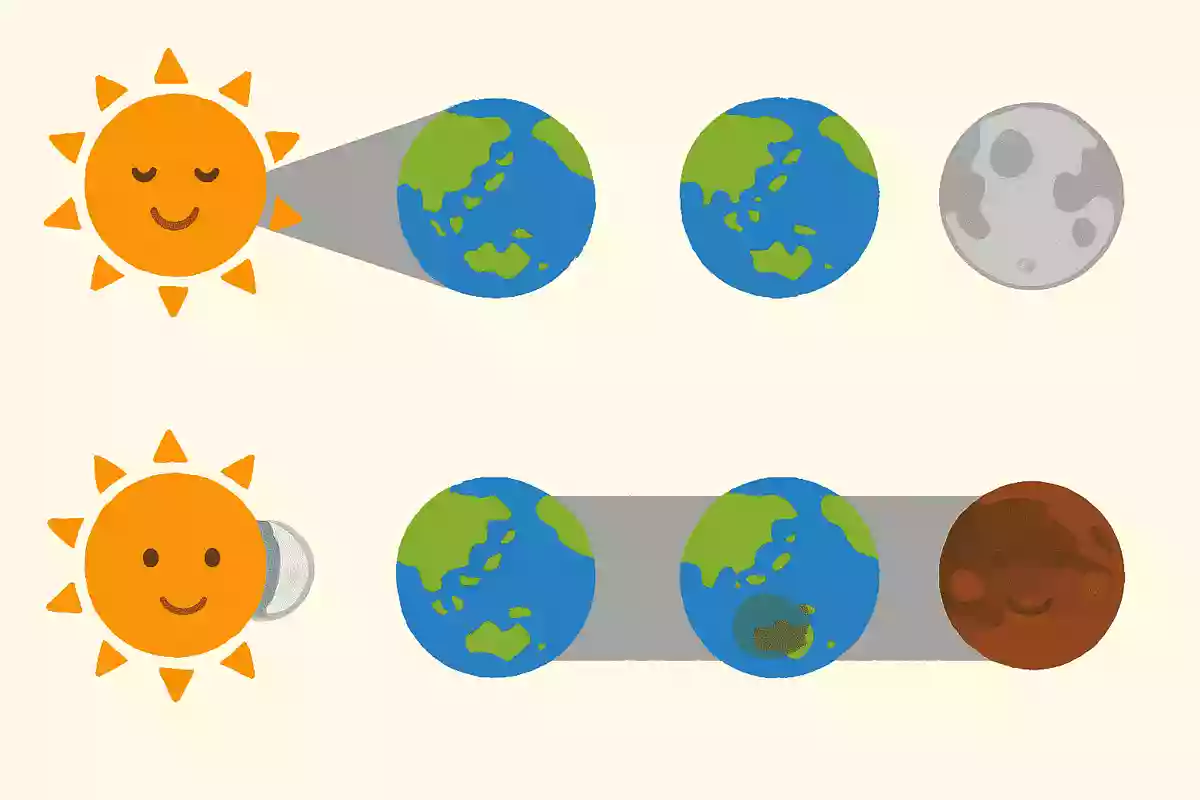
At the full moon
A total lunar eclipse occurs when the Sun, Earth, and Moon align in a straight line, and the Moon is completely within Earth’s shadow. At this time, the Moon is always full. Try thinking about it by focusing on the relative positions of the Sun, Earth, and Moon.
What did people in ancient times think a total lunar eclipse was a sign of?
- A sign of a bountiful harvest
- An omen of ominous events such as war or disasters
- A sign of an upcoming marriage or celebration
See the answer
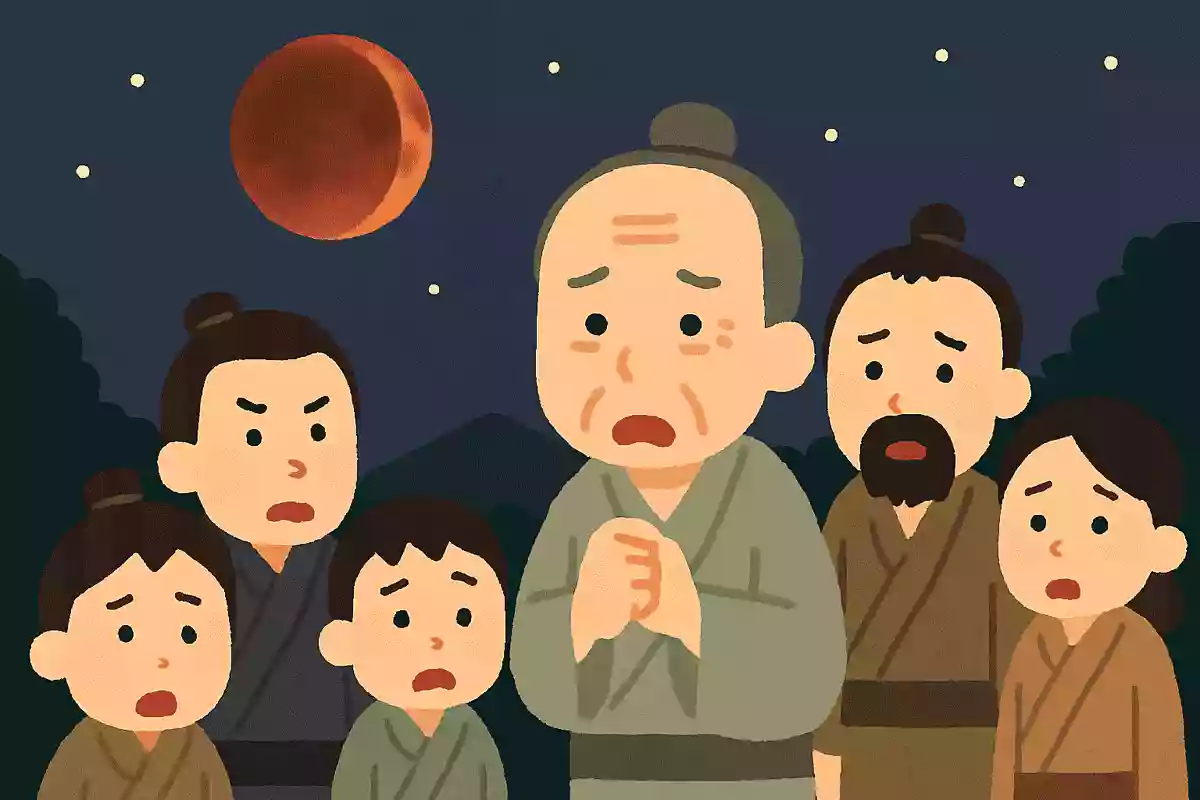
An omen of ominous events such as war or disasters
People in ancient times regarded a total lunar eclipse—when the Moon suddenly turns red—as a mysterious and ominous phenomenon, seeing it as a harbinger of misfortune such as war, disasters, and epidemics. Before it was scientifically understood, many cultures feared lunar eclipses as warnings of impending calamities like disasters and war.