

Games that get everyone excited without any equipment! A collection of simple ideas everyone can enjoy

You want to have fun with friends or family but don’t have any special equipment? That’s exactly when you should try these games! In this article, we introduce no-prop games like charades and “Takenoko Nyokki.” We’ve gathered a variety of games, from quick, casual ones to brain-training challenges that make you think.
Split into teams and compete, and it’ll be even more exciting! Why not try these easy-to-start, super-fun no-equipment games?
- Games that get the whole family excited! A collection of ideas you can start right away with no equipment
- Big fun with no props! A collection of party game ideas
- Get this excited with no props! A collection of Japanese play ideas
- Party games you can play without any props! A collection of ideas everyone can enjoy together
- No props needed: games everyone can play—fun activities using only voices and gestures
- Fun for up to 10 people! A collection of easy, no-equipment games and activities
- Fun games for five people! No props needed—ideas you can enjoy right now
- Games for 4 people with no equipment needed! Fun activities you’ll want to try right now
- Indoor Games You Can Do in 5 Minutes: A Collection of No-Prep, Instant-Fun Ideas
- Games you can play with just conversation. Classic and popular activities you can enjoy without any props!
- A collection of fun indoor play ideas: easy-rule games that hype up the fun
- No-prop games for 6 people that will get everyone excited! Fun activities you can play right now
- Recommended games for two people that you can enjoy without any equipment
Games that get everyone excited without any equipment! A simple collection of ideas everyone can enjoy (11–20)
High-Speed Yamanote Line Game
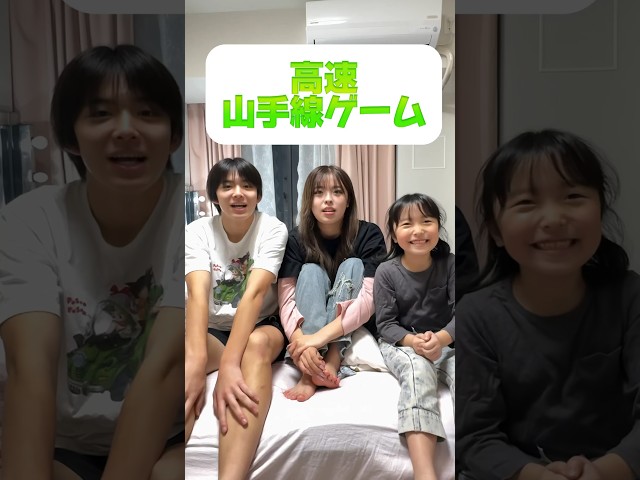
Test your sense of rhythm! Here’s an idea for a high-speed Yamanote Line game.
Try taking on a fast-paced version of the classic Yamanote Line game.
Normally, the Yamanote Line game involves naming stations on the Yamanote Line in order to a rhythm, but you can also play by changing the theme.
It’s simple, yet the challenge lies in staying flexible and quick-thinking.
And since this version is high-speed, you can expect the tempo to be faster than usual.
Give it a try and have fun while you’re at it!
Say one thing, do the opposite game

In this game, players are divided into one person who gives instructions and everyone else.
The others hold hands or link arms.
When the instructor gives a command of “say the same, do the opposite,” the players must do the opposite of what is said.
As the tempo increases or the game goes on longer, people tend to lose focus or get confused, making it more difficult.
Also, depending on the instructor’s call, there will sometimes be “say the same, do the same,” so be careful not to miss those instructions as well.

Pin Pon Pan Game
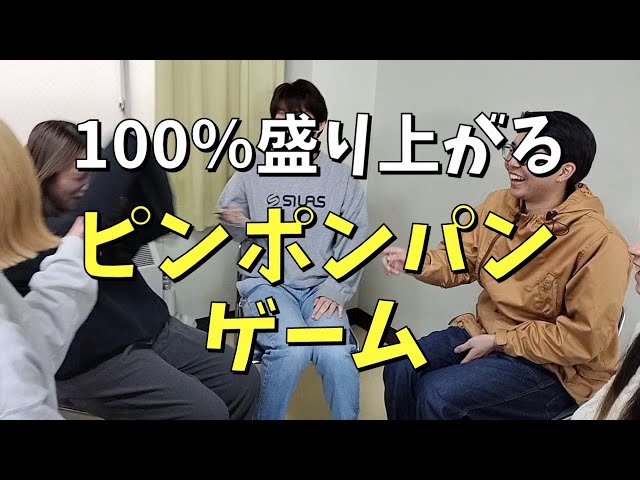
This “Pin-Pon-Pan” game is simple yet surprisingly tricky.
Starting from the person who says “Pin,” players go clockwise saying “Pon” and “Pan” one by one, and the person who says “Pan” points to someone to say the next “Pin.” Then it continues again clockwise with “Pin,” “Pon,” “Pan.” If anyone other than the “Pan” person points, or if someone goes out of turn, they’re out.
People tend to instinctively point when the “Pan” person points at them—even if it’s their role to say “Pin”—so it’s important to stay calm as you play.
Give it a try when you have a little spare time.
Gesture Game

The “gesture game” is a brain-training activity that gets you thinking while moving your arms and legs and using your whole body.
It’s fun for any number of people, from small groups to large ones, so it’s perfect for get-togethers with friends or parties.
It’s also enjoyable to figure out how to convey the prompt to others within the time limit using only gestures.
With a large group, you could split into multiple teams and see which team gets the most correct to decide the winner—that could be fun too.
Give it a try!

3-letter game
@lck_f_unite_d.c Challenge the 3-letter game!Dentisttranslation
♬ Athletic Meet “Heaven and Hell” (No Introduction) – Shinonome
This three-letter game is played by three people who, using a hint, work together to complete what they think is the correct word.
For example, if the hint is “a type of fish,” the first person might say “sa,” the next person would say “n,” and the last person would say “ma,” completing the three letters to form “sanma.” It’s a game that really makes you think, because you not only have to imagine your own answer based on the hint, but also adjust if things diverge.
Also, depending on the characteristics of the three players, changing the order they go in might improve your chances of winning.
A game about finding the correct moves

Act out the prompt’s movement and have others guess it.
For example, if the prompt is “forward roll,” the guesser should try various movements that come to mind.
The children around, who know the prompt, should react to each movement.
Decide in advance how to react when the movement is close to the prompt—for example, by cheering.
Using those reactions, the guesser narrows down the correct answer.
It’s also fun to have multiple guessers or to play team versus team.
You don’t need any materials, it’s a simple game, and it’s sure to get everyone excited.

Without Katakana

We use katakana for many names in daily life.
Katakana is familiar, but let’s try playing without using it.
First, show items that have katakana names and have people describe them without using katakana.
For example, for “pen,” someone might answer, “something you write with that isn’t a pencil.” It’s a game where you shift your thinking a bit, describe the given topic without using katakana, and have others guess.
If the topic is “game,” you could describe it as “something where you use your fingertips to control characters on the screen.” From there, everyone tries to guess the topic together.
Explaining with your current vocabulary makes for a good brain exercise.
after-the-fact rock-paper-scissors

Ato-dashi rock-paper-scissors looks simple, but it’s surprisingly good brain training that really makes you think! The rule is just to throw rock, paper, or scissors that will beat what the other person has already shown.
If you can win several times in a row, try the version where you deliberately lose after seeing the opponent’s hand.
Quickly figuring out how to win or lose at rock-paper-scissors and making big movements with your fingers provide just the right amount of stimulation for your brain.
It’s quick and fun, so it’s also great as a casual, bite-sized game!

Gesture Telephone Game

Let’s enjoy a gesture-only telephone game where you communicate without using words.
Form teams of about five or six people.
Once you line up in a single file, the first person checks the prompt.
Pass the prompt to the next person using only gestures, making your movements big and clear.
The last person gives the final answer to the prompt.
Exaggerating your gestures and adding facial expressions may make it easier to convey the message.
And if it doesn’t get across, thinking about how to make it clearer is part of what makes this game fun.

Clap-Clap Game

Let’s try a clap-along game that also works as brain training, filling the room with the sound of rhythmic clapping.
The rules are very simple: when the facilitator’s hands come together, participants clap both hands once.
The facilitator can also add fake-out motions, pretending to clap without actually doing it, to make the game more exciting.
Once everyone gets used to it, increase the speed of the claps and keep a steady tempo—this will create a sense of unity among the participants.
Have fun and give it a try!