

Games that get everyone excited without any equipment! A collection of simple ideas everyone can enjoy

You want to have fun with friends or family but don’t have any special equipment? That’s exactly when you should try these games! In this article, we introduce no-prop games like charades and “Takenoko Nyokki.” We’ve gathered a variety of games, from quick, casual ones to brain-training challenges that make you think.
Split into teams and compete, and it’ll be even more exciting! Why not try these easy-to-start, super-fun no-equipment games?
- Games that get the whole family excited! A collection of ideas you can start right away with no equipment
- Big fun with no props! A collection of party game ideas
- Get this excited with no props! A collection of Japanese play ideas
- Party games you can play without any props! A collection of ideas everyone can enjoy together
- No props needed: games everyone can play—fun activities using only voices and gestures
- Fun for up to 10 people! A collection of easy, no-equipment games and activities
- Fun games for five people! No props needed—ideas you can enjoy right now
- Games for 4 people with no equipment needed! Fun activities you’ll want to try right now
- Indoor Games You Can Do in 5 Minutes: A Collection of No-Prep, Instant-Fun Ideas
- Games you can play with just conversation. Classic and popular activities you can enjoy without any props!
- A collection of fun indoor play ideas: easy-rule games that hype up the fun
- No-prop games for 6 people that will get everyone excited! Fun activities you can play right now
- Recommended games for two people that you can enjoy without any equipment
Games that get everyone excited without any equipment! A simple collection of ideas everyone can enjoy (21–30)
Birthday line

Within the time limit, let’s try lining up in a single row in order of birthdays.
The rule here is that you must not say your exact date of birth.
If everyone clearly knows the others’ birthdates, you can line up smoothly.
But if someone’s is unknown, you’ll have to exchange clues and reason it out as you line up.
It might be tricky to come up with hints that others can understand, like “around the middle of the season.” If you think it through and line up correctly with no mistakes, it should be a big hit.
Having kids from various age groups—not just those born in the same year—will make it both more fun and more challenging.

Number guessing game

It’s a number-guessing game where you try to predict how many people will crouch.
Everyone stands in a circle and, while jumping, says “Ready, 1!” or “2,” guessing how many people will crouch.
You can crouch yourself, or stay standing and just guess the number—it’s up to you.
It’s simple, but it uses both your body and your brain, and it’s a lot of fun.
It’s hard to guess the number of people who will crouch, so when someone nails it, the group is sure to cheer.
It’s also a great game for chilly or rainy days when kids want to move around—you can play it indoors in a small space.
Simple rhythm game

Let me introduce a simple rhythm game that can also serve as jump rope practice.
Place a circle on the ground to mark the starting position, and use it as your reference point for jumping.
Follow the caller’s instructions on where to jump.
At first, you’ll get simple commands like “forward,” “right,” and “up,” but as the level increases, combinations like “right-left” or “front-back” get mixed in, testing your reflexes.
The more complex it gets, the more excited kids are likely to be.
It doesn’t take up much space, so give it a try!

Tongue Twister Challenge

The tongue twister challenge is a recreational activity that everyone can enjoy together, no matter their age.
The key is to read the designated phrase quickly without stumbling over the words.
The facilitator should demonstrate first; if they deliberately slip up, it can help participants relax and ease their nerves.
Start by practicing slowly at first, and once everyone gets used to it, gradually increase the speed.
It can also be fun to play in teams and compete for the best time.

Who am I? game

Liven up your New Year’s with 10 “Who am I?” quiz questions! Each question comes with three hints, and you use the clues to figure out the answer.
For example: “I have a red body and I’m always standing with my mouth open,” “I used to be round, but now my body is more angular,” and “Someone comes at the same time every day to take what’s inside me.” By reading the hints carefully and using your imagination, you’ll enjoy the thrill of arriving at the answer.
It’s great for all ages—from young children to adults—and helps develop thinking and observation skills.
It’s a game where you can feel the excitement of guessing correctly and enjoy discussing the hints with friends.

Let’s look for a loooong word

In the “Let’s Find Long Words” game, the questioner specifies the final letter and asks for long words that end with that letter—in this case, words that end with “n.” The respondents think of and answer with long words ending in “n.” The longer the word, the more impressive it might be.
You could also score one point per character and have the team with the highest score win.
Once everyone gets used to the game, try setting themes like food or animals, or add rules such as not allowing words that have already been used, to make it more fun.
Magical Banana

A Magical Banana game where clapping and rhythm are key.
The first person says, “When you say banana, I think of ___,” filling in a word by association.
The next person keeps the rhythm and continues saying what the word makes them think of.
Keep the rhythm going by saying the phrase “When you say ___” each time.
Once everyone gets used to the game, speed it up by increasing the clapping and rhythm tempo.
The main point is to say your associations in time with the rhythm; if you can’t say one in time, restart on the spot and try again.
human disentanglement puzzle
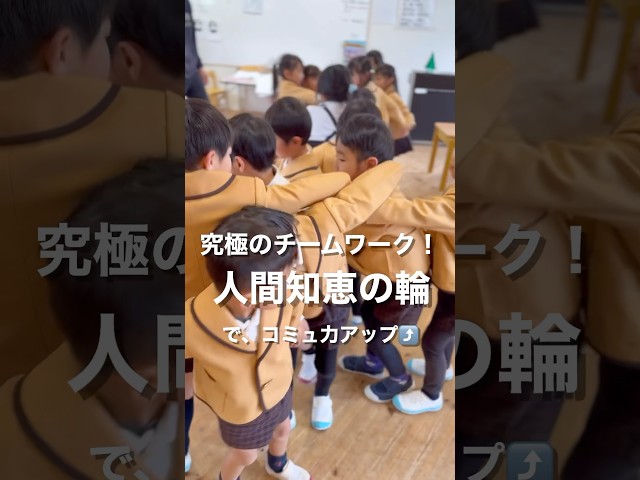
A human knot game where participants work together to figure out how to untangle themselves, naturally communicating as they go.
The rules are simple: talk to each other while you unravel the tangled human knot.
During this process, you must not let go of the hands you’re holding.
The key is to share ideas on how to solve it without letting go.
Be careful not to pull anyone’s arms forcefully, as that can be dangerous.
Sync up as a team, use your whole body, and have fun taking on the challenge.
Looking for the King

A fun King-Finder game for large groups.
First, split into a Detective Team and a King Team.
The King Team will imitate the King’s movements for one minute.
During that minute, the King should change their movement three times.
The detectives carefully observe during this time to figure out who the King is.
Setting a time limit can make it even more exciting.
At the end, the King Team asks, “Who is the King?” The Detective Team answers, “The King is ___,” and tries to guess correctly.
Adjust the difficulty according to the players’ ages and enjoy.
Have fun with no props needed! The Gyutan (beef tongue) game

The “Gyūtan” game, which naturally gets everyone into a circle, is a fun game that people of all ages—from small children to the elderly—can enjoy together.
The rules are simple: the first person says “gyū” out loud, and the second person doesn’t say “tan” but claps instead.
The “tan” at the end increases one by one—three times, then four times, and so on.
If you get the number of “tan” wrong or fall off the rhythm, you lose.
Once you get used to it, it’s fun to try speeding it up as a challenge.
In conclusion
How about enjoying games that require no props, spark lively conversations, and fill the time with smiles? From classic crowd-pleasers to games trending on social media, there are all kinds to choose from. When everyone gets creative and plays together, bonds naturally grow stronger. For making fun memories, be sure to try some exciting no-equipment games!