

[Business Manners] Trivia Quiz Useful for Work


No matter what job you do, business etiquette is something everyone must remember.
However, unless you’re in a training program, there aren’t many chances to study etiquette properly.
So in this article, we’ll present trivia quizzes focused on business manners that are useful at work.
Even business etiquette that can be a hassle to memorize becomes easier to learn when it’s in quiz form! Some quizzes also include little bits of work-related history, so feel free to use them as conversation starters.
I hope this can be a small help to you in your working life.
- It never hurts to know! General knowledge quiz
- [Business Manners] Trivia Quiz Useful for Work
- [Great for speeches] Trivia and fun-fact quizzes recommended for morning assemblies
- Fun Quiz Questions That Will Liven Up the Office [2026]
- Useful for workplace morning meetings! Recommended topics and trivia you can use for a one-minute speech.
- Let's take on a four-choice quiz that everyone can enjoy together!
- Abbreviation quiz: things you might not actually know? From everyday terms to youth slang
- [Interesting] Compilation of Trivia Quiz Questions
- A three-choice quiz of useful trivia: a collection of questions you can use in everyday life
- [Challenge] Stimulate your intellectual curiosity with a general knowledge quiz you might not know!
- A quiz of fun trivia: bite-sized knowledge that leads to new insights.
- So interesting you’ll want to tell someone! December Trivia & Fun Facts Special
- Trivia quiz with useful tips to know: fun facts that come in handy at school or at home [for kids]
[Business Manners] Trivia Quiz Useful for Work (21–30)
Which of the following is correct regarding the honorific title “殿” (tono)?
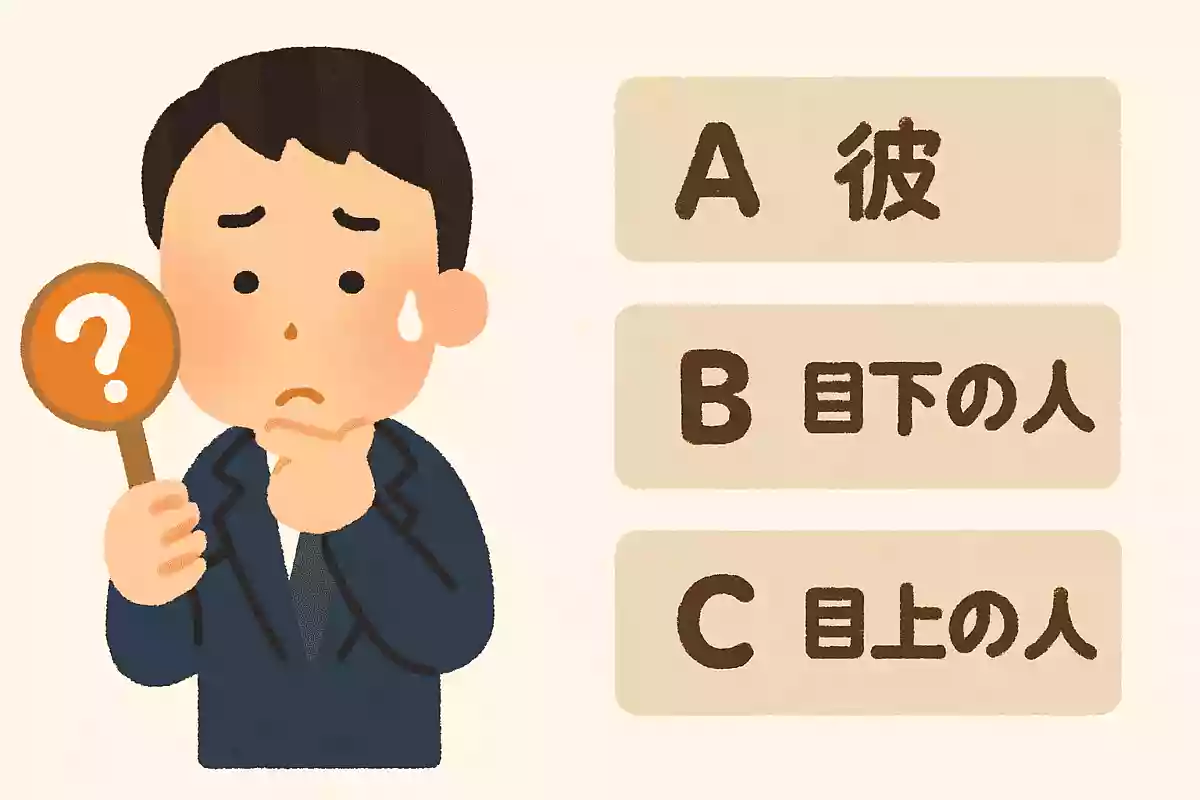
- honorifics used by subordinates when addressing superiors
- Not used in spoken language.
- Usable by people outside the company
See the answer
Not used in spoken language.
“-dono” is an honorific mainly used in writing as a respectful title from superiors to subordinates. Therefore, it is not commonly used in speech. Moreover, because it is an honorific for people of lower status, using “-dono” for someone outside your company is also incorrect.

When a client asks me over the phone to pass a message to my boss, what is the correct way to respond?

- Yes, I will inform ◯◯.
- Yes, I will let [name] know.
- Yes, I will let [name] know.
See the answer
Yes, I will let [name] know.
“Moshi-tsutaeru” is the humble form of “ii-tsutaeru” (to convey a message). When conveying a message from a superior party, such as a client, to your boss, it is appropriate to use the humble form. It is a more polite expression than “otsutae shimasu” or “tsutaete okimasu.”
In conclusion
We’ve explained the basics of business etiquette in a quiz format. From exchanging business cards and bowing to handling phone calls—these are practices every working professional should know. Each etiquette rule reflects a spirit of consideration for others. By putting this knowledge into practice, you’ll deepen trust in your professional relationships. Why not start incorporating these subtly from tomorrow?