

A masterpiece by William Walton. Popular classical music.

Sir William Walton, a composer of modern British music in the 20th century.
Not limited to pure classical music, his works—often arranged as concert suites of film scores or performed by wind bands—are frequently played, earning him tremendous support from a wide audience beyond just classical music fans.
Drawing on a variety of contemporary musical styles, his pieces are crisp, stylish, and richly expressive, yet approachable.
Here is a list of Walton’s works.
I’d be delighted if you discover just how many masterpieces there are beyond the well-known ones.
Now, please enjoy the world of William Walton!
William Walton’s masterpieces. Popular classical music (1–10)
Coronation March “The Crown”William Walton

Sir William Walton left behind numerous masterpieces, and here I would like to introduce one of his representative works, the Coronation March Crown Imperial.
It was originally composed for the coronation of Edward VIII, but after Edward VIII abdicated, it was performed at the coronation of his successor, George VI.
This march has a distinctly British flavor.
The original is scored for full orchestra including strings, but it has been arranged for wind band and is well loved in that repertoire as well.
British marches feature distinctive accents and rests, making them more than simple on- and off-beat patterns; the beautiful chorale in the middle section also calls to mind Edward Elgar, the British composer famed for Pomp and Circumstance.
The main theme returns in the recapitulation, and the piece concludes with a grand fanfare.
It is a celebrated work that enjoys great popularity among performers.
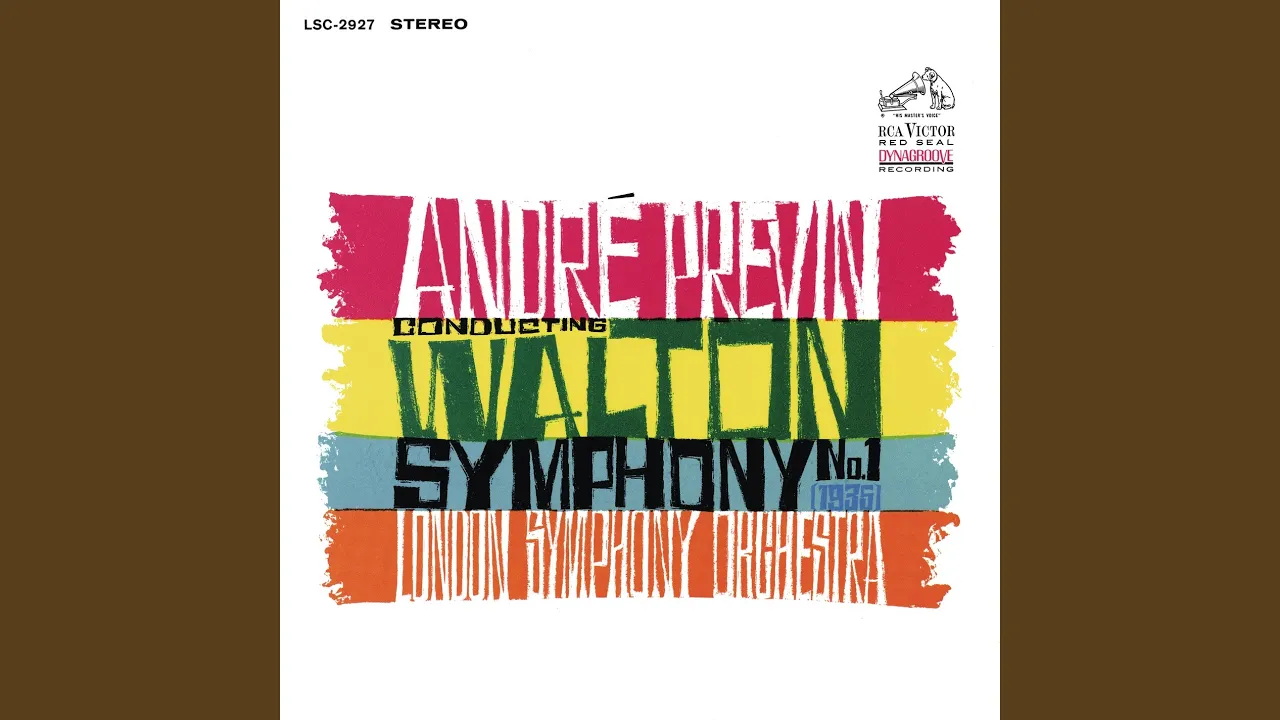
Symphony No. 1 in B-flat minor, Movement I: Allegro assaiWilliam Walton

This is a symphony by the British composer William Walton.
He was active from the late 19th century to the early 20th century, and the work was commissioned by the conductor Hamilton Harty.
It is in four movements; the first movement, Allegro assai, has a brisk character and exudes the quintessential feel of an English symphony.
Completed in 1935, the piece took time because Walton was a slow writer and a perfectionist, so at the premiere Harty reportedly performed only the first through third movements.
When you listen to it, it’s so strikingly cool that you can understand why Harty couldn’t wait.
Overture ‘Portsmouth Point’William Walton

This is an overture that portrays the lively atmosphere of the British port city of Portsmouth.
Through complex, varied rhythms, abrupt tempo changes, and syncopation, it captures the bustling, chaotic character of the harbor town.
Featuring a brilliant orchestration that highlights the brass section, it sounds as if the town’s clamor is depicted through music.
Premiered in Zurich on June 22, 1926, it established international recognition.
The work is regarded as an important piece that contributed to the modernization of British music.
It’s recommended not only for classical music enthusiasts but also for anyone who enjoys energetic music.
Suite “Battle of Britain”William Walton

Are you looking for a cool, electrifying orchestral suite? I have a masterpiece I’d love to recommend: the suite “Battle of Britain” by the British composer William Walton.
It’s the film music for the 1969 movie “Battle of Britain,” which focuses on the aerial battles between the German Luftwaffe and the British Royal Air Force during World War II.
Although it’s categorized as film music, the film’s director, Guy Hamilton, actually didn’t like Walton’s score and commissioned film composer Ron Goodwin to write a new one, so only about one piece of Walton’s music was ultimately used.
The suite consists of two movements—Movement I: “Spitfire Music – Battle in the Air” and Movement II: “March Introduction – Siegfried Music”—and it’s brimming with swagger and romance.
From the Viola Concerto, 1st movement: Andante comodoWilliam Walton

I’d like to introduce a famous piece by William Walton that features the viola within the orchestra.
Despite the viola’s crucial role in connecting harmony, melody, and the bass line, it is rarely spotlighted as a solo instrument in orchestral music, and relatively few works suitable for today’s repertoire were written for it during the Romantic era.
Walton composed this work for Lionel Tertis, one of the foremost violists of the early 20th century, but because Tertis was not very enthusiastic, the solo part was taken up by Paul Hindemith, who was both the composer and a distinguished violist.
British composers often give a brisk, dignified impression—like Edward Elgar’s “Pomp and Circumstance”—but this first movement contains many lyrical, singing passages that showcase the rich, dark tone of the viola.
Symphony No. 1 in B-flat minor, IV. Maestoso – AllegroWilliam Walton

This is the fourth movement of William Walton’s Symphony No.
1, a signature work by a composer who represents the British music scene of the 20th century.
Forming a grand climax, this movement is marked by powerful expressiveness and dynamism.
Its structure transitions from a weighty Maestoso to a brisk Allegro, prominently showcasing Walton’s distinctive contrasts and intense emotional expression.
At its premiere in London on November 6, 1935, it was highly acclaimed by both audiences and critics.
Through the music, Walton conveys personal turning points and joy, making this a piece I highly recommend not only to fans of classical music but also to anyone who wants to enjoy orchestral music that blends strength with delicacy.
From Cello Concerto, Movement IIWilliam Walton

A masterpiece by William Walton.
The second movement, “Allegro appassionato,” is distinguished by its passionate melodies and dramatic development.
The interplay between the cello and the orchestra is superb, gripping the listener and never letting go.
Premiered in Boston in January 1957, the work was composed at the request of cellist Gregor Piatigorsky, who was born in Ukraine and made his career in the United States.
Walton infused the piece with reflections on his own married life and romantic feelings, conveying a quiet yet steadfast sense of love and connection.
Highly recommended for those interested in cello music or British music of the 20th century.