

[Classics] Famous waltzes: recommended popular pieces


Introducing a selection of famous waltzes all at once! From classic staples to lesser-known gems, we’ve picked a wide range.
The true charm of the waltz lies in its 3/4 time, doesn’t it? That distinctive meter creates such a romantic atmosphere.
Whether in major or minor keys, it’s captivating music.
This time, it’s a special feature on waltzes! You might even discover something like, “I didn’t know there was such a great piece!” We’ve selected pieces across various styles, so be sure to read to the end!
- Famous German Folk Songs | That familiar tune in Japan was actually a German folk song?!
- Polka masterpieces. Recommended popular songs.
- [Nostalgic Collection] Classic oldies masterpieces. Recommended popular songs
- [2026] Iconic musical numbers: from the latest releases to timeless classics!
- Cool! Introducing classic masterpieces of Argentine tango
- Also great as café music! Introducing famous tunes to savor the charm of musette
- [Famous Songs of the World] A curated introduction to soul-stirring popular Latin mambo tracks
- Chanson masterpieces. Recommended popular songs.
- [Western Music] The World of Power Ballads: A Collection of Must-Listen Gems to Start With
- [Tango] Famous Tango Songs: Recommended Popular Tracks
- Masterpieces and history of folklore: An introduction to traditional music of the South American Andes
- [2026] A Guide to Country Music: From the Latest Hits to Classic Favorites
- Everything is stylish! Popular music in France
[Classical] Famous Waltzes: Recommended Popular Pieces (11–20)
Waltz for the MoonUematsu Nobuo

Have you heard the exquisite waltz composed by Nobuo Uematsu, often called the “Beethoven of video game music”? Released in March 1999, the RPG Final Fantasy VIII features this piece in its iconic scene where the protagonists dance.
Set in an elegant triple meter, the melody is romantic yet tinged with a certain wistfulness—that’s what makes it so striking.
It beautifully captures both the exhilaration of a glittering ballroom and the delicate emotions of two people drawn to each other but unsure of the distance between them, and it never fails to set my heart aflame each time I listen.
Why not play it on an evening when you want to bask in elegance, or during a special moment with someone dear?
Waltz from Sleeping BeautyPeter Ilyich Tchaikovsky

This piece is used in The Sleeping Beauty, one of the most famous works in classical ballet.
Tchaikovsky composed it, taking inspiration from Charles Perrault’s fairy tale “The Sleeping Beauty.” Among his ballet scores, it is the longest in performance time, and even the abridged version takes about two hours—a true epic.
The opening makes a strong impact with its surging strings and brassy accents.
The beautiful melody of the waltz section was also used in Disney’s animated film Snow White and the Seven Dwarfs, making it beloved across generations.
Alongside the Waltz of the Flowers from The Nutcracker, it’s one of Tchaikovsky’s great waltzes and well worth remembering.
Eccentric WaltzCharles-Henry

Composer Charles-Henri, who bridged jazz and classical music and left numerous educational works in France.
The piece in question is the final work in his collection of piano miniatures.
While it is a traditional waltz in 3/4 time, it carries a curious sense of weightless drift, as if the rhythm were deliberately offset, letting you enjoy an “eccentric” world just as the title suggests.
Published in 1980, it was originally written as a narrative-style piece for children, but it is a work that adults can also find deeply satisfying.
In the style of Chabrier, M. 63Maurice Ravel

This work, by French musical master Maurice Ravel, was written as a homage to a senior composer he deeply admired.
While imitating Chabrier’s characteristic humor and bold harmonies, it remains a refined and sonorous miniature.
Borrowing a melody from Gounod’s opera Faust and casting it in the style of a waltz, it exudes a chic esprit.
Though it lasts only about two minutes, it distills the essence of French music with remarkable density.
It’s the perfect piece for when you want to savor the atmosphere of an elegant salon or to gently change the mood on a quiet afternoon.
Chihiro’s WaltzHisaishi Joe

A deeply resonant waltz that colors the world of Studio Ghibli’s masterpiece Spirited Away.
It’s included on Joe Hisaishi’s album Spirited Away: Image Album.
In the film itself, the piece appears under the title “Reprise,” supporting the climax, but this work carries the very melody that could be called its origin.
As you surrender to the gentle 3/4 rhythm, a certain nostalgia may well up—an aching poignancy that tightens the chest.
While it evokes the film’s grand scale, it’s marked by a more delicate, introspective tone.
It’s the kind of track you’ll want to savor alone on a quiet night, soaking in precious memories.
Merry-Go-Round of LifeHisaishi Joe
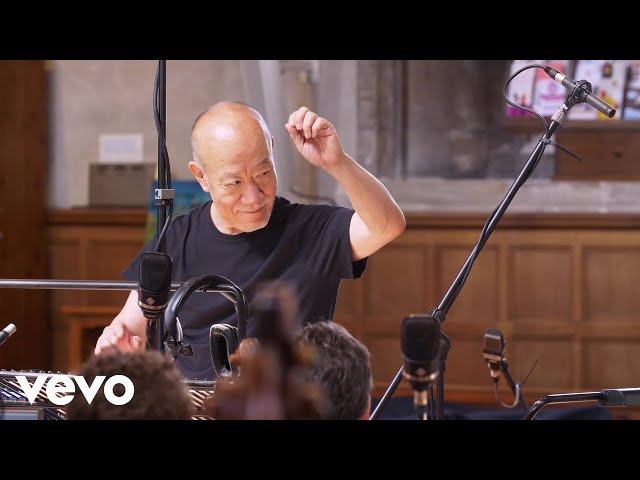
The main theme of Studio Ghibli’s film Howl’s Moving Castle, “Merry-Go-Round of Life.” The wistful waltz composed by Joe Hisaishi beautifully captures the film’s worldview.
The hidden sadness within its splendor evokes the image of Sophie, the protagonist, who, even after being transformed by magic, confronts her inner self and lives with strength.
In fact, there’s an anecdote that in February 2004, Hisaishi performed the piece on the piano in front of director Hayao Miyazaki, and it was approved on the spot.
Its emotionally stirring, dramatic progression is the perfect companion for quiet nights when you want to be alone with your thoughts.
[Classical] Famous Waltzes: Recommended Popular Pieces (21–30)
Waltz No. 7 in C-sharp minor, Op. 64 No. 2Frederic Chopin

Composed by Chopin, it is said to be a culmination of his compositional technique, featuring a mazurka as the main theme.
It is one of the last works published during his lifetime.
Many people may find it familiar, as figure skater Mao Asada used it for her exhibition program in the 2011–2012 season.