


Weather is crucial information that directly affects laundry, work, school events, and outings on your days off.
Many of you probably check the weather forecast on TV or online every day.
So, how much do you really know about the weather?
In this article, we’ll share trivia and fun facts about the weather that will make checking the forecast even more enjoyable.
We’ve gathered tidbits about the hidden meanings behind common forecast terms and surprising facts about the weather—things that will make looking at the sky and sensing the changing seasons more fun.
Just like you check the weather forecast, be sure to check this out too!
- Rainy season trivia roundup: fun facts you'll want to share with someone
- [Trivia] Did You Know? A Collection of Weather Proverb Quizzes!
- [For Seniors] Trivia Quiz & Fun Facts About the Weather
- Trivia quiz with useful tips to know: fun facts that come in handy at school or at home [for kids]
- So interesting you’ll want to tell someone! December Trivia & Fun Facts Special
- Useful right away in daily life! Surprising trivia and handy tips
- Trivia you think you know but surprisingly don’t? August trivia and fun facts quiz!
- Collection of trivia and fun facts about stars shining in the night sky
- Didn't want to know?! Fascinating and scary trivia & fun facts
- Think you know it, but maybe you don’t? Fun trivia quiz about the Sun!
- Fun October Trivia Quiz & Facts! Exciting Questions for Kids
- [For Kids] January Trivia Quiz & Fun Facts: Learn About the New Year in a Fun Way
- [For Kids] December Trivia Quiz & Fun Facts! Learn about seasonal events and traditions!
Make weather forecasts more fun! Trivia and fun facts about weather (1–10)
Even a 0% chance of precipitation doesn’t mean it will never rain.
Some of you may have experienced something like, “The forecast said a 0% chance of precipitation, but it rained.” In fact, a 0% chance of precipitation does not mean it will never rain.
It’s a statistical figure based on how often it rained under similar atmospheric conditions in the past.
For example, a 40% chance of precipitation means that out of 100 past instances with similar atmospheric conditions, it rained 40 times.
Also, the chance of precipitation does not indicate how heavy the rain will be.
It only reflects how likely it is to rain, so interpreting “a 90% chance of precipitation means heavy rain” is incorrect.

It’s dangerous to take a bath when there’s thunder.
When there’s thunder, it’s considered dangerous to go to high places or hold things like umbrellas up high.
I’m sure many of you know this.
But did you know that taking a bath during a thunderstorm is also dangerous? In fact, the high voltage from lightning can travel through water pipes and drains.
It often rains when there’s thunder, and many people want to jump into a bath as soon as they get wet.
But please hold off and wait until the thunder has stopped before getting in.

A rainbow forms on the side opposite the Sun.
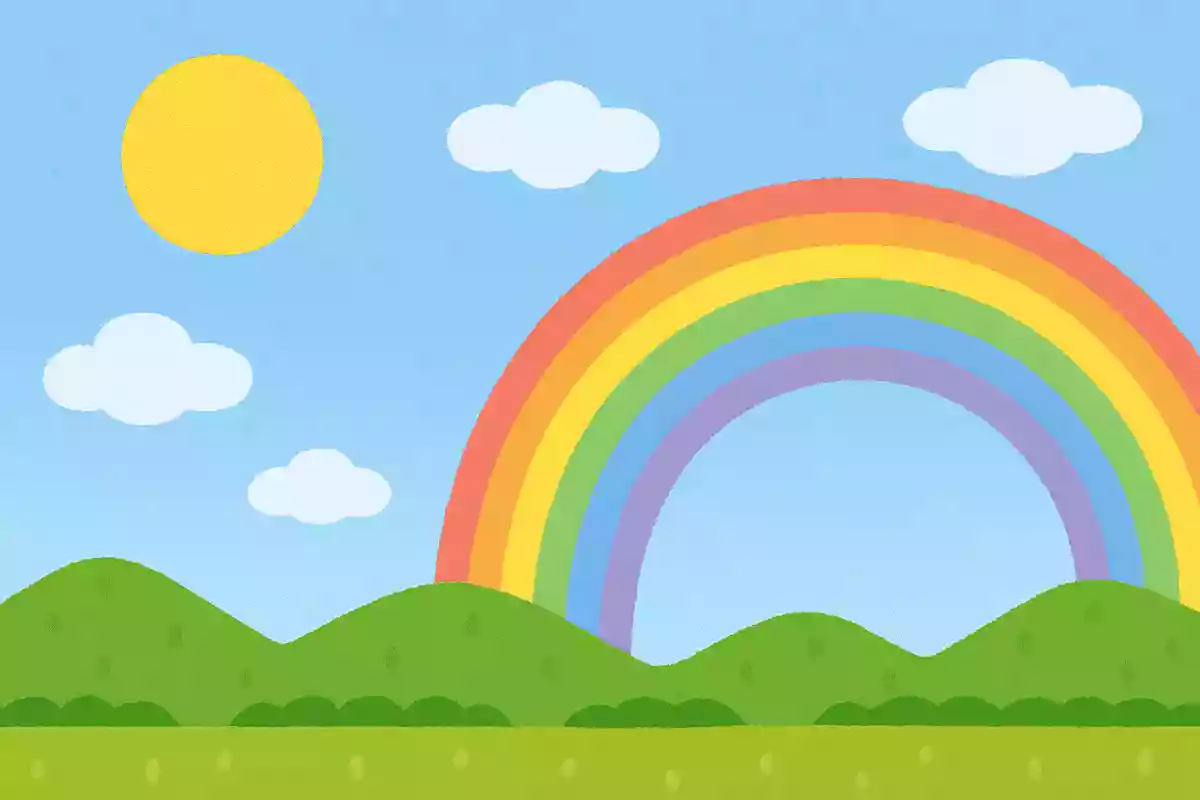
After the rain stops, a rainbow appears in the sky.
On days when you can see a distinct semicircle with seven colors, some people may feel happy.
Did you know that rainbows form on the side of the sky opposite the sun? Because a rainbow is created when sunlight is reflected and refracted by raindrops, it appears on the side opposite the sun.
Furthermore, rainbows form when the sun is low in the sky, such as in the morning or evening, either just after the rain has stopped or even while it’s still raining.
By the way, under the right conditions, rainbows can also be seen in moonlight.
These are called moonbows, and Hawaii is the most famous place to observe them.
The number of colors in a rainbow differs around the world.
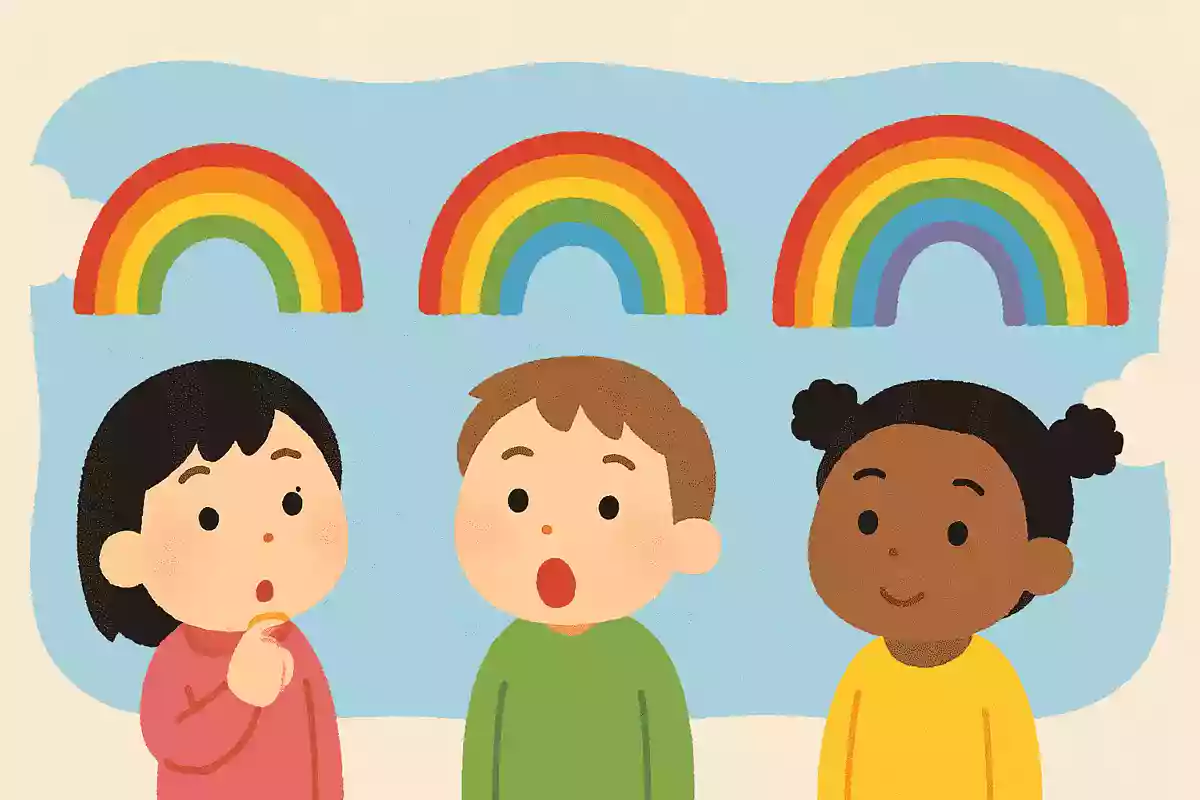
A beautiful rainbow that appears in the sky when the rain lets up.
In Japan, a rainbow is said to have seven colors: red, orange, yellow, green, blue, indigo, and violet.
In fact, however, this perception differs from country to country.
Although rainbows look the same everywhere, the way colors are categorized varies.
Because a rainbow is a gradient with no clear boundaries between colors, the number of colors it’s said to have can differ: what is called a seven-color rainbow in Japan may be five colors or even three in other countries.
For reference, it’s said to be six colors in the United States and five in Germany.
If contrails disappear quickly, it will be sunny.

Contrails that look like white paths flown by airplanes.
You can predict the weather by observing the state of contrails.
The reason lies in the moisture contained in aircraft exhaust.
Airplanes fly at around 10,000 meters, where the surrounding temperature can be as low as minus 50 degrees.
The moisture in the exhaust turns into ice crystals, and the way these ice crystals persist aloft changes the appearance of contrails.
If a contrail quickly disappears, it indicates fair weather; if a contrail stretches out for a long distance, it suggests rain.
When the upper atmosphere is covered by a high-pressure system and contains little water vapor, the air is stable and clear weather is likely.
When a low-pressure system approaches, the upper air becomes moist, contrails extend for a long time, and rain is forecast.
In the news, they don’t call it bad weather just because it’s rainy or snowy.

How do you feel when you see a rain icon in the weather forecast? Some people might think, “Rain makes me feel gloomy,” “I won’t be able to go out,” or “I need to prepare an umbrella.” On the other hand, for those whose work depends on it or who love rain and snow, it may be a day they’ve been looking forward to.
In news and weather forecasts that are watched and listened to by people in many different situations, they don’t typically call rainy or snowy days “bad weather.” Those who predict the weather avoid making subjective statements.
Instead, they use terms like “unsettled,” “a downward turn in the weather,” or “the weather will deteriorate” to describe rainy or snowy days.
Raindrops are shaped like steamed buns.
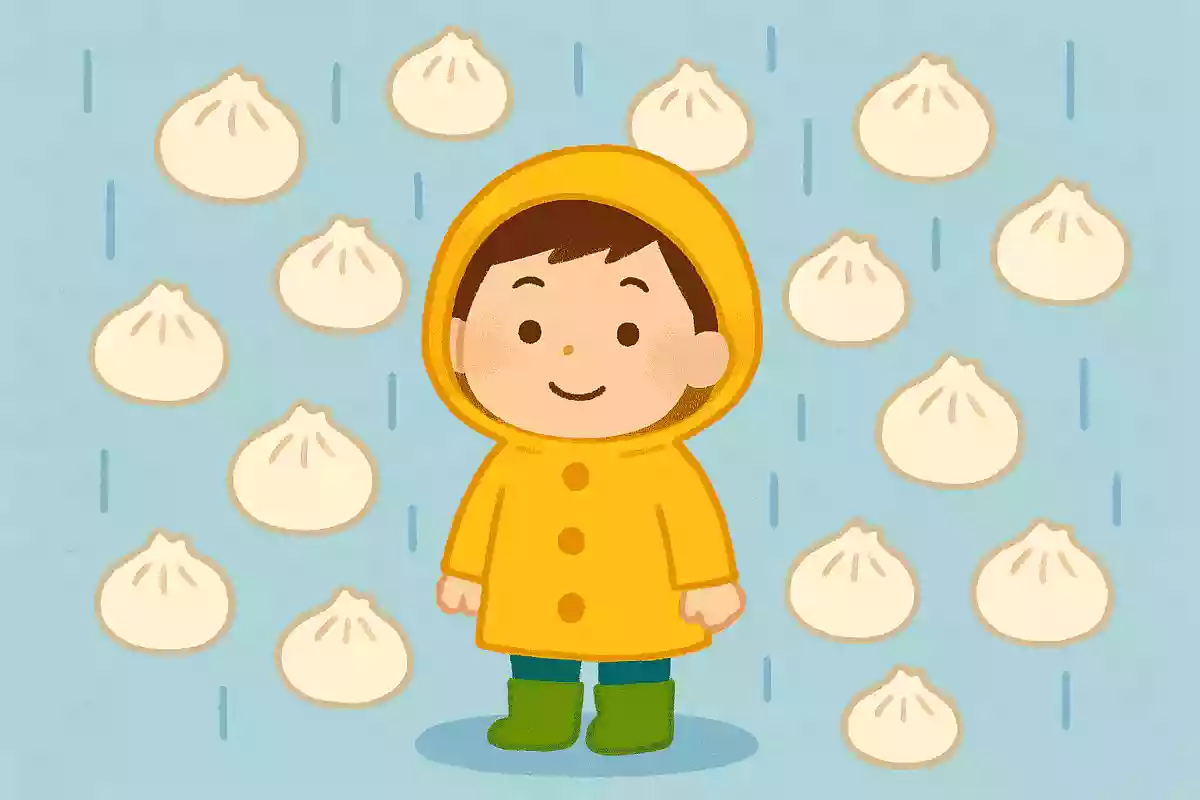
When you hear “the shape of a raindrop,” what shape do you imagine? Most people probably think of a teardrop shape, or perhaps a vertically elongated oval.
But in fact, the shape of a raindrop is like a steamed bun.
By “steamed bun,” I mean the kind you start craving in winter—the ones sold at convenience store entrances.
The reason for this shape is that as raindrops fall to the ground, air resistance flattens their bottom.
Besides “steamed bun-shaped,” it’s also sometimes described as “manju-shaped.”