

[For Seniors] Brain-training with winter-themed quizzes. Great for activities, killing time, and dementia prevention.


As the weather turns cold, we tend to spend more time indoors where it’s warm.
On such winter days, why not enjoy some fun moments with quizzes that anyone can enjoy, regardless of age, while engaging your mind? This time, we’re introducing quizzes that you can enjoy and learn from together with older adults, featuring tidbits about New Year’s traditions and the nature of winter.
By revisiting traditional wisdom and seasonal changes in quiz form, conversations that span generations will flow naturally.
How about taking on the challenge with your family or friends?
- [For Seniors] January Trivia Quiz & Fun Facts. Brain training with quizzes about New Year and winter.
- [For Seniors] Fun Quiz Questions That Will Liven Up December
- [For Seniors] Introducing Trivia Quizzes and Fun Facts About December
- [For Seniors] Brain-training quizzes for January: Let’s have fun with New Year and winter trivia
- [For Seniors] Enjoy the Cold Winter! Seated Activities You Can Do
- [For Seniors] Recommended Trivia Quizzes & Fun Facts for November
- [For Seniors] Have Fun with Wordplay Characters! A Collection of Funny Puzzles
- [For Seniors] Winter Haiku: Introducing Beautiful Masterpieces by Famous Haiku Poets
- [For Seniors] Trivia Multiple-Choice Quiz
- [For Seniors] Surprisingly Unknown! General Knowledge Quiz
- [For Seniors] Fun and Educational True-or-False Quiz
- [For Seniors] Fun and Lively! Recommended Quiz Questions
- [For Seniors] Fun Brain Training! February-Themed Quiz
[For Seniors] Brain training with winter-themed quizzes. Great for recreation, killing time, and dementia prevention (31–40)
Why are traditional New Year’s Osechi dishes typically seasoned on the sweet side?
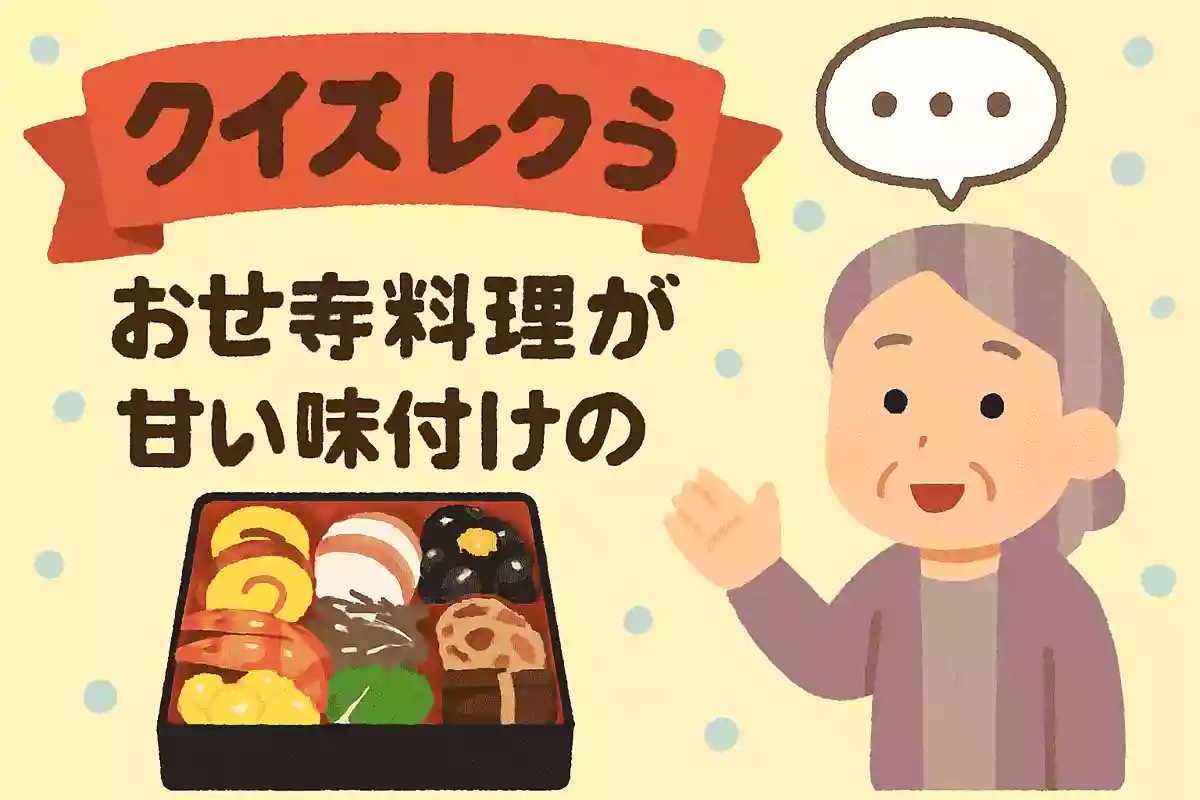
- By making it sweet, it makes you feel gratitude toward the gods.
- To improve shelf life
- When osechi was devised, sweet flavors were in vogue.
See the answer
To improve shelf life
Osechi ryori, the traditional New Year’s dishes, often include many sweet items like black soybeans, sweet chestnut paste (kuri-kinton), and datemaki. They became sweet to improve their shelf life. Since people prepare them at the end of the year so they won’t have to cook during the first three days of the New Year, they use plenty of sugar to keep the food from spoiling. Also, because sugar was a precious commodity at the time, it was used generously for the festive New Year occasion.

Why are kotatsu lights red?
- Because the inside of a dark kotatsu looks bright when it's red.
- Because setting it to red makes it easier to transmit heat inside the kotatsu.
- Because it looks warm when it's red.
See the answer
Because it looks warm when it's red.
They say the kotatsu light is red because it looks warm. A kotatsu uses infrared radiation. Infrared itself is invisible, but they colored the light red when selling kotatsu because it “somehow looks warm.” As a result, sales went up, so the lights inside kotatsu have remained red or other warm colors.
Why is it that snow doesn’t accumulate only on top of manholes?
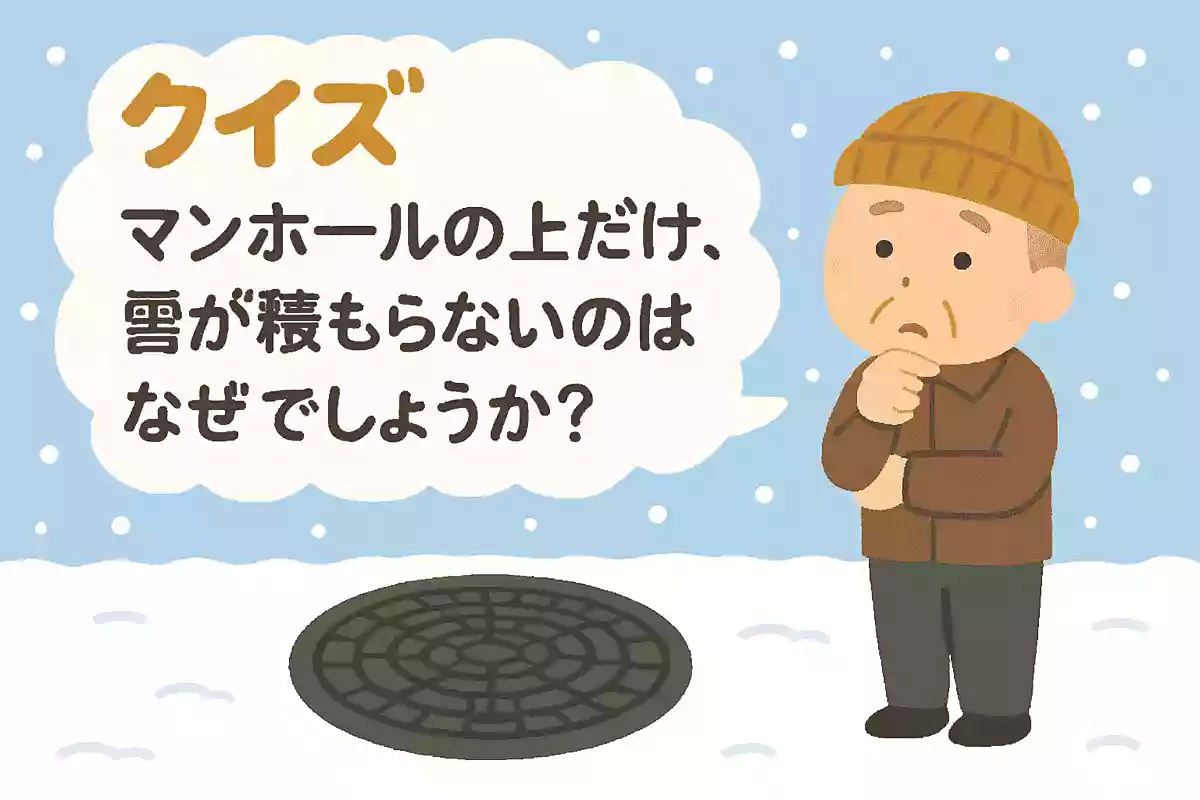
- Because it’s installed in a place where snow doesn’t tend to accumulate in the first place.
- Because wastewater from daily life is flowing
- Because it’s made of a material that melts like snow
See the answer
Because wastewater from daily life is flowing
Let's think about what's beneath a manhole cover. As you may know, sewage flows under manholes. Sewers carry warm wastewater from homes, such as from kitchens and baths. This heat warms the manhole cover and melts the snow, so it doesn't accumulate.
One thing to watch out for in winter is heat shock. What causes heat shock to occur?
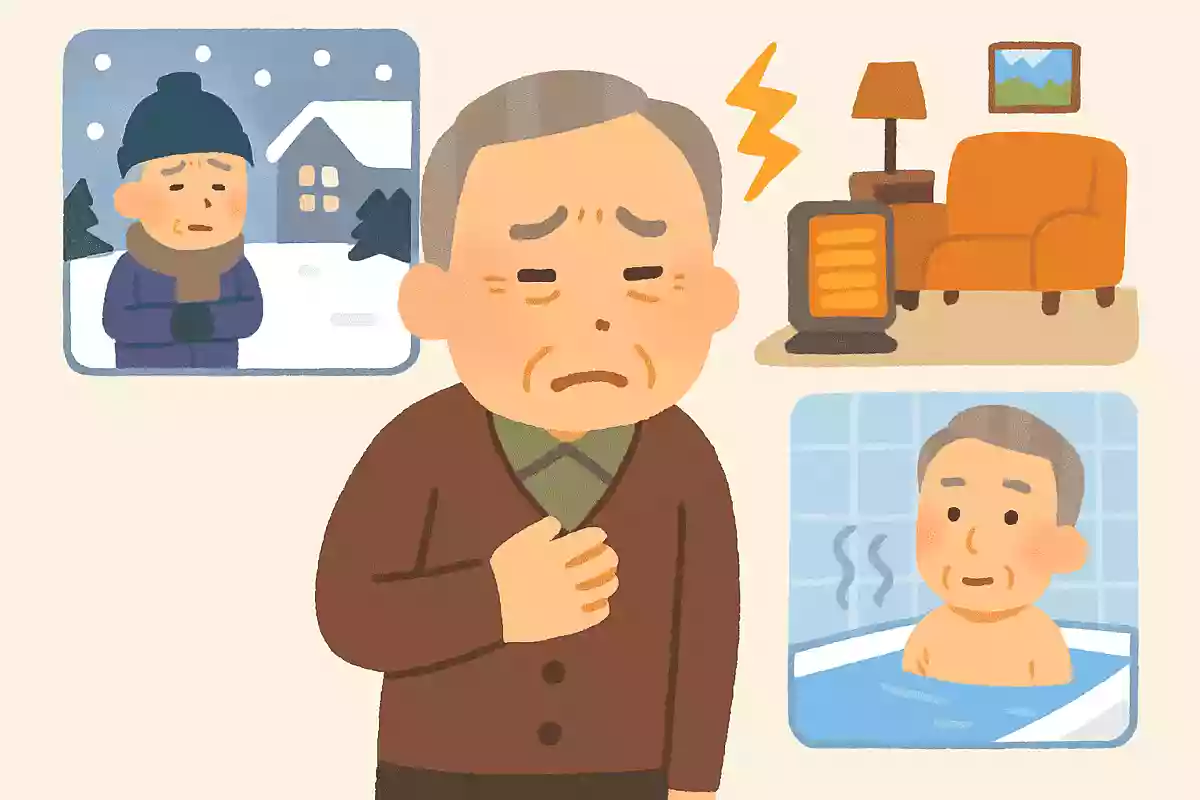
- a sudden change in temperature
- Missed or excessive medication intake
- fall
See the answer
a sudden change in temperature
Heat shock refers to health problems caused by sudden changes in temperature. Rapid temperature shifts can cause large fluctuations in blood pressure, placing strain on the heart and blood vessels and damaging the body. Major changes in blood pressure can also lead to conditions such as intracranial hemorrhage and aortic dissection. Older adults should be especially careful, particularly while bathing.
Which are the winter constellations?
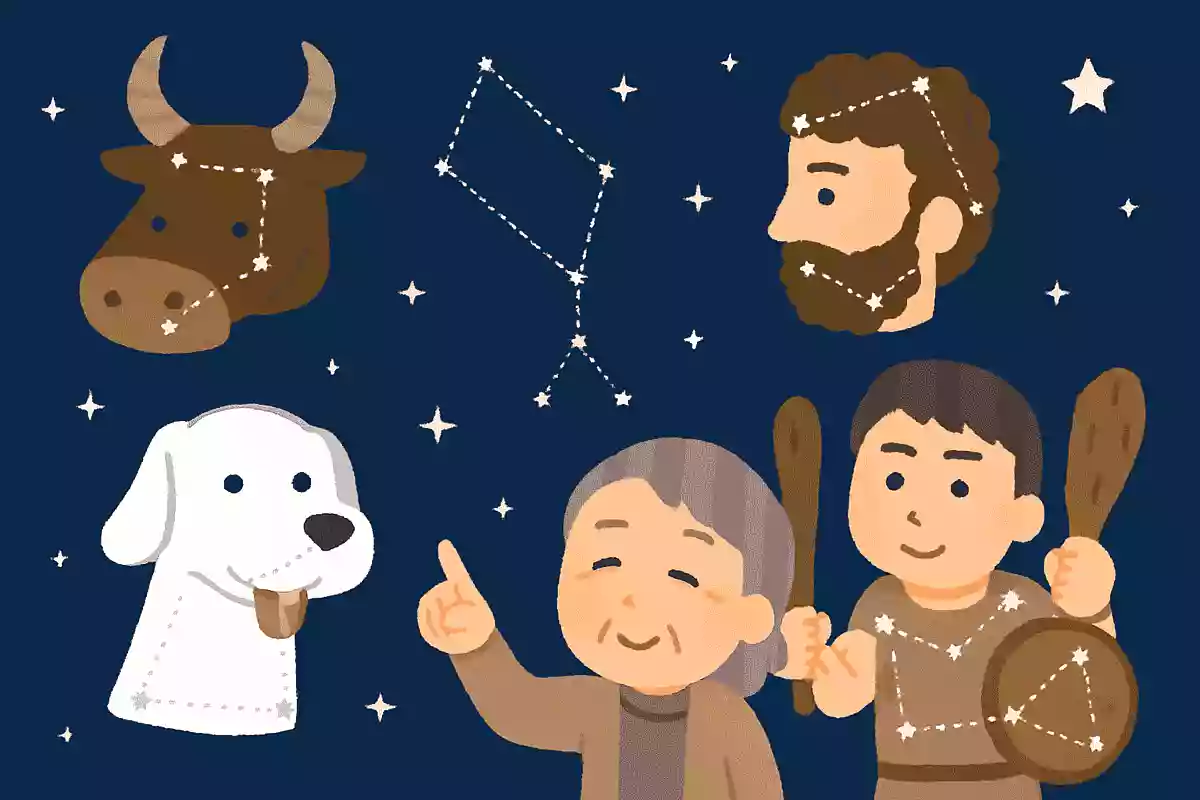
- Aquila (the Eagle constellation)
- Orion
- Triangulum
See the answer
Orion
Orion is one of the constellations that represent winter. If you connect Betelgeuse in Orion, Procyon in Canis Minor, and Sirius in Canis Major, they form a triangle. This triangle is called the Winter Triangle. Incidentally, the name Orion comes from Orion, the handsome hunter in Greek mythology.
[For Seniors] Brain training with winter-themed quizzes: great for recreation, passing time, and dementia prevention (41–50)
From which month to which month does winter span?
- From November to January
- December to February
- January to March
See the answer
December to February
In the Japan Meteorological Agency’s seasonal classification, winter runs from December to February. Incidentally, spring is from March to May, summer from June to August, and autumn from September to November. Winter spans the turn of the year, so when specifying which year a winter refers to, the year that includes January is used.
In winter, there are opportunities to see swans that overwinter in Japan. Why are swans able to float on water?

- Floating in the water, kicking legs
- There’s a spot on my foot where air goes in like a balloon.
- Because I’m applying oil to my body
See the answer
Because I’m applying oil to my body
People often say that swans and other waterfowl may look graceful, but beneath the surface they’re paddling hard. But what is it really like? In fact, swans and waterfowl have what’s called a uropygial (preen) gland near their rump that secretes oil. They spread this oil over their feathers to improve water repellency. What’s more, by coating their bodies with the oil, they also trap air, which serves like a flotation device.