

A selection of Takuro Yoshida’s moving masterpieces: timeless monuments of folk music that will never fade.

Takuro Yoshida has long been a driving force in Japan’s folk scene.
Even after stepping back from his career as an active artist in 2022, his songs continue to live on in the hearts of many.
In February 2026, there was delightful news: “Takuro Yoshida’s All Night Nippon Premium” was broadcast, and a concert—the first in seven years since 2019—was announced! What is the charm of Takuro’s sound that transcends generations? Through numerous masterpieces he created—such as “Let’s Get Married,” “Tabi no Yado,” and “Don’t Talk About Life”—we look back on the legacy he carved into the history of Japanese pop music.
- Takuro Yoshida Popular Song Rankings [2026]
- Carefully selected easy-to-sing songs by Takuro Yoshida! Enjoy classic folk song masterpieces
- [Touching the Heart] Timeless Ballad Masterpieces. A Collection of Unfading Classics and the Latest Songs [2026]
- Timeless classics only! Showa-era hit songs perfect for acoustic sing-alongs
- Kazuya Yoshii’s Most Popular Songs Ranking [2026]
- A roundup of debut songs by Japanese female artists from the 1970s
- A classic Japanese folk song passed down through generations of acoustic performances
- [Japanese Music] A Collection of Heart-Touching Hit Folk Songs from the 1970s
- A Collection of Heartfelt Guitar Love Songs [Great for Solo Acoustic Performances Too]
- [Showa Era] A roundup of nostalgic folk song classics and popular tracks you’ll want to sing at karaoke
- The fiery soul and the roots of folk felt in Tsuyoshi Nagabuchi’s classic song
- Inoue Yosui’s classic and popular songs
- Kazuyoshi Saito’s masterpieces and popular songs
A selection of Takuro Yoshida’s timeless masterpieces that strike the heart: an enduring monument of folk (31–40)
Which platform is for the train to Osaka?yoshida takurou
A medium-tempo tune whose lyrics, depicting the transience of life and love, gently sink in.
It’s included on the classic 1984 album FOREVER YOUNG.
While the song has a sentimental yet bright atmosphere that wraps around you, and it may seem very easy to sing, in reality its wide vocal range and sharp rises and falls in pitch make it quite challenging.
Even so, the confessional style of singing feels approachable, and with a bit of teamwork among fellow fans or friends, it can become easier and more fun to perform.
It’s a song that can strengthen bonds and inspire the feeling of taking a fresh step forward!

uniformyoshida takurou

These days, the term “mass employment” has completely disappeared, but back then they were called “golden eggs,” the people who supported Japan’s period of high economic growth.
The song is packed with Takuro’s signature style; the slightly lofty, looking-down perspective is part of his character, and the viewpoint is razor-sharp.
Since it’s a song from the early 1970s, the only day off was Sunday—a time that forged worker bees.
Luoyangyoshida takurou

It’s one of Takuro Yoshida’s signature songs, contrasting the image of contemplating life’s long journey with the scenery of the sun setting on the horizon.
It’s also memorable for its many arrangements, including the version used as the theme song for the drama “Ano Natsu ni Dakaretai.” The lyrics, written by Osami Okamoto, are said to be based on his real experiences, and you can feel the authenticity that comes from scenes he actually witnessed.
The gentle, deliberate delivery makes it easy to sing, and it’s important to cherish the words and perform them with care.

Hiroshima I always used to seeyoshida takurou

The lyrics to this song were not written by Takuro Yoshida; they were penned by the late Osami Okamoto, known for “Erimo Misaki.” I feel it was highly significant that Yoshida, who didn’t sing anti-war songs during the folk boom of the 1970s, released this song after entering the 1980s.
It might make it in time.yoshida takurou

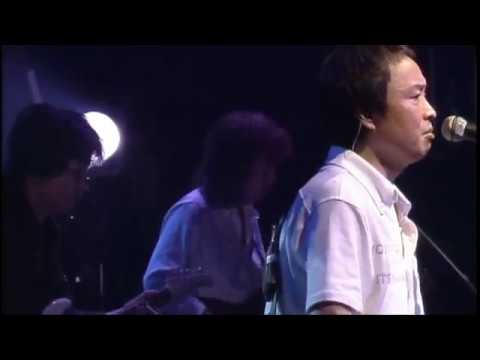
It’s probably a studio take video from the included DVD.
Only Takuro Yoshida appears on screen, passionately singing with a guitar in hand.
Because of that, there’s nothing extraneous—just the strength of the song itself—which is the appeal.
It’s aimed at fans, but it’s worth it.
A selection of Takuro Yoshida’s moving masterpieces. A timeless monument of folk music (41–50)
The sorrow left behindyoshida takurou

This was their sixth single, released in 1972.
It’s another quintessential folk song, and its melody—singing of life’s ups and downs and hardships—really sinks in; it’s an outstanding track.
I think people older than me will remember many things when they hear this song.
I also want today’s young people to listen to it.
Dancing Girlyoshida takurou

This song was released in 1979, so it was about 35 years ago.
Of course, it does feel dated, but it still conveys something like the glow of a classic folk song.
From the melody and arrangement, you could say it’s a song that appeals more to women than to men.