

Take on the Hyakunin Isshu quiz! Guess the lower verse from the upper verse!

Even if you want to memorize the Ogura Hyakunin Isshu and try competitive karuta or play casual karuta, many people probably feel it seems too difficult.
So in this article, we’re introducing a Hyakunin Isshu quiz perfect for anyone who wants to give karuta a try.
It’s a quiz where you hear the first half of a poem and guess the second half, letting you enjoy Japan’s traditional culture while having fun.
Why not imagine the scenes of the poems and enjoy the world of waka with friends or family? If the quiz helps you learn the Hyakunin Isshu, be sure to try competitive karuta too!
- [Playable from lower grades] Japanese language games and activities
- [For Elementary School Students] A Four-Choice Proverb Quiz Recommended for Kids
- Let's get excited with a two-choice quiz that everyone—from kids to adults—can enjoy!
- Where Do You Split It? A Word-Splitting Quiz That Even Elementary Schoolers Love
- Let's take on a four-choice quiz that everyone can enjoy together!
- The world’s fewest: A collection of one-stroke kanji. Learn them in a quiz format!
- How many can you guess? Intro quiz prompts that everyone can enjoy together
- A four-character idiom quiz that elementary schoolers will love! Questions become fun once you understand the meanings
- [For Elementary School Students] Brain Training with Kanji Decomposition Quiz! Guess the Complete Kanji from Its Parts
- [For Elementary School Students] Challenge! Kyoto Local Quiz
- Let's get excited with a New Year quiz! General questions about the Japanese New Year
- How many can you read? Test your trivia skills with a brain-twisting ateji quiz!
- [For Elementary School Kids] A New Year’s Quiz Everyone Can Enjoy! Learn surprising fun facts with multiple-choice questions
Take on the Hyakunin Isshu quiz! Guess the second verse from the first! (1–10)
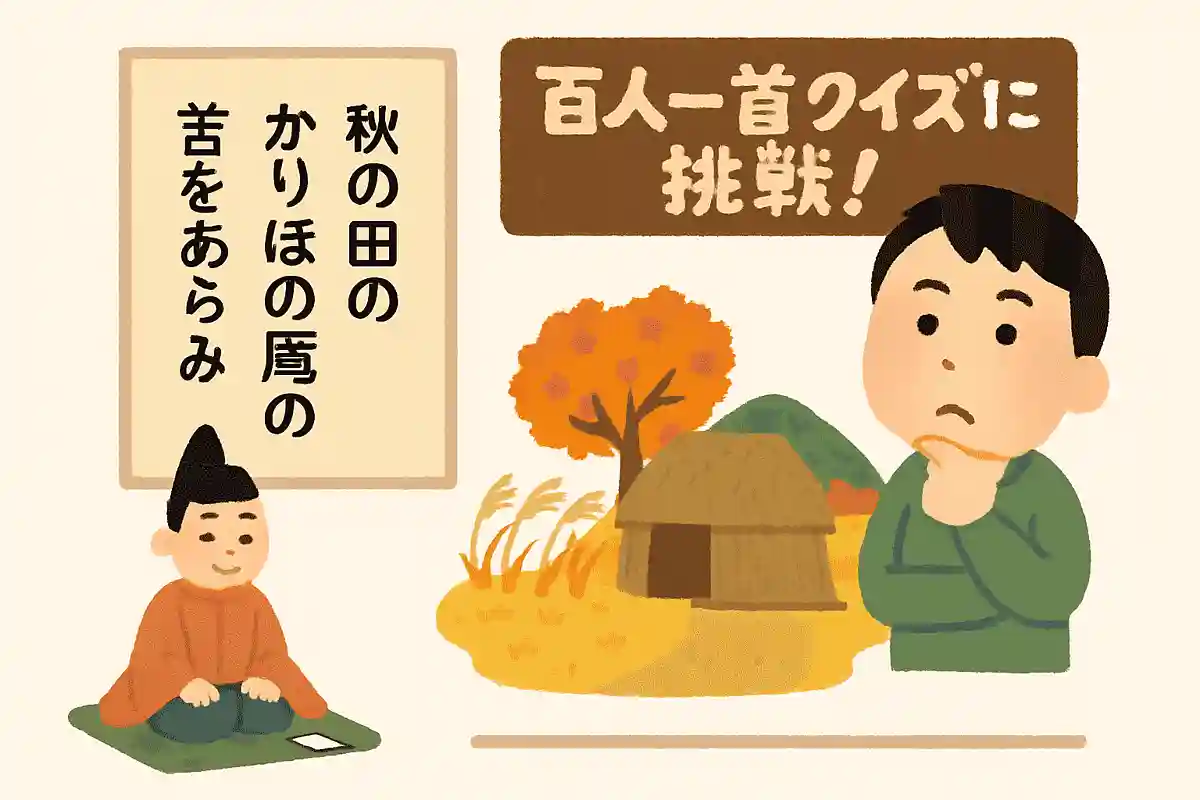
What is the lower verse that follows “In the autumn fields, in a temporary hut, the thatch is thin”?
- Everywhere alike, an autumn evening.
- How swiftly it flows—these autumn leaves cannot hold their course.
- My sleeves and hands grow wet with dew.
See the answer
My sleeves and hands grow wet with dew.
From life in nature, one can sense the atmosphere of the long autumn nights. It depicts the nights of farmers keeping watch over the rice fields, with the coarse weave of the temporary hut’s walls and sleeves getting wet from the night dew falling from the roof. It also shows farmers lodging in these roughly built shelters. The poem conveys a sense of respect for the farmers who grow and harvest rice, the staple food of the Japanese people.

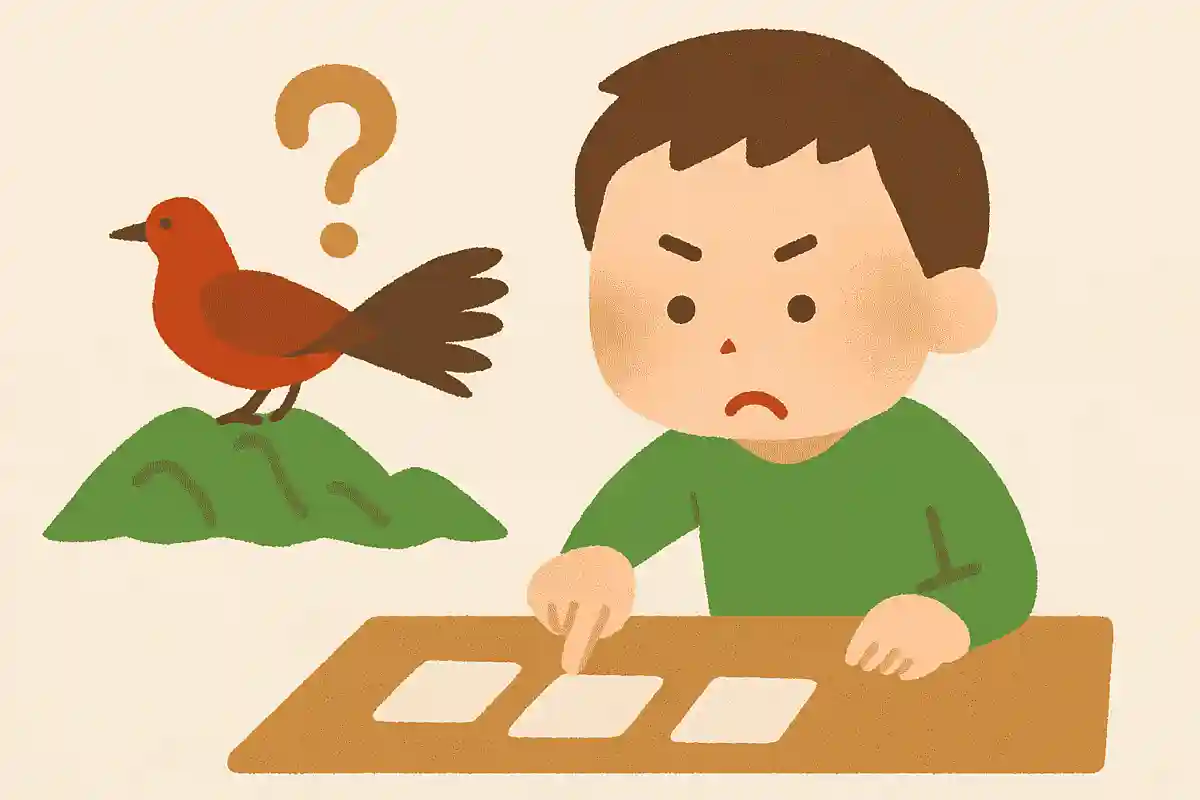
What is the second half (shimo-no-ku) that follows “Ashibiki no yamadori no o no shidario no”?
- In what part of the clouds might the moon be lodging?
- I gazed at the moon until I leaned to one side.
- On this long, long night, must I sleep alone?
See the answer
On this long, long night, must I sleep alone?
Nights spent with unreturned feelings for someone you love can feel long and lonely, can’t they? This piece expresses those drawn-out, aching nights through the long tail of a mountain pheasant. It also alludes to the species’ behavior: while a pair stays together during the day, at night they sleep apart on opposite sides of a valley.
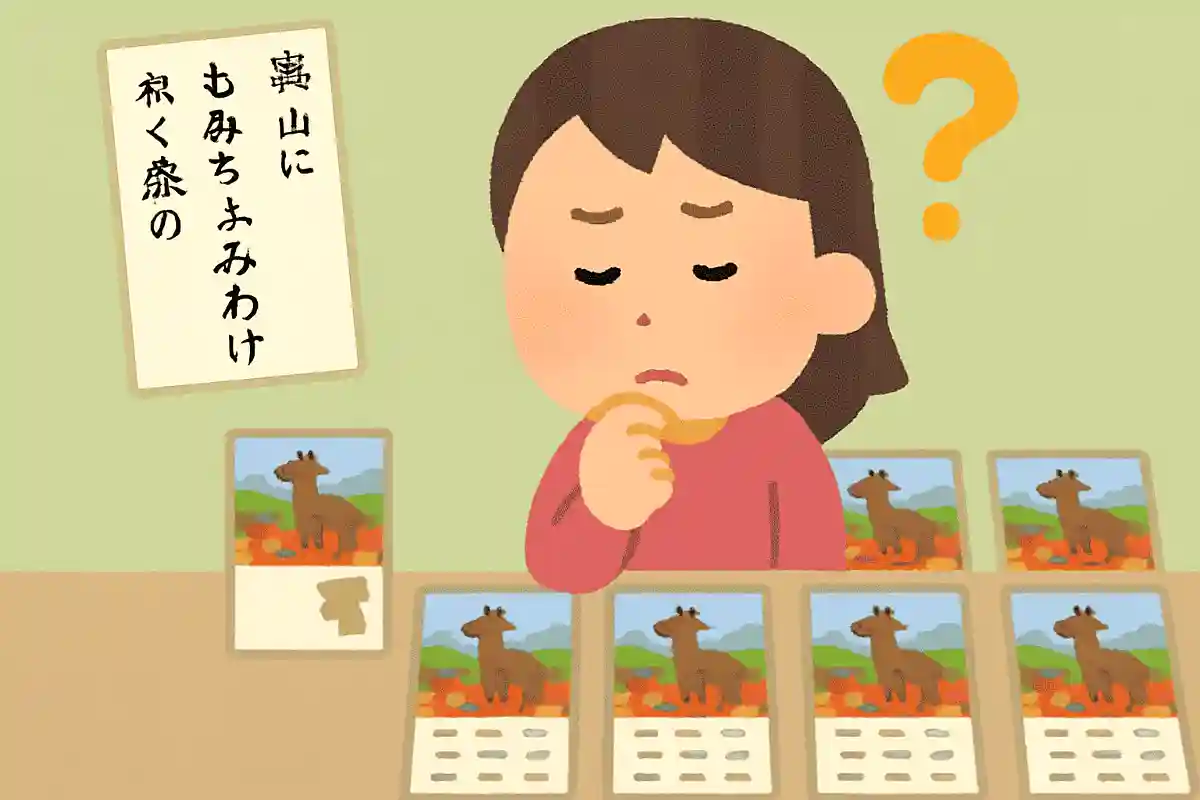
What is the second half of the poem that follows “In the deep mountains, pushing through the autumn leaves, a crying deer…”?
- Mist rises in the autumn dusk.
- When hearing their voices—how sorrowful autumn is.
- Even deep within the mountains, the deer are crying.
See the answer
When hearing their voices—how sorrowful autumn is.
On an autumn day when the once-beautiful autumn leaves are coming to an end, one can also feel a sense of loneliness. In those days, it was said that when autumn arrived, male deer cried out in search of females. Surrounded by a carpet of fallen leaves underfoot, hearing the calls of deer, the poet may have sung while feeling a longing for human company. It is a quiet mountain scene rich with the colors of fallen leaves, yet it also conveys loneliness. You can sense the delicate nuances of Japan’s changing seasons, too.
Take on the Hyakunin Isshu quiz! Guess the lower verse from the upper verse! (11–20)
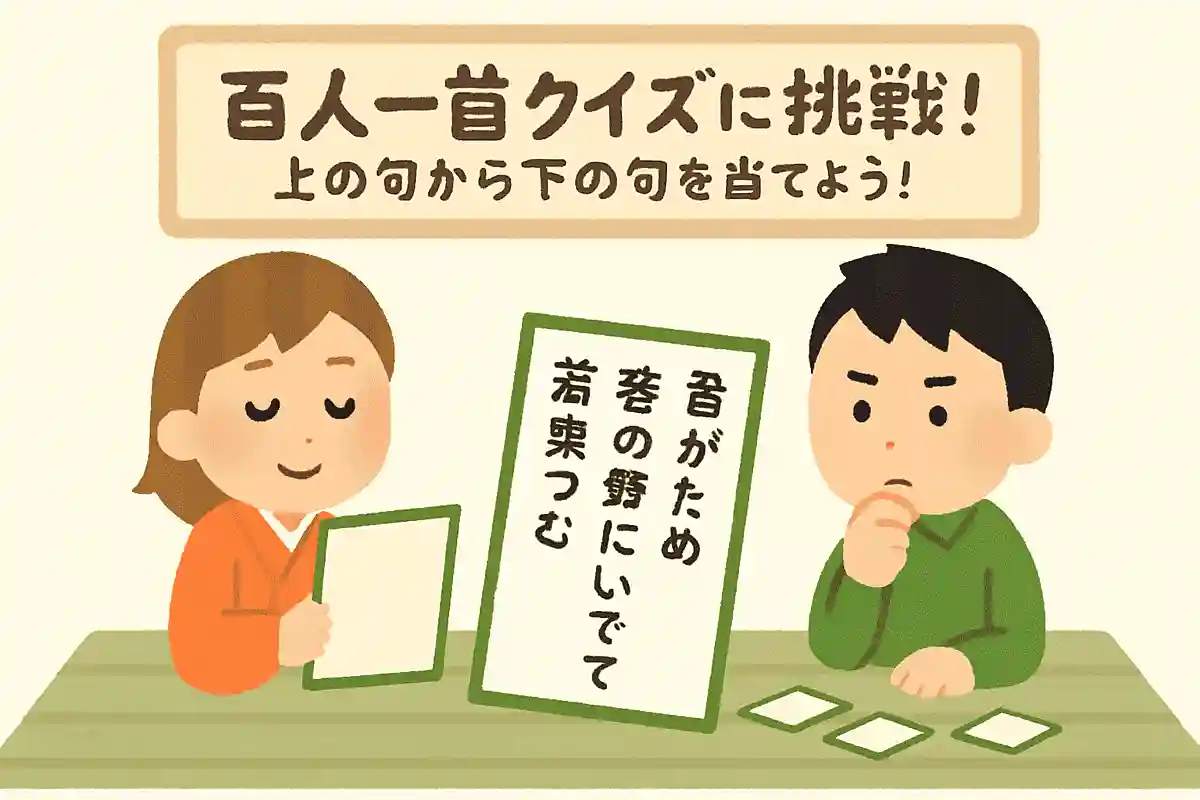
What is the concluding lower phrase that follows “For your sake, I go out to the spring fields to pick young greens”?
- White snow that touches the village of Yoshino
- On Fuji’s lofty peak, the snow keeps falling.
- Snow keeps falling upon my sleeves.
See the answer
Snow keeps falling upon my sleeves.
Emperor Kōkō, the 58th emperor, was a person of refined taste and is said to have been not only skilled in waka poetry but also a master of the koto. The phrase “in the spring fields” results in an extra syllable, but perhaps that very irregularity gives the poem a tighter rhythm. The blend of imagery and rhythm is truly lovely, isn’t it?

What is the concluding lower verse that follows “Ama no hara furisake mireba Kasuga naru”?
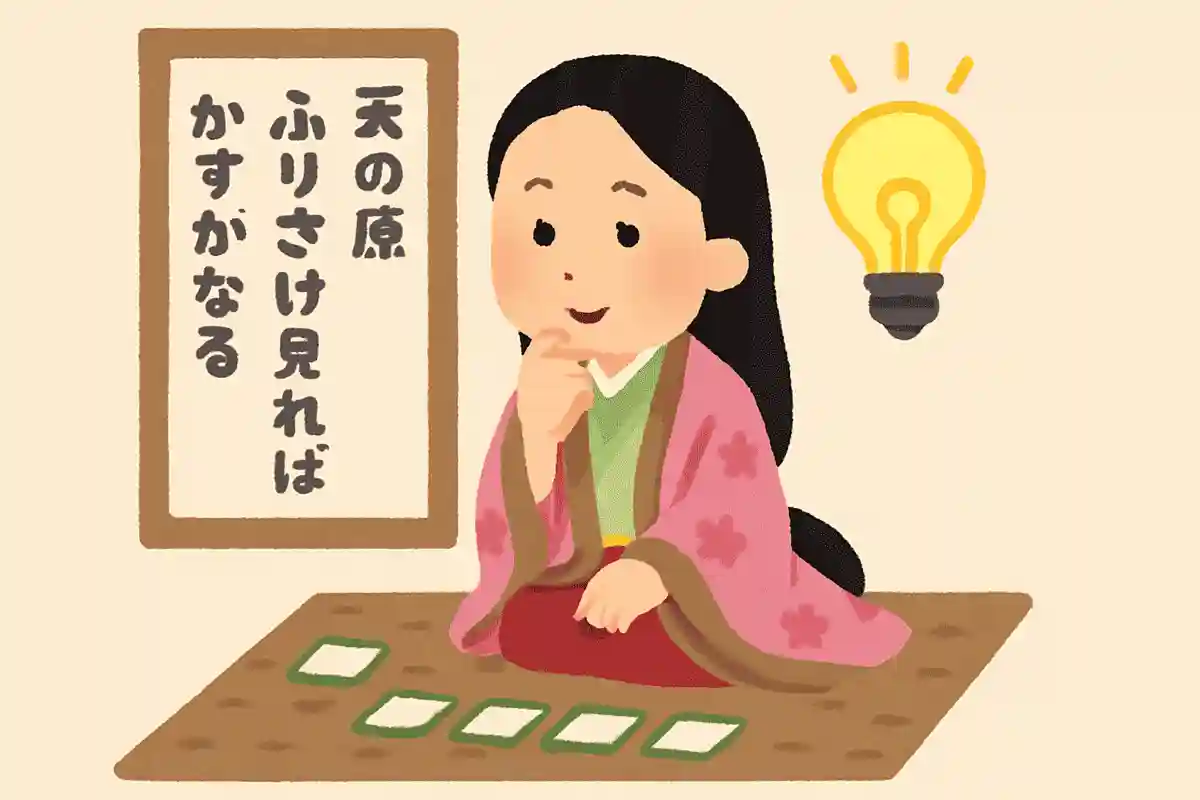
- Is it the moon that has risen over Mount Mikasa?
- That which drifts away is none other than myself.
- White waves offshore, mingling with the clouds.
See the answer
Is it the moon that has risen over Mount Mikasa?
Today, it’s easy to travel abroad, but there were times when returning to Japan was difficult. Abe no Nakamaro, who went to Tang China as a Japanese envoy, was so talented that it’s said he found it hard to come back to Japan. He is believed to have lived in Tang for about 30 years. When his return was finally set, he must have looked up at the moon and overlaid it with the moon he had seen in his homeland.
What is the latter half (shimo-no-ku) that follows “Chihayaburu kamiyo mo kikazu Tatsutagawa”?
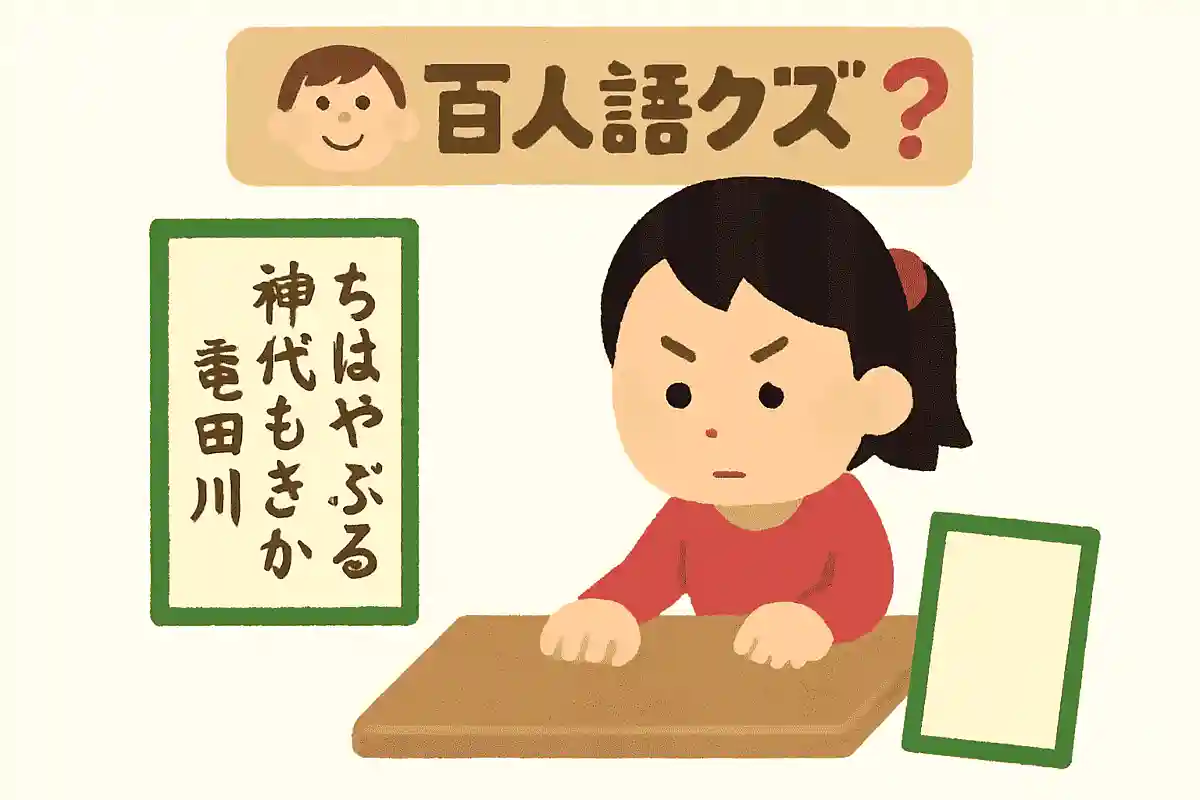
- When I hear their voices, autumn is sorrowful.
- That in deep crimson, water is bound together
- They are autumn leaves that cannot withstand the current.
See the answer
That in deep crimson, water is bound together
Among the poems in the Ogura Hyakunin Isshu, this verse is particularly famous and is said to have been composed by Ariwara no Narihira upon viewing a folding screen painting of autumn leaves. In later years, it even inspired a rakugo routine in which a know-it-all retiree gives an incorrect explanation of the poem—making it well-known in that context as well.
What is the concluding lower verse that follows “Having met again, before I could tell whether it was truly you or not”?
- I gazed at the moon until I leaned to one side.
- In what part of the clouds might the moon be lodging?
- The midnight moon has hidden behind the clouds.
See the answer
The midnight moon has hidden behind the clouds.
On a cloudy night, it can be difficult to see the moon without it being obstructed by the clouds. At times, you might catch a glimpse of a beautiful moon peeking through a break in the clouds. The way the moon appears like that is similar to meeting someone after a long time only to part again in haste. Describing a brief encounter between people through the image of the moon conveys both beauty and a touch of sadness.