

Self-directed study that impresses your teacher! Recommended independent science study ideas for 6th graders

Independent science study can be a fun adventure for kids! Here, we introduce recommended independent science study themes for sixth graders that might even earn praise from teachers.
When you explore freely, learning becomes much more enjoyable.
Observe the nature around you, try simple experiments, and experience the joy of discovering all kinds of things.
As your interest in nature and science grows, it’s also fun to share what you’ve learned with friends and family.
Please use this as a reference and let’s jump together into the exciting world of science!
- Recommended for 6th graders! A collection of easy self-study ideas you can enjoy while learning
- Self-study that impresses your teacher! Recommended science self-study ideas for 5th graders
- Independent study that impresses your teacher! Science self-study ideas recommended for third graders
- For 6th Graders: Unique and Fun Ideas for Independent Research Projects
- Self-study that teachers will praise! Recommended independent science study ideas for 4th graders
- Recommended for elementary students! A collection of fun craft ideas to make for 6th graders
- Recommended for 5th graders! A collection of easy self-study ideas you can enjoy while learning
- Recommended for 3rd graders! A collection of easy self-study ideas you can try
- Recommended for elementary school students' independent research! Experiment and observation ideas using everyday materials
- Recommended for 4th graders! A collection of easy self-study ideas to try
- Recommended Independent Research Projects for 5th Graders [Elementary School Students]
- Recommended for elementary school students! Science fair topics & craft ideas
- Third graders will be hooked! A collection of science project ideas using everyday materials
Self-study that earns praise from your teacher! Recommended independent science study ideas for 6th graders (91–100)
Tofu making

Here’s how to make tofu, a beloved Japanese food that’s delicious both on its own and cooked.
Like a science experiment, you’ll learn why tofu solidifies while also enjoying the finished homemade tofu.
Heat soy milk in a pot to 75°C (167°F), then add nigari (magnesium chloride) and stir.
Cover and let it sit to steam for about 10 minutes, then transfer the solids into a mold lined with cloth.
Place a weight on top to remove excess moisture, then soak the block in water set in a bowl for about 20 minutes.
Your tofu is ready.
It’s also fun to make while learning that the liquid solidifies because the magnesium in the nigari binds with the proteins.

Observation of vegetable DNA
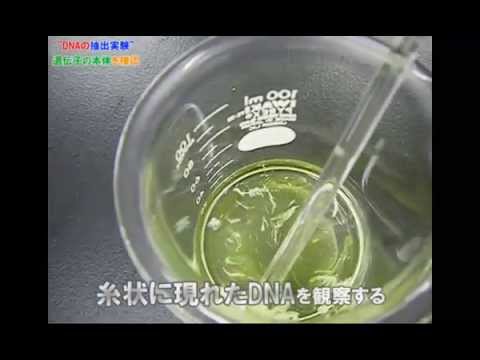
How about extracting and observing the DNA contained in vegetables? You might wonder, “Is DNA really that easy to observe?” but if you follow the steps, you’ll find it’s surprisingly simple.
All the necessary materials are easy to find in everyday life, so it should be approachable.
Let’s not only document the process step by step until we observe the DNA, but also research and summarize in a report what role each material plays.

Let’s make a battery-powered train

A great science project we recommend for kids who are good at science is the battery-powered coil train.
What you need: 30 meters of copper wire, a AAA battery, neodymium magnets, and a pipe cleaner to wrap with wire and make into a coil.
That’s all you need, and the method is simple: wrap the wire around the pipe cleaner over and over, like making a long spring, to create the copper-wire coil—the track.
Next, attach neodymium magnets to the ends so that they repel each other, place a AAA battery between them, and you’ve made the train.
Put the train into a looped coil, and it will run endlessly until the battery runs out.
It’s fun, easy, and highly recommended.

Observing various things under a microscope

It’s also fun to observe various things with a microscope.
First, try looking at whatever comes to mind under the microscope.
You might find it more engaging to examine familiar items, like your own hair or snacks you usually eat.
Just observing is fine, but digging deeper and doing a bit of research makes it even more interesting.
Compare, for example, a guardian’s hair or different kinds of snacks.
Then think about why they’re different.
By the way, microscopes for children can be purchased for around 2,000 yen.

Clean a 10-yen coin using food

Sometimes you come across a shiny coin, right? Why does that make us feel happy? Let’s try making a “gleaming 10-yen coin” while experimenting! It wouldn’t be very interesting to just use detergent to make a 10-yen coin shiny, so we’ll conduct our experiment and research under the constraint of using only the power of foods like lemons or natto.
We’ll categorize foods—citrus, fermented foods, salty foods, etc.—polish 10-yen coins with them, and sometimes leave them to sit, then compare how shiny the coins become.
It takes more time than making something, so it’s suited for people who enjoy careful, patient observation!