

[Children’s Songs of Autumn] Autumn songs, school songs, and traditional children’s rhymes. A collection of classic pieces to sing in autumn.


We’d like to introduce autumn nursery rhymes, songs, and traditional children’s songs that can be enjoyed by both kids and adults.
When you think of autumn, what comes to mind?
Pine cones, acorns, autumn leaves, moon-viewing… The more you think about it, the more images pop up, don’t they?
In this article, we’ve gathered wonderful classics that make autumn scenery unfold right before your eyes.
From gentle, soothing pieces unique to autumn that sink into the heart, to hand-play songs and traditional children’s tunes you can play and sing along with—these are all famous songs that let you experience autumn in many ways.
Be sure to listen together, sing along, and immerse yourselves in “autumn.”
- [For Seniors] Autumn Songs That Touch the Heart: From Nostalgic Children’s Songs and School Songs to Showa-Era Kayōkyoku
- [Autumn Songs] Songs of autumn. Classic tracks and popular favorites you’ll want to listen to in the fall.
- Song of the Maple Leaves. An autumn children’s song/nursery rhyme/folk song
- Recommended children's songs and hand play songs for October! Music time in childcare that feels like autumn.
- [2026] Songs to listen to in November: masterpieces of late autumn, autumn songs.
- [Childcare] Recommended songs and nursery rhymes for November: Fun autumn fingerplay songs
- A collection of classic nursery rhymes and hand-play songs for September! Enjoy autumn with your child through songs.
- [2026] Autumn Songs for People in Their 60s: Classic Tracks Perfect for the Deepening Fall
- [For Seniors] Classic Autumn Songs to Sing in November: From Children’s Songs to Popular Enka and Kayōkyoku
- Children’s songs and nursery rhymes about the moon
- Recommended autumn songs for people in their 90s: A collection of Showa-era autumn tunes
- Popular Autumn Songs Ranking [2026]
- [Autumn Classics] Japanese Songs to Listen to and Sing in October: A Curated Selection of Beloved, Heartfelt Hits
[Autumn Children's Songs] Autumn songs, school songs, and nursery rhymes. A collection of classic songs you’ll want to sing in autumn (21–30)
Harvest MoonSakushi: Noguchi Ujo / Sakkyoku: Motoori Nagayo

Looking up at the Harvest Moon and feeling a swell of poignant loneliness—that is the essence of “Jūgoya Otsukisan.” The protagonist has no mother, the grandmother who raised them has left their side, and even their younger sister has been married off.
Alone, the protagonist gazes at the beautiful harvest moon and sees their mother’s figure reflected in it, and the loneliness wells up.
If you, too, find yourself viewing the Harvest Moon alone for whatever reason, why not listen to this song and project the person you long to see onto the moon?

Waltz of the Maple Leavessakushi: kudou naoko / sakkyoku: zuekiran naoko

It’s a charming song that conjures up images of maple leaves twirling and dancing in the wind.
The world that poet Naoko Kudo depicts, with personified maple leaves, is truly wonderful.
Its calm, warm melody gently cradles the poetic sentiment.
This piece is included in the choral collection “Giniro Jikan” and is loved in many settings, such as being performed in children’s song contests.
It would be lovely to hum it while sitting on a park bench on an autumn day, or to sing it together with family and friends.
[Children’s Songs of Autumn] Autumn songs, school songs, and nursery rhymes. A collection of classic tunes to sing in autumn (31–40)
wild gooseSakushi sakkyoku: Taki Rentarō

“Wild Geese,” a composition by Rentaro Taki themed around the geese that come to Japan from autumn to winter, vividly portrays the emotional scene of flocks moving across a moonlit night sky.
It’s a charming piece perfectly suited to autumn, the season of the Harvest Moon.
It is said that Taki composed this work while in Toyama, inspired by the sight of geese flying through the night sky.
In this brief piece, the beauty of a Japanese moonlit night is captured to the fullest.
As the heat fades from mornings and evenings in autumn, why not listen to this piece and once again savor Japan’s distinctive elegance?
Child of AutumnSakushi: Satou Hachirou / Sakkyoku: Suehiro Yasuo

Another autumn masterpiece by poet Hachiro Sato—also known for writing the lyrics to the children’s song Little Autumn Found—is Aki no Ko (Child of Autumn).
The song appeared in 1954 in an article titled “New Children’s Songs Almanac” in the magazine Asahi Graph.
The composer was Yasuo Suehiro, who was both a composer and a fisheries scientist.
Its lyrics, which evoke autumn landscapes and scenes of the era, combined with a gentle melody, give the song a melancholy sound while also conveying a warm, embracing feeling.
It’s a perfect piece for an autumn evening, especially when you want to calm your mind.

World of StarsSakushi: Kawaji Ryūko / Sakkyoku: Konvāsu

In autumn, when the air turns dry and the sky grows clearer, the stars in the night sky look even more beautiful than in summer.
This sense of romance in autumn’s starry skies is captured in “Hoshi no Sekai” (“The World of Stars”).
Originally a hymn composed by Converse, it has various lyric versions in Japan, including the wedding standard “Itsukushimi Fukaki” (“What a Friend We Have in Jesus”) and “Hoshi no Yo” with lyrics by Sugitani Daisui.
This “Hoshi no Sekai” is often included in music classes, so many people may already know it.
It’s a song you’ll want to listen to quietly while gazing at the stars.
a maple leafSakushi sakkyoku: Sasaki Nobutsuna
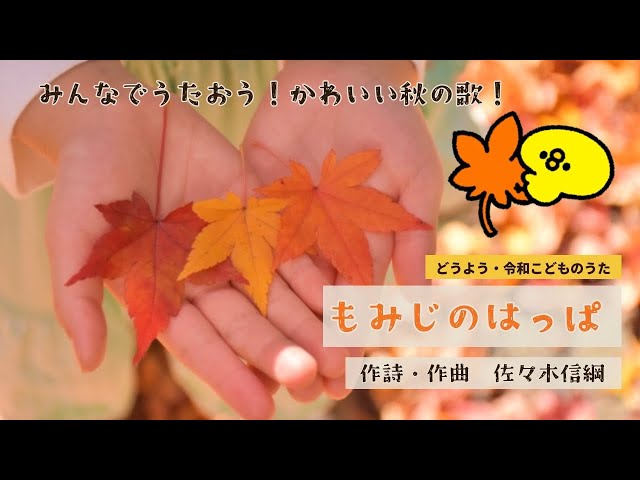
This is a charming children’s song written and composed by Nobutsuna Sasaki.
It depicts a heartwarming scene that brings to mind a child delighting in comparing fluttering, falling leaves with their own hands.
Its gentle melody makes it easy for children to sing, and the lyrics are filled with words that warm the heart.
It’s perfect not only for singing in preschools and kindergartens, but also for humming along with your child on an autumn stroll.
Be sure to sing together and enjoy the colors of the season.
Wild geese migrate.Suginami Jidō Gasshōdan

This is a Ministry of Education song published in 1912 in “Elementary School Songs: For the Third Grade.” Unfortunately, the lyricist and composer are unknown.
It vividly captures the moment in autumn when wild geese migrate, with a melody that matches the poetic world and overflows with literary sentiment.