

J.S. Bach | Introducing Famous and Representative Works

The songs that are popular today—across not only classical music but also pop and jazz—are deeply influenced by past composers.
Among them, classical music is often called the foundation of music, and it’s no exaggeration to say that Johann Sebastian Bach, known as the “Father of Music,” was one of the figures who laid that very groundwork.
Bach’s music, while carrying a religious hue, is characterized by philosophical depth and intricately refined structure down to the finest details, with melodies of exceptional beauty.
Please take a look into the world of Johann Sebastian Bach, one of the greatest composers in history.
- J.S. Bach | Introducing Famous and Representative Works
- J.S. Bach Popular Songs Ranking [2026]
- [Masterpiece Classics] A special showcase of gem-like masterpieces so beautiful they’ll move you to tears
- Handel’s Masterpieces | A Comprehensive Introduction to His Popular Works
- [Baroque Music] A Curated Selection of Timeless Masterpieces and Famous Works
- Vivaldi’s masterpiece. Popular classical music.
- Today's Classics: Recommended classical music and great performances to listen to today
- Mozart: An Introduction to His Signature and Popular Works
- Popular classical piano pieces. A collection of masterful performances by Japanese pianists.
- Cool classical masterpieces. Recommended classical music.
- [Quartet] Masterpieces and Popular Pieces for String Quartet
- François Couperin Popular Songs Ranking [2026]
- Masterpieces of Ballet Music: Introducing Classic Favorites
J.S. Bach | Introducing Famous and Representative Works (171–180)
St Matthew PassionJ.S.Bach

A work set against the Passion of Christ.
It was premiered in 1727 at St.
Thomas Church.
Although Bach’s legacy was largely forgotten after his death, in 1829 Mendelssohn performed this piece, bringing it to wide public attention.
Goldberg VariationsJ.S.Bach
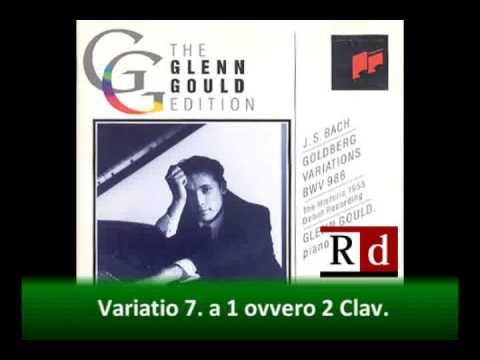
Bach himself titled the work “Aria with diverse variations for a harpsichord with two manuals.” Glenn Gould’s performances of this piece are rendered with his own unique interpretation, diverging from traditional ornamentation practices.
Yet their ineffable allure has become legendary in the classical world, attracting fans around the globe.
There are recordings from 1955 and 1981, and the striking contrast between them—almost as if played by entirely different pianists—is one of the key points to listen for.
Jesu,Joy of Man’s DesiringJ.S.Bach

This commercial is famous for the phrase, “Ton ton ton ton, Hino’s two-ton!” Starring Lily Franky and Shinichi Tsutsumi, it’s always comical and fun.
This time, the two become ninjas, sneak into a castle, and get discovered by the lord.
And then what starts playing is Bach’s “Jesu, Joy of Man’s Desiring.” Isn’t that such a hilarious contrast? (lol)

Passacaglia No. 2J.S.Bach

J.S.
Bach’s Passacaglia and Fugue was originally composed for organ around 1710, but the orchestral arrangement is also a classic recording.
This link features a performance arranged and conducted by Stokowski.
There are many orchestral arrangements of Bach’s works, and it is also fascinating how the character of the same piece can change considerably depending on the arranger.
Toccata and Fugue, BWV 565J.S.Bach

It’s probably only in Japan that people nationwide have been familiar with this piece since kindergarten.
Even for a work that showcases the brilliant playing of the organist, Bach could never have imagined it would be turned into a song about milk coming out of your nose in a far eastern country.
J.S. Bach | Introducing Masterpieces and Signature Works (181–190)
Brandenburg ConcertoJ.S.Bach

It consists of six pieces.
It was composed around 1718–1721 and dedicated to Christian Ludwig, Margrave of Brandenburg, in Germany.
In this video, instruments from earlier times are used, which differ somewhat from modern orchestral instruments.
Perhaps the most commonly heard are No.
1 and No.
5.
Toccata and FugueJ.S.Bach

Toccata and Fugue is a solo organ piece composed by the German composer Johann Sebastian Bach in the early 18th century.
You may have heard it in commercials or parody songs—it’s a piece that feels as if the sheer shock of a moment has been turned directly into melody.
The introduction is especially famous, but the later sections are also compelling, making full use of the organ’s mournful, resonant timbre and its wide range.
If you get the chance, try listening to the whole piece from start to finish!
