

Berlioz’s famous piece. Popular classical music.

Louis-Hector Berlioz, a master of Romanticism whose portrait once appeared on the French 10-franc note.
Among the works Berlioz created—led by the Symphonie fantastique—are many pieces inspired by literary masterpieces.
He was also a composer who anticipated the direction of Romantic music through large-scale expansions of instrumentation and a richly colorful orchestral technique.
This time, I’ve listed the works that became the starting point of Berlioz’s artistry, dividing them by movement.
I hope you’ll give them a listen.
- [Masterpiece Classics] A special showcase of gem-like masterpieces so beautiful they’ll move you to tears
- A masterpiece by Franck. Popular classical music.
- [Orchestra] Introducing famous and popular pieces
- Mussorgsky’s masterpiece. Popular classical music.
- Pick up Beethoven’s famous and representative works!
- Masterpieces of the Romantic Era: A sweeping introduction to soul-stirring, celebrated gems!
- A masterpiece by Franz Liszt. Popular classical music.
- Classical Masterpieces: Recommended Works You Should Hear at Least Once
- Impressionist Music: A Comprehensive Introduction to Masterpieces of the Impressionist Movement That Enliven Classical Music History
- Classical masterpieces. Recommended classical music.
- A masterpiece by Alexander Borodin. Popular classical music.
- Cool classical masterpieces. Recommended classical music.
- Masterpieces of the bolero. Recommended popular pieces in bolero form and outstanding performances.
Berlioz’s masterpieces: Popular classical music (11–20)
Symphonie Fantastique, Movement VLouis Hector Berlioz

It’s “Dream of a Witches’ Sabbath,” the fifth movement from Symphonie fantastique, Op.
14.
This is the final movement of the work, and in it the Gregorian chant Dies irae is used as a principal theme.
The character of the music is, as the title suggests, heavily fantastical, depicting the ghosts gathering for the funeral of the protagonist—the “young musician of morbid sensitivity and fiery imagination” who dies in the fourth movement.
This movement is also famous for its use of the col legno technique near the end, where the players strike the strings with the wooden part of the bow.
It’s one of the representative works that feature col legno.
To know what it sounds like, give it a listen!
Overture ‘Waverley’, Op. 1Louis Hector Berlioz

Among Hector Berlioz’s works, this piece stands as a foundational one.
Inspired by a novel by Walter Scott, the overture vividly evokes the story’s world through dynamic musical expression.
Marked by bold orchestration and dramatic development, it showcases the brilliance of the young Berlioz.
At its premiere in May 1828, it received mixed reactions, but today it is highly regarded as an important early work by Berlioz.
Recommended for those interested in Romantic-era music or the relationship between literature and music.
From the Grand Symphony of Requiem and Victory, Movement ILouis Hector Berlioz

This is a grand work imbued with requiem-like remembrance and admiration for the heroes of the French Revolution and the Napoleonic Wars.
Composed in three movements, it portrays both sorrow and triumph.
The first movement, a solemn funeral march, begins with a snare drum rhythm and unfolds in a call-and-response with the brass.
In the second movement, a solo for tenor trombone leaves a strong impression.
The final movement adds brilliant fanfares and chorus, becoming a festive celebration of victory.
Strongly reflecting the characteristics of Romantic music, the piece captivates with the powerful expression of its large orchestral forces.
It is recommended for those interested in music from the era of the French Revolution and for anyone who enjoys grand orchestral works.
From Dramatic Symphony ‘Romeo and Juliet’, Part IILouis Hector Berlioz

An innovative symphony that portrays Shakespeare’s tragedy through music.
The second part, scored for orchestra alone, vividly depicts Romeo’s solitude and the Capulets’ feast.
Hector Berlioz completed the work in 1839, pursuing musical expression that went beyond conventional operatic methods.
Notably, in the “Love Scene,” he makes a bold attempt to depict the lovers’ feelings using instruments alone, without any singing.
Bringing a fresh breeze to Romantic-era music, this work is recommended for those who want to experience new possibilities in classical music.
From Symphonie fantastique, Movement IIILouis Hector Berlioz
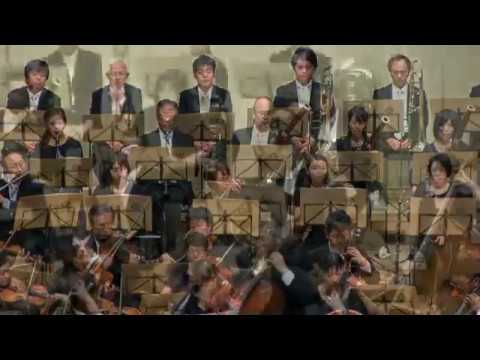
It is “Symphonie fantastique, Op.
14: III.
Scène aux champs (Scene in the Fields).” In this work, Hector Berlioz uses a melody representing the woman with whom he fell in love in various scenes.
The third movement was not highly regarded and was extensively revised in 1831, the year after the premiere.
This movement also contains pastoral elements reminiscent of Part III of Rossini’s William Tell Overture set in the Alps, and its principal theme appears in Berlioz’s own works such as the Mass in C (Messe solennelle), which he had planned to discard, as well as in other pieces—suggesting it was one of his favorite phrases.
From the Requiem, No. 10: Agnus DeiLouis Hector Berlioz

The 10th movement of Louis-Hector Berlioz’s Requiem is a masterpiece of sacred music filled with deep prayer and consolation.
Its lyrics, which implore God’s mercy, are beautifully harmonized with music that is serene and majestic.
Composed in 1837, this movement is characterized by a delicate dialogue between orchestra and chorus that speaks powerfully to the listener’s heart.
Its universal theme—praying for the repose of the souls of the dead—transcends religion and will resonate with many.
It is a highly recommended piece for those seeking comfort or who are interested in grand sacred music.
A masterpiece by Berlioz. Popular classical music (21–30)
Erlkönig (arranged by Hector Berlioz)Franz Schubert

The sound of a horse’s hooves racing through the darkness of a deep forest is vividly portrayed by the orchestra’s powerful resonance.
The son’s anxious cries, the father’s desperate encouragement, and the eerie, seductive whispers of the Erlking are all masterfully expressed through the orchestra’s varied timbres, stirring the listener’s heart.
In the arrangement crafted by Berlioz around 1860, the flute voices the Erlking’s honeyed enticements, while the strings generate the sensation of a galloping horse, further heightening the tension inherent in the original.
With its universal themes of parental love and the inevitability of death, this work—through its dramatic development and rich musical expression—is highly recommended for those seeking narrative-driven music or wishing to savor the full allure of orchestral sound.