

Berlioz’s famous piece. Popular classical music.

Louis-Hector Berlioz, a master of Romanticism whose portrait once appeared on the French 10-franc note.
Among the works Berlioz created—led by the Symphonie fantastique—are many pieces inspired by literary masterpieces.
He was also a composer who anticipated the direction of Romantic music through large-scale expansions of instrumentation and a richly colorful orchestral technique.
This time, I’ve listed the works that became the starting point of Berlioz’s artistry, dividing them by movement.
I hope you’ll give them a listen.
- [Masterpiece Classics] A special showcase of gem-like masterpieces so beautiful they’ll move you to tears
- A masterpiece by Franck. Popular classical music.
- [Orchestra] Introducing famous and popular pieces
- Mussorgsky’s masterpiece. Popular classical music.
- Pick up Beethoven’s famous and representative works!
- Masterpieces of the Romantic Era: A sweeping introduction to soul-stirring, celebrated gems!
- A masterpiece by Franz Liszt. Popular classical music.
- Classical Masterpieces: Recommended Works You Should Hear at Least Once
- Impressionist Music: A Comprehensive Introduction to Masterpieces of the Impressionist Movement That Enliven Classical Music History
- Classical masterpieces. Recommended classical music.
- A masterpiece by Alexander Borodin. Popular classical music.
- Cool classical masterpieces. Recommended classical music.
- Masterpieces of the bolero. Recommended popular pieces in bolero form and outstanding performances.
A masterpiece by Berlioz. Popular classical music (21–30)
Requiem, No. 4: King of Terrible MightLouis Hector Berlioz

Requiem (Grande Messe des morts), Op.
5, No.
4: Rex tremendae.
Choir: Berlin Oratorio Choir; Orchestra: Berlin Symphony Orchestra; conducted by Thomas Hennig.
Symphony “Harold in Italy,” Second MovementLouis Hector Berlioz

From Symphony ‘Harold in Italy,’ Op.
16, Movement II: ‘March of the Pilgrims Singing the Evening Prayer.’ Viola solo by Felissa Hernández, performed by the Mexico City Philharmonic Orchestra, conducted by José Elian.
Symphony “Harold in Italy,” Third MovementLouis Hector Berlioz

From Symphony ‘Harold in Italy’ (Harold en Italie), Op.
16, Movement III: ‘Serenade of a Mountaineer of the Abruzzi to his Mistress.’ It incorporates a folk melody played by the mountaineer’s shepherd.
Viola: Chingiz Maemedov; State of Mexico Symphony Orchestra, conducted by Enrique Bátiz.
From Part I of the dramatic symphony ‘Romeo and Juliet’Louis Hector Berlioz

From Dramatic Symphony ‘Roméo et Juliette,’ Part I: Introduction — The Quarrel, Tumult, and the Lords’ Arbitration.
This symphony is based on Shakespeare’s tragedy.
Performed by the Codarts Symphony Orchestra of Rotterdam, conducted by Arie van Beek.
From Dramatic Symphony “Romeo and Juliet,” Part IIILouis Hector Berlioz

Dramatic Symphony “Roméo et Juliette,” Part III: Love Scene (Scène d’amour).
A calm, clear night — the Capulet garden — young people pass by, humming the dance music as they please.
Performed by the BBC Symphony Orchestra, conducted by Esa-Pekka Salonen.
From Dramatic Symphony ‘Romeo and Juliet’, Part 7Louis Hector Berlioz

Dramatic symphony Roméo et Juliette, Part 7: Finale.
The bass-baritone (as Friar Laurence) soloist is Evgeny Nikitin; orchestra and chorus: the London Symphony Orchestra and the London Symphony Chorus, conducted by Valery Gergiev.
Overture “The Corsair”Louis Hector Berlioz
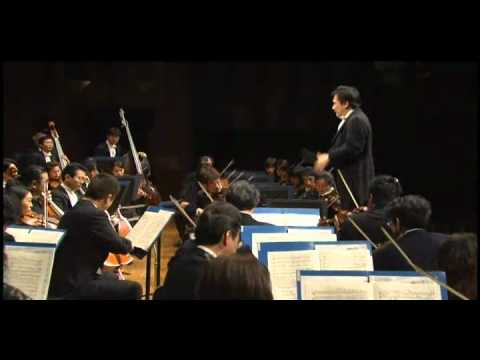
Overture “Le Corsaire,” Op.
21.
This is a concert overture composed by Berlioz during his stay in the Mediterranean resort city of Nice, inspired by the narrative poem “The Corsair” by the English poet George Gordon Byron.
Performed by the Osaka Philharmonic Orchestra, conducted by Eiji Oue.