

Chopin’s masterpieces. Popular classical music.

Are you looking for famous piano pieces and beautiful melodies?
Here are some masterpieces and recommended works by Frédéric Chopin, a pianist and composer who represents the early Romantic era in Poland.
Chopin composed as many as 21 nocturnes, and he also left a wealth of piano works in many other styles—such as mazurkas, waltzes, and polonaises—which is why he is known as the Poet of the Piano.
Let yourself be captivated for a while by the beautiful melodies woven by Chopin.
- [Masterpiece Classics] A special showcase of gem-like masterpieces so beautiful they’ll move you to tears
- Classical piano masterpieces: legendary performances from around the world you should hear at least once
- Rachmaninoff’s masterpieces. Recommended pieces by Rachmaninoff.
- [Tchaikovsky] Pick up famous and representative pieces!
- Frederic Chopin Popular Songs Ranking [2026]
- François Couperin Popular Songs Ranking [2026]
- [Advanced] A Comprehensive Introduction to the Difficult Piano Pieces of Chopin, the Poet of the Piano!
- Pick up Beethoven’s famous and representative works!
- Popular classical piano pieces. A collection of masterful performances by Japanese pianists.
- Timelessly beautiful classical masterpieces. Recommended classical music.
- Classical masterpieces. Recommended classical music.
- Cool classical masterpieces. Recommended classical music.
- Elgar’s masterpiece. Popular classical music.
Chopin’s masterpieces. Popular classical music (101–110)
Waltz No. 6 in D-flat major “Minute Waltz”Frederic Chopin

Written for solo piano, this piece is characterized by its lively and brilliant melody.
The rapid right-hand scales combine exquisitely with the left hand’s steady waltz rhythm, as if depicting a playful puppy scampering about.
Composed between 1846 and 1848, it was dedicated to Countess Delfina Potocka.
Although the performance time is relatively short—about one and a half to two minutes—the piece demands advanced technique and expressive nuance.
It’s recommended not only for classical music enthusiasts but also for those learning piano performance.
It has also been used as background music in films and anime, making it beloved by a wide audience.
Waltz No. 10Frederic Chopin

Waltz No.
10 in B minor, Op.
69, No.
2 by Frédéric Chopin evokes a feeling as if your chest is tightly gripped by a melody suffused with melancholy.
Composed when Chopin was around 19, it stands out for its simple structure and unadorned, memorable tune.
While the main theme is filled with heartache, the middle section warms into a tender, happy mood, as though reminiscing about joyful days long past.
Yet that warmth is fleeting, and we are drawn back into deep sorrow.
Why not listen to it when you want to linger in a bittersweet mood or gently work through your sadness?

Berceuse in D-flat major, Op. 57Frederic Chopin
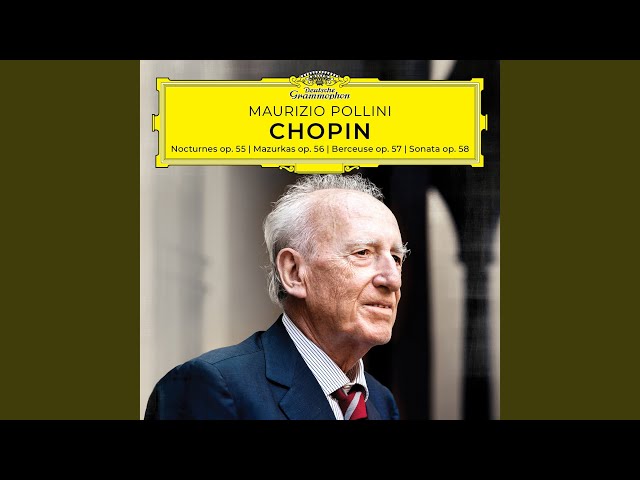
The Lullaby in D-flat major, Op.
57, was composed in 1844 and dedicated to Miss Élise Gavard upon its publication in 1845.
It has a unique structure among Chopin’s works in that it is written entirely at dynamics ranging from pianissimo to piano.
Etude Op.10-2 in A minorFrederic Chopin

Among Frédéric Chopin’s works, the masterpiece Twelve Études is said to boast one of the highest levels of difficulty.
This time, I would like to introduce Étude Op.
10 No.
2 from that set.
Although its performative impact is not especially large, it is known for being extremely difficult.
The key point of this piece is, above all, the opening section: because the 1st and 2nd fingers must hold chords, the remaining 3rd–5th fingers have to play the other parts.
For these reasons, it is known as a high-difficulty piece that demands innate hand size and supple fingers.

Etude Op. 10 No. 4Frederic Chopin

Chopin’s demanding piece, Etude Op.
10 No.
4.
It requires a combination of techniques and presents difficulties throughout.
Among them, the most challenging spot is probably the right hand in measures 29–30.
You have to handle the fingering while keeping the wrist supple, but because it’s hard to connect legato, the performance tends to become stiff.
Even professionals often end up sounding rigid with this etude, so be sure to check it out.
Chopin’s masterpieces. Popular classical music (111–120)
Etude Op. 25, No. 1 “Aeolian Harp”Frederic Chopin

When you listen to performances, it can sound difficult, but among them I’d like to introduce a piece that seems gentle.
It is Frédéric Chopin’s famous étude, Étude Op.
25 No.
1, “Aeolian Harp.” Also known as “The Shepherd Boy” or “The Shepherd’s Flute,” this work is regarded as a kind of gateway for intermediate players among Chopin’s compositions.
Its hallmark is the sonority of broken chords woven throughout the piece, demanding not only technique but also a high level of expressiveness.
The wide arpeggiated passages are prone to fluctuations in tempo and touch, so keep that in mind as you polish your performance.
Etude Op. 25 No. 6Frederic Chopin

Frédéric Chopin, the great French composer who created numerous beautiful masterpieces.
He is also known as a composer of many highly demanding works, and among them, the Etude Op.
25 No.
6 ranks among the most difficult.
The main challenges of this piece are undoubtedly the right hand trills in thirds and the chromatic scales in thirds.
Thirds are already difficult as they are, but in this piece you must also play a dramatic melody with the left hand.
Although the difficulty level is considerable, practicing it is recommended, as it strengthens finger independence—a fundamental technique essential for playing any piece.