

Chopin’s masterpieces. Popular classical music.

Are you looking for famous piano pieces and beautiful melodies?
Here are some masterpieces and recommended works by Frédéric Chopin, a pianist and composer who represents the early Romantic era in Poland.
Chopin composed as many as 21 nocturnes, and he also left a wealth of piano works in many other styles—such as mazurkas, waltzes, and polonaises—which is why he is known as the Poet of the Piano.
Let yourself be captivated for a while by the beautiful melodies woven by Chopin.
- [Masterpiece Classics] A special showcase of gem-like masterpieces so beautiful they’ll move you to tears
- Classical piano masterpieces: legendary performances from around the world you should hear at least once
- Rachmaninoff’s masterpieces. Recommended pieces by Rachmaninoff.
- [Tchaikovsky] Pick up famous and representative pieces!
- Frederic Chopin Popular Songs Ranking [2026]
- François Couperin Popular Songs Ranking [2026]
- [Advanced] A Comprehensive Introduction to the Difficult Piano Pieces of Chopin, the Poet of the Piano!
- Pick up Beethoven’s famous and representative works!
- Popular classical piano pieces. A collection of masterful performances by Japanese pianists.
- Timelessly beautiful classical masterpieces. Recommended classical music.
- Classical masterpieces. Recommended classical music.
- Cool classical masterpieces. Recommended classical music.
- Elgar’s masterpiece. Popular classical music.
Chopin’s masterpieces. Popular classical music (111–120)
Etude Op. 10 No. 12 “Revolutionary”Frederic Chopin

Frédéric Chopin is a great composer who created many masterpieces with his fantastical and distinctive compositions.
Among his astonishing number of celebrated works, the one I especially recommend is Etude Op.
10 No.
12, “Revolutionary.” Its greatest appeal lies in the intensely dramatic melody that bursts forth right from the opening.
It’s such a famous piece that almost everyone has heard it at least once, but if you listen closely, you’ll be struck anew by its overwhelming power.
Be sure to check it out.

Waltz Op. 34 No. 1 “Grande valse brillante”Frederic Chopin

Waltz Op.
34 No.
1, “The Brilliant Waltz.” It’s a work by Chopin.
There’s also a Chopin piece called “The Grand Brilliant Waltz,” which is easy to confuse with this one, so be careful.
The “Brilliant Waltz” is very dazzling and full of speed.
The same melody modulates several times, and that brilliance captivates listeners.
It may be a bit less well-known than the “Grand Brilliant Waltz,” but it’s no less splendid.
Please give it a listen.

Waltz Op. 64, No. 2Frederic Chopin
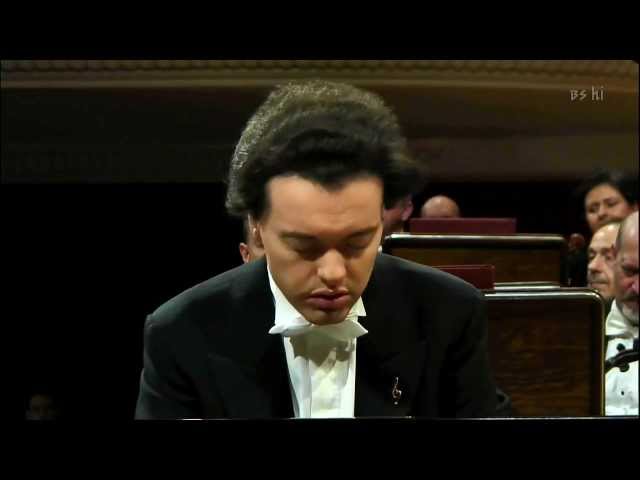
In contrast to the Minute (Puppy) Waltz, this waltz is striking for its dark, heavy atmosphere.
Yet even within the darkness, hints of elegance flicker, and to me it evokes an almost nocturne-like mood—an enchanting, dreamlike piece.
Because it doesn’t demand exceptionally high technical skill, it is also a frequently performed classic in concert settings.
Impromptu No. 3, Op. 51Frederic Chopin

Vladimir Davidovich Ashkenazy is a Russian pianist who is also known as a conductor.
He currently holds Icelandic citizenship and resides in Switzerland.
This is a performance of Chopin’s Impromptu No.
3.
The light, nimble fingerwork is delightful to watch.
Impromptu No. 4 in C-sharp minor, Op. posth. 66 “Fantaisie-Impromptu”Frederic Chopin

Among Frédéric Chopin’s best-known works and a favorite at competitions and recitals, Fantaisie-Impromptu was originally never intended for publication, but is said to have seen the light of day when it was published after Chopin’s death by his friend Julian Fontana.
This piece is renowned for the beautiful contrast between the rapid figurations at the beginning and the calm middle section.
While the fast passages at the start may seem highly challenging, train your body by moving your fingers slowly and letting the motions sink in.
With the piano, practice is everything!

Barcarolle, Op. 60, CT 6, in F-sharp majorFrederic Chopin

A “barcarolle” is a piano piece inspired by the gondolas of Venice, the city of water, and is said to have originated from the songs that boatmen would hum while on their boats.
Among the barcarolles composed by classical composers, Frédéric Chopin’s Barcarolle in F-sharp major, Op.
60 (CT 6), is particularly famous.
Characterized by its use of 12/8 time, it creates a grand yet elegant atmosphere.
Written in Chopin’s late period, it also demands an advanced level of technique.
Why not try performing it while imagining a gondola floating on sunlit waters?

Fantaisie-Impromptu in C-sharp minor, Op. 66Frederic Chopin

If we’re talking about the most famous piece in the piano classical repertoire, it might well be this one.
It’s a simple three-part composition, yet it seems a shame that only the fast melodies of the first and last sections are widely celebrated.
The true essence of Chopin lies in the luscious timbre of the middle section, and listening to the entire piece will surely move you with its otherworldly lyricism.