

Chopin’s masterpieces. Popular classical music.

Are you looking for famous piano pieces and beautiful melodies?
Here are some masterpieces and recommended works by Frédéric Chopin, a pianist and composer who represents the early Romantic era in Poland.
Chopin composed as many as 21 nocturnes, and he also left a wealth of piano works in many other styles—such as mazurkas, waltzes, and polonaises—which is why he is known as the Poet of the Piano.
Let yourself be captivated for a while by the beautiful melodies woven by Chopin.
- [Masterpiece Classics] A special showcase of gem-like masterpieces so beautiful they’ll move you to tears
- Classical piano masterpieces: legendary performances from around the world you should hear at least once
- Rachmaninoff’s masterpieces. Recommended pieces by Rachmaninoff.
- [Tchaikovsky] Pick up famous and representative pieces!
- Frederic Chopin Popular Songs Ranking [2026]
- François Couperin Popular Songs Ranking [2026]
- [Advanced] A Comprehensive Introduction to the Difficult Piano Pieces of Chopin, the Poet of the Piano!
- Pick up Beethoven’s famous and representative works!
- Popular classical piano pieces. A collection of masterful performances by Japanese pianists.
- Timelessly beautiful classical masterpieces. Recommended classical music.
- Classical masterpieces. Recommended classical music.
- Cool classical masterpieces. Recommended classical music.
- Elgar’s masterpiece. Popular classical music.
Chopin’s masterpieces. Popular classical music (171–180)
Largo in E-flat major, Hymn ‘God, Protect Poland’Frederic Chopin

Frédéric Chopin, the genius composer born in Poland.
Among his works, the Largo in E-flat major is a gem imbued with longing for his homeland.
Composed in 1837, it was first published posthumously in 1938.
Despite its simple structure, the piece exudes a solemn atmosphere, and its beautiful melody—shining with Chopin’s characteristic delicacy—leaves a strong impression.
Conveying a prayer-like sentiment through the piano’s timbre, it is recommended for those who wish to listen quietly and attentively.
If you’d like to step into Chopin’s musical world, why not start with this piece?
Rondo in E-flat major, Op. 16Frederic Chopin

The masterpiece dedicated to his pupil, Miss Karoline Hartmann, Rondo in E-flat major, Op.
16, is known as the last rondo Chopin composed.
This work demands stamina, featuring an introduction that spans 51 measures.
Because the tempo and character shift intricately even within the introduction, it requires not only straightforward technical skill but also a deep understanding of the piece.
Since the right hand must play delicate, rapid arpeggios for an extended period, performers who are not accustomed to it may even experience cramping.

Waltz in A minor, Op. posth.Frederic Chopin

This work, the posthumous piece by Frédéric Chopin, a composer emblematic of the Romantic era, was written between 1847 and 1849 and published in 1860 after his death.
Its simple yet wistful melody and the section that modulates brightly midway are striking.
The piece showcases Chopin’s characteristic delicate sensibility throughout, and because it is relatively approachable technically, it is beloved by piano students as well.
Its melody, where elegance and melancholy intersect, will resonate deeply with listeners.
It is a highly recommended piece for those who wish to experience Chopin’s musical world, prioritize expressive nuance, or refine their emotional expression.
Waltz in C-sharp minor, No. 7, Op. 64-2Frederic Chopin
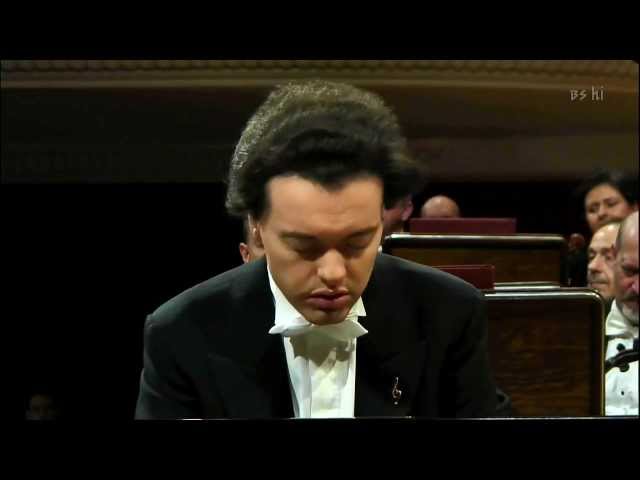
Waltz No.
7, Op.
64-2, composed in 1847, is one of Frédéric Chopin’s late works.
It is said to be a culmination of his compositional technique, featuring a mazurka—Poland’s national dance—as its main theme.
The piece is also known for being relatively accessible in difficulty and is frequently performed at piano recitals.
By clearly expressing the contrast between passages that quietly convey sorrow and those where emotions overflow with movement, you can achieve a performance that is richly expressive, not merely dark.

Waltz No. 10 in B minorFrederic Chopin

This piano piece, the Waltz No.
10 in B minor, is notable for its strikingly wistful opening melody and was published in 1829 by the Polish pianist Frédéric Chopin.
It carries a Slavic melancholy, and in the mazurka-like middle section, major and minor keys alternate.
While not especially difficult technically, it’s a captivating work whose musical maturity reveals itself the longer one plays it.
It is a romantic piece, but the key to performance is to avoid becoming overly sentimental and not make it excessively sweet.

Chopin’s masterpieces. Popular classical music (181–190)
Waltz No. 12 in F minorFrederic Chopin

Waltz No.
12 in F minor, Op.
70 No.
2, was published after Frédéric Chopin’s death by his friend Julian Fontana.
It is said that this piece was not composed for publication, but rather written for a woman he knew.
With phrases that evoke poignancy as well as ones filled with happiness, it invites a range of emotional interpretations and is a work that lends itself to expressive performance.
Instead of merely playing the notes on the score, why not take on the challenge as an exercise in cultivating expressiveness and imagination?
Waltz No. 19 in A minor, Op. posthumousFrederic Chopin

Composed in Chopin’s later years and published after his death, the Waltz No.
19 in A minor is relatively approachable among Chopin’s waltzes, which vary widely in difficulty.
Because No.
19 has a calm character, the key is to value the horizontal flow and perform it gently.
In the brighter middle section, switch to a lighter touch to bring out the waltz’s triple-meter dance quality.
Use the pedal skillfully to connect the sounds while taking care to avoid muddiness.