

Classical Masterpieces: Recommended Works You Should Hear at Least Once


Classical music, the foundation of all music.
It began with chants sung in churches and led to the birth of countless composers and works.
In Japan, classical music remains close to us even today—taught in music classes and played as background music in a variety of settings.
In this article, we’ll introduce a wide range of classical pieces: from famous works you’ve likely heard somewhere at least once, to lesser-known pieces that will still linger in your ears.
Please enjoy these masterpieces of classical music—performed in many forms, from sacred music and symphonies to piano solos and concertos, including works arranged for different instruments.
- [Masterpiece Classics] A special showcase of gem-like masterpieces so beautiful they’ll move you to tears
- [Orchestra] Introducing famous and popular pieces
- Timelessly beautiful classical masterpieces. Recommended classical music.
- Cool classical masterpieces. Recommended classical music.
- Popular classical piano pieces. A collection of masterful performances by Japanese pianists.
- [Violin] A curated selection of beloved classic masterpieces and popular pieces that continue to be cherished across eras
- Cello Masterpieces: A comprehensive introduction to exquisite classical works that let you savor its profound timbre
- Recommended classical masterpieces for autumn
- Today's Classics: Recommended classical music and great performances to listen to today
- Pick up Beethoven’s famous and representative works!
- Masterpieces by Gustav Mahler. Popular classical music.
- Classical music by Japanese composers. Recommended classical music.
- A poignant classic masterpiece. Recommended classical music.
Classical Masterpieces: Recommended Works You Should Hear at Least Once (11–20)
From Symphony No. 9 in D minor, Op. 125 — Fourth Movement “Ode to Joy”Ludwig van Beethoven

In Japan, it is affectionately known as “the Ninth,” and as the year draws to a close, performances of the Ninth are held all over the country.
The lyrics of this piece are based on Schiller’s poem “Ode to Joy,” and in Japan the choral section is also called the “Song of Joy.” While there had been symphonic works that used voices before, this is considered the first work to employ vocal parts effectively.
In addition to voices, it also uses percussion instruments—such as cymbals and triangle—that had rarely been used in symphonies up to that point.

VocaliseSergei Rachmaninov

This song beautifully fuses Sergei Rachmaninoff’s profound emotion and virtuosity.
Devoid of words, it is sung on a vowel of the performer’s choosing and has been arranged for a variety of ensembles.
Composed in 1915 and premiered in Moscow in January of the following year, the piece reflects Rachmaninoff’s delicate sensibility.
Its captivating melodic line possesses an expressive power beyond words, resonating deeply with listeners.
Strongly imbued with the spirit of Russian land and culture, as well as Rachmaninoff’s own experiences, it evokes a wistful beauty and introspective contemplation.
The video features a piano-and-cello duo version, whose cello timbre offers a distinct appeal different from the human voice.
NocturneFrederic Chopin
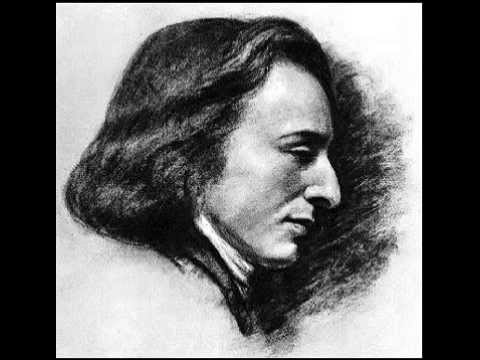
A collection of 21 solo piano pieces left by Frédéric Chopin, a composer emblematic of the Romantic era.
No.
2 and the posthumous No.
20 are especially famous.
Born in 1810, Chopin showed musical talent from childhood, composing his first piece at the age of just seven.
Written from his twenties through his final years, this work can be regarded as a masterpiece that reveals the depth of his artistry and the breadth of expression in piano music.
It beautifully captures the stillness of night and an introspective atmosphere, characterized by lyrical melodies, fresh harmonies, and a free spirit that resonates deeply with listeners.
It is a work well worth hearing on a quiet night.
Chaconne from Partita No. 2 in D minor, BWV 1004, for solo violinJ.S.Bach

A masterpiece for unaccompanied violin by Johann Sebastian Bach, the German composer who epitomizes the Baroque era.
Spanning about 15 minutes, this large-scale set of variations demands the ability to convey rich harmony and counterpoint on a single violin.
Some interpret it as a memorial tribute mourning the death of Bach’s wife, Maria Barbara, imparting a solemn quality and emotional depth to the listener.
Characterized by structural complexity that makes full use of lush harmonic writing and counterpoint, it has long been esteemed as a landmark in the solo violin repertoire.
While quintessentially Baroque, the work also conveys powerful inner expression and energy, continuing to be cherished today as a piece that inspires profound empathy.
Piano solo arrangements by Brahms and Busoni are also well known—be sure to give them a listen.
Ballet Suite ‘Swan Lake’Peter Ilyich Tchaikovsky

A masterpiece of ballet music by Pyotr Ilyich Tchaikovsky, a leading composer of the Russian Romantic era.
Its plaintive, beautiful melodies and dramatic development are deeply appealing.
The story of a princess transformed into a swan and her tragic love with a prince resonates profoundly with audiences.
Although its premiere at the Bolshoi Theatre in March 1877 was poorly received, it was reevaluated after Tchaikovsky’s death and has since become a beloved classic worldwide.
Memorable themes—such as the Swan motif and the brilliant waltzes—demonstrate an artistry that transcends the bounds of ballet music.
Rhapsody on a Theme of PaganiniSergei Rachmaninov
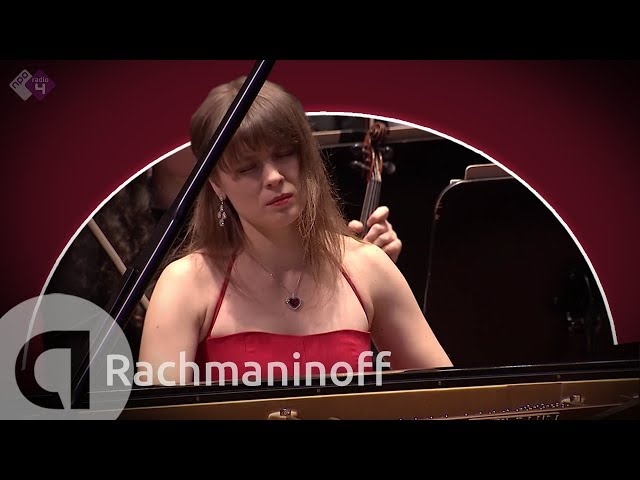
A masterpiece by Sergei Rachmaninoff, a leading composer of the Russian Romantic era.
Based on a famous work by Niccolò Paganini, it was written for piano and orchestra.
Premiered in November 1934, it consists of 24 variations.
Especially striking is the 18th variation, where Rachmaninoff presents a beautifully melancholic melody by inverting Paganini’s theme—a quintessential touch of his style.
In Japan, it’s often used as background music, so many people may recognize the melody even if they don’t know the piece by name.
Rachmaninoff himself reportedly said, “This is for the agent,” reflecting its popularity.
The medieval chant Dies Irae is also woven into the work, lending it a mystical atmosphere throughout.
With its dramatic development and brilliant virtuosity, this piece is a superb fusion—be sure to give it a listen!
Classical Masterpieces | Recommended Works You Should Hear at Least Once (21–30)
Symphony No. 5 in C-sharp minorGustav Mahler

This piece is the first symphony Mahler wrote in the 20th century, and after composing vocal symphonies for Nos.
2 through 4, it is a purely instrumental symphony written once again for orchestra alone.
Mahler held Beethoven in extremely high regard as a composer, and the trajectory from the first movement, “Funeral March,” to the fifth movement, “Rondo–Finale,” follows the same program of “from anguish to joy” as Beethoven’s Fate Symphony.
In Visconti’s film Death in Venice, the fourth movement of this work is used.