



Classical music, the foundation of all music.
It began with chants sung in churches and led to the birth of countless composers and works.
In Japan, classical music remains close to us even today—taught in music classes and played as background music in a variety of settings.
In this article, we’ll introduce a wide range of classical pieces: from famous works you’ve likely heard somewhere at least once, to lesser-known pieces that will still linger in your ears.
Please enjoy these masterpieces of classical music—performed in many forms, from sacred music and symphonies to piano solos and concertos, including works arranged for different instruments.
- [Masterpiece Classics] A special showcase of gem-like masterpieces so beautiful they’ll move you to tears
- [Orchestra] Introducing famous and popular pieces
- Timelessly beautiful classical masterpieces. Recommended classical music.
- Cool classical masterpieces. Recommended classical music.
- Popular classical piano pieces. A collection of masterful performances by Japanese pianists.
- [Violin] A curated selection of beloved classic masterpieces and popular pieces that continue to be cherished across eras
- Cello Masterpieces: A comprehensive introduction to exquisite classical works that let you savor its profound timbre
- Recommended classical masterpieces for autumn
- Today's Classics: Recommended classical music and great performances to listen to today
- Pick up Beethoven’s famous and representative works!
- Masterpieces by Gustav Mahler. Popular classical music.
- Classical music by Japanese composers. Recommended classical music.
- A poignant classic masterpiece. Recommended classical music.
Classical Masterpieces: Recommended Works You Should Hear at Least Once (1–10)
Piano Concerto No. 2 in C minor, Op. 18Sergei Rachmaninov
Sergei Rachmaninoff, born in Russia in 1873, was a multifaceted pianist as well as a composer and conductor.
Many of you may have heard his Piano Concerto No.
2.
It’s a familiar piece from the 2006 hit TV drama Nodame Cantabile.
Hiroshi Tamaki’s portrayal of Chiaki and his performance were so cool.
With this work, Rachmaninoff achieved success and secured his place as a composer.
It’s also famous for being featured in the 1945 British film Brief Encounter, where it became a major hit.
Because of the film’s storyline, the Piano Concerto No.
2 came to be associated with the image of a love piece.
It’s a number brimming with appeal, where intense and luscious melodies alternate again and again.
The flowing piano lines, full of drive, are also magnificent.
Among the many piano concertos, Rachmaninoff’s is one of the most popular.

Symphony No. 9 in E minor, Op. 96, “From the New World”Antonín Dvořák

It’s such a famous piece that, along with Beethoven’s “Fate” and Schubert’s “Unfinished,” it’s known as one of the “Three Great Symphonies.” The theme of the second movement, arranged with lyrics as “Faraway Hills, the Sun is Setting,” is probably something even those not well-versed in classical music have heard at least once somewhere.
The “New World” in the title refers to America, and it was after Dvořák emigrated to the New World that he composed this work as a message to his homeland.

Symphony No. 9 in D majorGustav Mahler

Mahler’s last completed symphony, finished the year before his death.
Together with Das Lied von der Erde and the unfinished Symphony No.
10, it is known as the “Farewell Trilogy.” The Ninth Symphony, in particular, is imbued with a profound contemplation of death.
In the final five minutes of the fourth movement, the first violins play the closing section of the fourth song from Kindertotenlieder.
After composing that song, Mahler’s beloved eldest daughter, Maria, died before reaching the age of five, which lends the work an even deeper expression of his grief in the face of death.
CanonJohann Pachelbel

Johann Pachelbel, a towering figure of Baroque music born in 1653, studied under Schwemmer in his youth and later absorbed the influence of Italian music in Vienna.
The piece in question is one of his masterpieces.
Written for three violins and basso continuo, it employs a structure in which the same melody is imitated by voices that enter in succession, creating simple yet rich harmonies.
Its gentle, graceful melody evokes feelings of joy and peace and has been cherished across generations.
Beloved as a piece that accompanies life’s milestones—such as weddings and graduations—it is a perfect choice for anyone seeking music that resonates with the heart.
BoleroMaurice Ravel
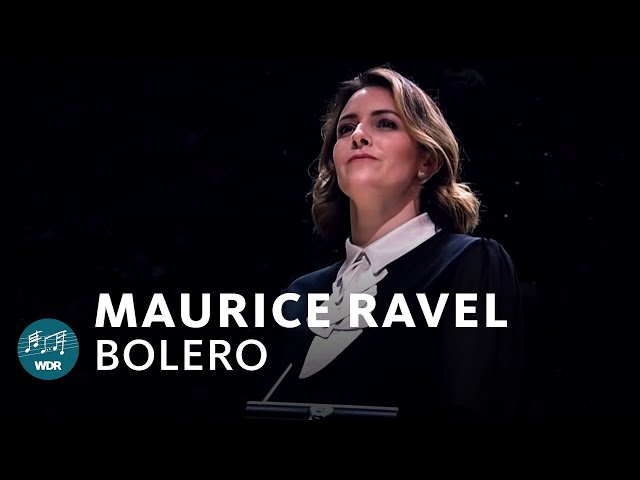
An orchestral piece composed in 1928 by the French composer Maurice Ravel.
Beginning with the quiet, repeated notes of the snare drum, its unique structure—built from only two melodies that gradually increase in volume and orchestration—makes it unlike any other work.
As various instruments such as the flute, clarinet, and trumpet take up the melody, the music unfolds over about 15 minutes toward a majestic climax.
Its charm lies in the beautiful melodies woven over a monotonous rhythm and the richly colored sonorities created by masterful orchestration.
Although it was first used as ballet music at its premiere, it has also become widely cherished as a concert hall piece.
Pictures at an ExhibitionModest Mussorgsky

Just as the Czech composer Dvořák had his counterparts, Russia also had composers known as the “Mighty Handful” or “nationalist school.” Mussorgsky was one of them.
Pictures at an Exhibition is not only one of the famous works of the late Romantic era but has also become a classic of Russian music.
The Rite of SpringIgor Stravinsky

Alongside The Firebird and Petrushka, this is one of Stravinsky’s three great ballets and a seminal work of 20th-century primitivism.
“Primitivism” refers to an approach that, above all, elaborates rhythm among the elements of music to draw out the primitive energy and vitality inherent in sound.
The work’s subject—a ritual of the early Slavs who offer a living sacrifice to the sun god in celebration of spring sprouting from the earth—and its use of changing meters and accents that seem random, generating unremitting tension, exemplify the characteristics of primitivism.