

![[Trivia] A quiz to deepen your corn knowledge](https://media.ragnet.co.jp/img/1200__png__https://www.studiorag.com/files/2025/05/81e23cd6cdc44ca33b433435b6c4c540.webp)

Corn is eaten all over the world because the edible parts contain many nutrients such as carbohydrates.
It’s a small-kernel, sweet-tasting food enjoyed by people of all ages, from children to adults.
In this article, we’ve put together a quiz full of fun trivia about corn.
We’ll ask various questions about corn’s characteristics and nutrients.
Answer the quiz to discover unexpected facts and gain new insights—boost your knowledge and trivia about corn!
- Corn trivia quiz: from history and cultivation to delicious ways to eat it
- How Much Do You Know? Food Quiz for Elementary School Students
- Cucumber trivia quiz. A collection of fun facts about cucumbers.
- Get Healthy with Vegetables: Trivia Quiz About Vegetables
- [True or False?] Diet Trivia Quiz
- Coffee Trivia Quiz: A one-stop introduction to lots of fun facts
- [Interesting] Compilation of Trivia Quiz Questions
- [Did you know?] Fun Trivia Quiz About Health
- September Trivia Quiz & Fun Facts! A Fun Autumn Quiz for Kids
- How many can you answer? Trivia and fun facts quiz about rice
- Deepen your knowledge of food! A three-choice trivia quiz
- Trivia and fun facts about food (summary)
- Trivia quiz with useful tips to know: fun facts that come in handy at school or at home [for kids]
[Trivia] A Quiz to Deepen Your Corn Knowledge (1–10)
What time of day is best to harvest corn for maximum sweetness?
- evening
- daytime
- morning
See the answer
morning
Corn converts starch into sugars through photosynthesis, but when the sun sets, that process stops and the sugars begin reverting back into starch. Therefore, even within a single day, corn harvested early in the morning retains more sweetness and tastes sweeter. If it’s harvested during the day, sunlight causes the sugars to start turning back into starch, so morning is best for preserving sweetness.

How many days after sowing can corn be harvested?
- about 45 days
- about 60 days
- about 90 days
See the answer
about 90 days
In general corn cultivation, you can harvest about 90 days after sowing. However, this is an average figure and may vary depending on the growing conditions and the variety. During that period, sufficient watering and fertilizer are necessary, and with proper care you can harvest high-quality corn.
How many corn silks are there?
- the same as real numbers
- twice the real number
- half of the real number
See the answer
the same as real numbers
The number of corn silks matches the number of kernels, and each individual silk delivers nutrients to its corresponding kernel. This structure contributes to the uniform seed formation of corn.
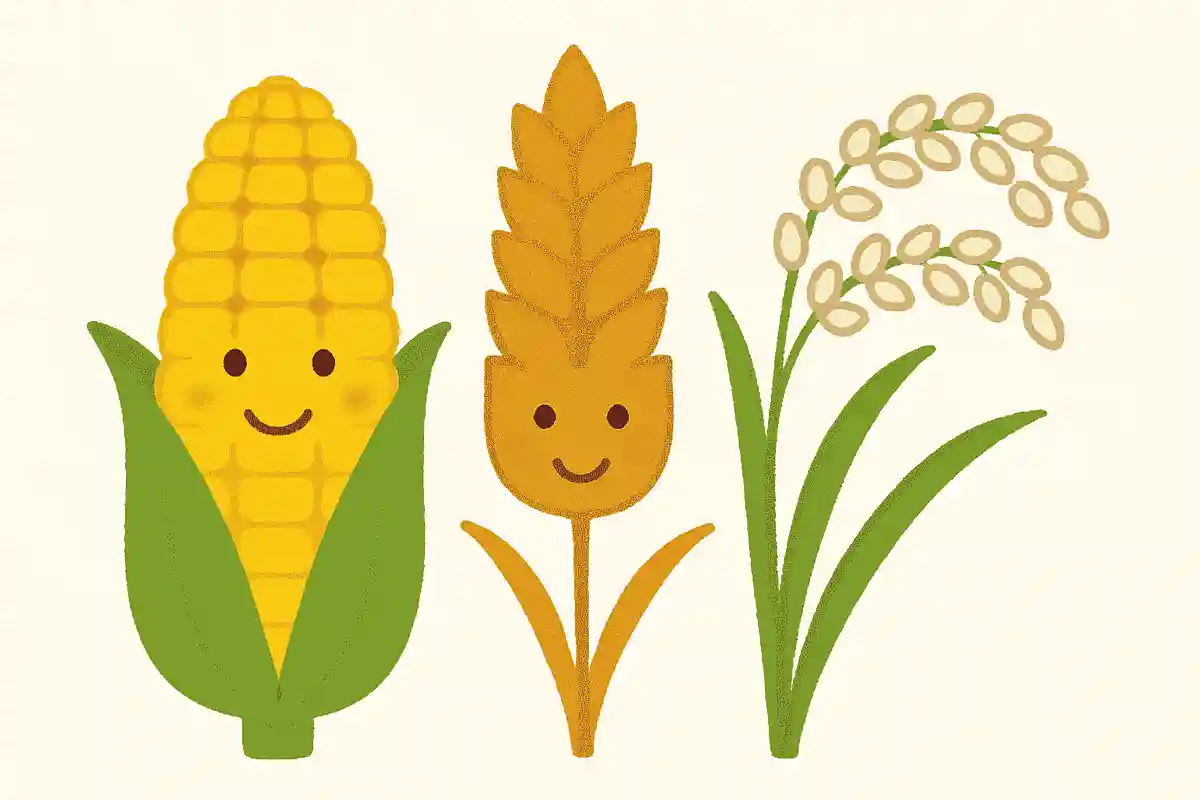
What are the world’s three major cereals—corn, wheat, and what is the other one?
- rice
- barley
- rye
See the answer
rice
The world’s three major cereals are corn, wheat, and rice, which have high production volumes and are deeply rooted in food cultures. These are staple foods in many regions around the world, and their production and consumption far exceed those of other grains. In particular, rice holds a very important place as a staple food in Asia.
What do you call corn silk?
- carnation
- silk thread
- Stamina
See the answer
silk thread
Corn silk is called “silk threads.” Each silk thread functions as a pollen tube, a necessary pathway through which pollen travels to form seeds (kernels). The healthier the silk threads are, the more kernels you can expect to develop.
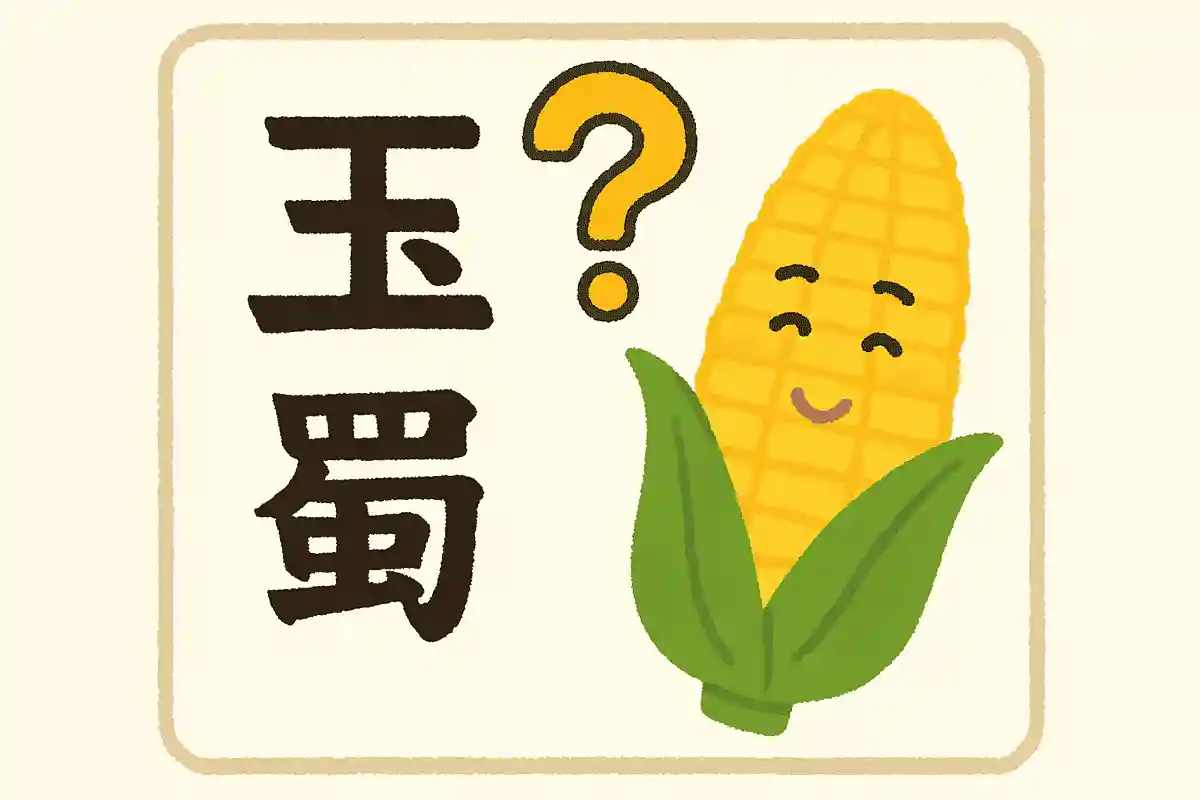
How do you write ‘corn’ in kanji?
- corn
- Benimaro
- golden barley
See the answer
corn
Corn is written in kanji as “玉蜀黍.” As this character suggests, corn has been cultivated in China since ancient times and later spread throughout the world. This elegant kanji, tied to its origins and history, has also become established as the Japanese name.
Which country is the origin of the name for corn?
- China
- America
- Egypt
See the answer
China
Corn (tōmorokoshi) came to be called “tōmorokoshi” in Japan when it was introduced from China, being named as a ‘Tang (Chinese) plant’ called ‘morokoshi.’ In ancient Japan, ‘Tang’ (Tō) referred to China, and many items were given names prefixed with ‘Tang,’ so this followed that convention. The name also derives from the appearance of many kernels attached like beans.