

Japanese Shoka, Children's Songs, and Nursery Rhymes | Timeless masterpieces that resonate in the heart, passed down across generations

Do you ever recall the nursery rhymes and children’s songs you sang with family and friends when you were little? The nostalgic songs—including the Monbushō shōka (Ministry of Education songs)—are treasures of Japan that have been passed down across generations.
Still, there are times when you remember a title but can’t recall the lyrics, or you know the melody but can’t remember the title.
In this article, we’ll introduce a wide range of shōka, nursery rhymes, and traditional children’s songs that everyone has heard at least once.
As you listen to those nostalgic voices, try humming along with someone dear to you.
- Nostalgic Children’s Songs, Folk Songs, and Nursery Rhymes: The Heart of Japan Passed Down Through Song
- Popular Song Rankings of Monbusho Shoka [2026]
- Ranking of Popular Children's Songs [2026]
- [Japanese Folk and Regional Songs] A Collection of Beloved Masterpieces from Across Japan, Brimming with Local Pride
- [Warabe-uta] Beloved Classic Songs Passed Down Through Generations
- [Minna no Uta] Beloved Across Generations: Nostalgic Classics and Popular Songs
- [Japanese Children's Songs] Carefully selected timeless masterpieces loved across generations!
- Nursery rhymes you’ll want to sing at karaoke: classic and popular songs everyone can enjoy together.
- [Preschool] Recommended choral pieces for 3-year-olds
- Japanese counting songs: nostalgic temari (handball) songs and children’s folk songs
- [Children's Songs] Cute songs recommended for childcare. List of popular nursery rhymes.
- List of seasonal songs: a classic guide to finding tracks that fit the current season
- A Nationwide Compilation of Timelessly Beloved Railway Songs
Japanese shoka, children's songs, and warabe-uta | Timeless classics that resonate in the heart, passed down across generations (21–30)
A bamboo shoot has sprouted.warabeuta asobi
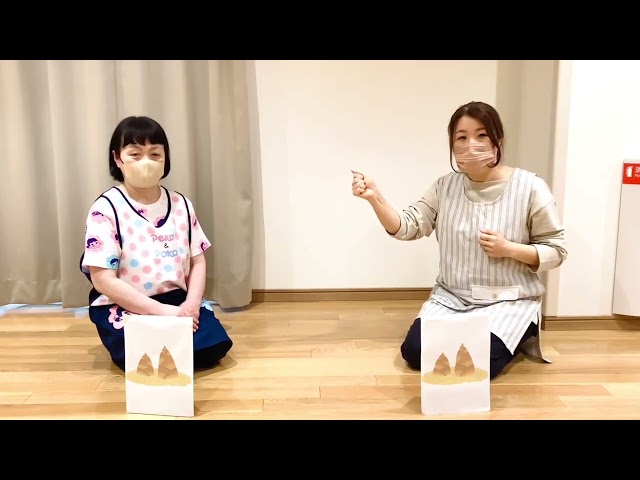
A children’s hand-play song that vividly expresses the growth of bamboo shoots, which are in season from spring to early summer.
Through hand motions, kids enjoy the story of a sprout emerging from the soil, a flower blooming with a pop, and finally being snipped with scissors.
Because the rock-paper-scissors hand shapes—fist, scissors, and open hand—are naturally built into the actions, it’s also perfect for helping children learn the rules of the game.
Though it’s a traditional folk song passed down through generations, its introduction on children’s programs like those on NHK has helped it become a familiar group activity in preschools and kindergartens.
It typically ends with everyone chanting “Essa, essa!” together and deciding the winner with rock-paper-scissors.
On a fresh May day under the blue sky, get moving energetically with your family and friends!
skylark skylarkwarabeuta asobi

In the pleasantly breezy month of May, here’s a nursery rhyme game with a springtime bird theme that we hope parents and children will enjoy at a relaxed pace.
It’s characterized by short, repeated phrases that call to the birds and depict traveling over mountains and through valleys.
You can rock your child on your lap, use your fingertips to represent hills and valleys—there’s no single right way to play! Though it’s a traditional song passed down in local communities since long ago, new audio recordings with fresh ways of singing were released as recently as March 2021, and it continues to be loved today in various forms, especially in early childhood settings.
Precisely because there’s no fixed answer, you can tailor it to your child’s age and the atmosphere of the moment—that’s the charm of this piece.
On a warm, sunny day, why not find your own original way to play together with your child?
The Sparrow School

This is a children’s song by the duo of composer Ryutaro Hirota and poet Katsura Shimizu, who were active in the Taisho era.
It was composed in December 1921 and published in the February 1922 issue of the children’s magazine Shōjo-gō.
The song depicts a school where sparrows gather in a circle under their teacher and chirp in unison.
The repeated onomatopoeia “chii-chii pappa” gives it a rhythmic structure that’s easy for children to remember.
It has been included in numerous compilations, including Nippon Columbia’s three-disc set “Ketteiban: Kokoro no Dōyō—Omoide no Aishōka 100-sen.” It’s a recommended song for those nostalgic for their early childhood or for anyone who wants to sing along with their children.
The Clock Song

Since its inclusion in the 1910 textbook “Jinjō Shōgaku Tokuhon Shōka” (Elementary School Reader Songs), this Ministry of Education song has been sung for generations.
Set to a steady onomatopoeic rhythm, it depicts a clock that keeps moving tirelessly from morning till night.
Its recording history is also long: as early as 1932, an SP record by Chiyoko Fumiya and the Nippon Victor Junior Orchestra was released, among other various recordings.
Cherished in NHK educational programs and school teaching materials, it may evoke nostalgic classroom scenes for some listeners.
Village Festival

A classic song that sings of autumn’s bounty and gratitude to the gods, evoking Japan’s quintessential pastoral scenery.
The lyrics vividly conjure a lively festival scene—you can almost hear the flutes and drums—which is a big part of its charm.
First published in March 1912 in “Jinjō Shōgaku Shōka: For Third-Year Students,” it has been beloved for generations.
Passed down in performances by artists like Saori Yuki and Shoko Yasuda, it remains a staple autumn song today.
With its playful, rhythmic onomatopoeia, this piece is perfect for savoring the exhilaration of a festival!
the temple’s head monk

This hand-clapping song, sung while holding hands and chanting “Ses-ses-se—no, yoi yoi yoi,” is a traditional children’s rhyme that playfully traces, with gestures, the monk sowing pumpkin seeds and the flowers blooming.
Passed down orally, it has developed numerous lyrical variations across regions and eras, and it continues to evolve alongside children’s play today.
Its appeal lies in a singable range, a clear storyline, and a structure that invites movement.
Beyond early childhood settings, it is also used in rehabilitation for the elderly, and it will likely continue to be sung as a song that people of all generations can enjoy together.
Counting Song

A traditional Japanese counting song that has long been sung in schools as a Ministry of Education song.
Included in the July 1910 volume of “Songs for the Elementary School Reader,” this piece teaches children virtues such as loyalty, filial piety, harmony among siblings, friendship, and sincerity while counting numbers.
It adapts melodies of children’s folk songs passed down in various regions into educational material; Naoaki Fukui prepared the accompaniment score and arranged it to be easy to sing in school settings.
In 1997, it was also included on the album “Jinjō Shōgaku Shōka: Third Grade,” performed by the Suginami Children’s Choir.