


Do you ever recall the nursery rhymes and children’s songs you sang with family and friends when you were little? The nostalgic songs—including the Monbushō shōka (Ministry of Education songs)—are treasures of Japan that have been passed down across generations.
Still, there are times when you remember a title but can’t recall the lyrics, or you know the melody but can’t remember the title.
In this article, we’ll introduce a wide range of shōka, nursery rhymes, and traditional children’s songs that everyone has heard at least once.
As you listen to those nostalgic voices, try humming along with someone dear to you.
- Nostalgic Children’s Songs, Folk Songs, and Nursery Rhymes: The Heart of Japan Passed Down Through Song
- Popular Song Rankings of Monbusho Shoka [2026]
- Ranking of Popular Children's Songs [2026]
- [Japanese Folk and Regional Songs] A Collection of Beloved Masterpieces from Across Japan, Brimming with Local Pride
- [Warabe-uta] Beloved Classic Songs Passed Down Through Generations
- [Minna no Uta] Beloved Across Generations: Nostalgic Classics and Popular Songs
- [Japanese Children's Songs] Carefully selected timeless masterpieces loved across generations!
- Nursery rhymes you’ll want to sing at karaoke: classic and popular songs everyone can enjoy together.
- [Preschool] Recommended choral pieces for 3-year-olds
- Japanese counting songs: nostalgic temari (handball) songs and children’s folk songs
- [Children's Songs] Cute songs recommended for childcare. List of popular nursery rhymes.
- List of seasonal songs: a classic guide to finding tracks that fit the current season
- A Nationwide Compilation of Timelessly Beloved Railway Songs
Japanese Shoka, Children’s Songs, and Nursery Rhymes | Timeless classics that resonate across generations (1–10)
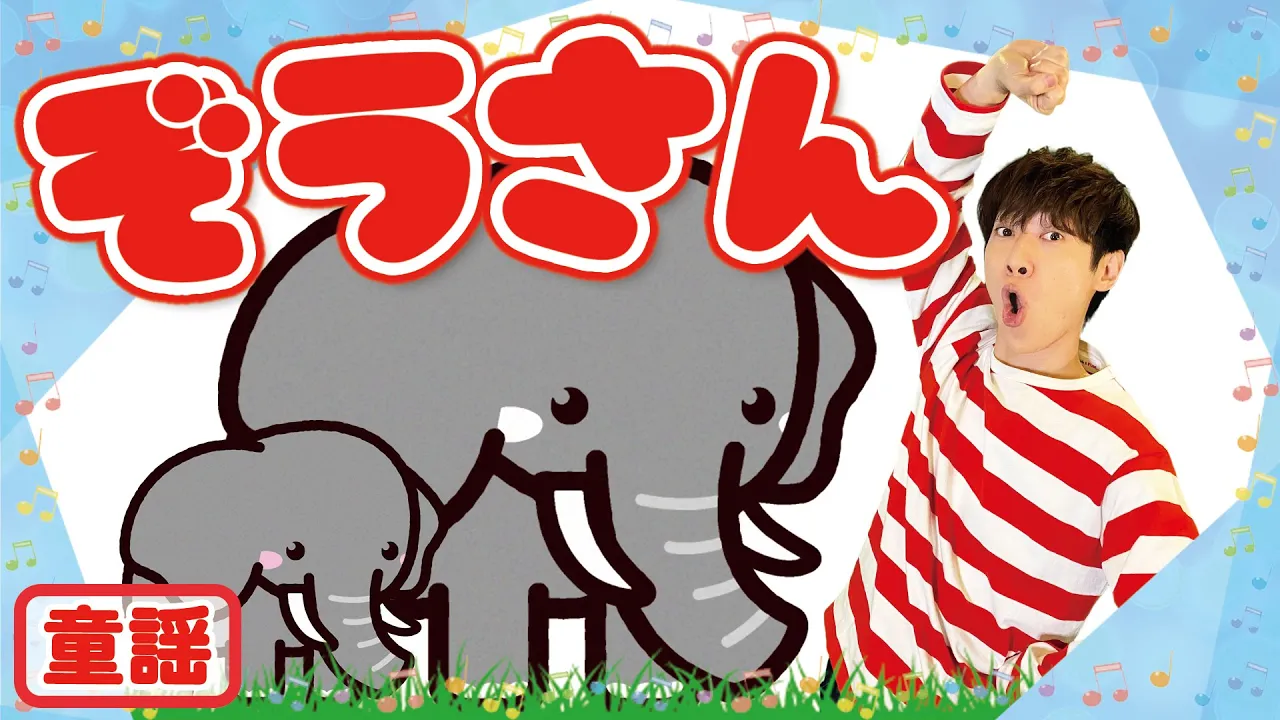
Mr. Elephant

In this song, Michio Mado’s poem is set to a gentle triple-meter melody by Ikuma Dan.
Through the image of a baby elephant, teased for its long trunk, proudly replying, “My mother’s is the same,” it tenderly conveys a heart that embraces differences.
In the 2003 “Favorite Children’s Songs” ranking, it placed seventh and has continued to be loved across generations.
It has been included in many collections, such as King Records’ “Zō-san — Michio Mado Children’s Song Collection [White Jubilee Commemoration]” and Nippon Columbia’s “Michio Mado Works — Zō-san.” It’s a song to hum along with someone dear to you, nurturing a spirit that cherishes your own individuality.
I accidentally broke the clarinet.Sakushi: Ishii Yoshiko / Sakkyoku: Fumei

This piece, for which Yoshiko Ishii wrote Japanese lyrics to a traditional French children’s song, comically portrays a child’s bewilderment when their clarinet suddenly stops making sound.
The mysterious chant “Opa kyamarado” derives from a French marching call meaning “In step, comrades.” It was broadcast in 1963 on NHK’s Minna no Uta, sung by Dark Ducks with animation by Yoji Kuri, and has remained beloved, being rebroadcast many times since.
Turning small instrumental mishaps into humor, this song is perfect not only for singing in kindergartens and elementary schools, but also for parents and children to hum together at home.
seaSakushi: Hayashi Ryūha / Sakkyoku: Inoue Takeshi

A well-known school song that conjures up a vision of the vast, blue sea.
It’s also famous that lyricist Ryuha Hayashi and composer Takeshi Inoue were both from Gunma Prefecture, which has no coastline.
Perhaps that’s why the song overflows with pure awe and longing for a sight they were seeing for the first time.
Introduced in a Ministry of Education textbook in 1941, it was later selected in 2007 as one of the “100 Japanese Songs.” It’s a classic that brings gentle moments, inviting parents and children to hum along together.
snailMonbushō shōka
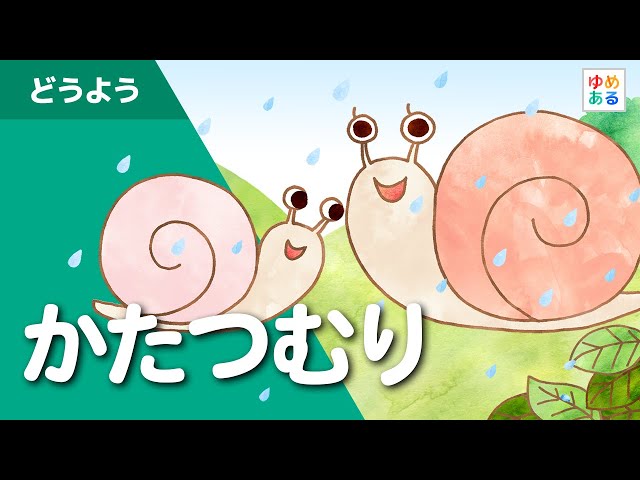
Many people can’t help but hum a tune when they spot a snail on the roadside after the rain, struggling earnestly to move forward.
Some listened to it as children and now sing it with their own kids.
This piece captures a child’s pure curiosity as they call out to the snail, asking, “Where is your head?” It was included in 1911 as a Ministry of Education shoka in Elementary School Songs (Volume 1).
Despite its relaxed image, its light and rhythmic melody is part of its charm.
Beloved across generations, this classic song also offers a chance for parents and children to engage with nature together.
tidying up

This is a practical, everyday children’s song often sung during clean-up time at nurseries and kindergartens.
Its simple structure repeats call-and-response phrases, making it easy and friendly for young children to memorize right away.
Many arrangements speed up partway through, adding a playful touch that naturally guides kids into tidying up.
It’s also featured on childcare-related YouTube channels and is widely used as background music at home and in schools.
A perfect pick for parents who want to make tidying a fun habit and for professionals working in early childhood education.
I found the first starMonbushō shōka

At dusk, everyone has likely had the experience of looking up at the sky to find the first shining star.
Published in 1932 in the Ministry of Education’s elementary school music textbook, this piece simply depicts, from a young child’s perspective, stars glittering above familiar trees such as cedars, willows, and pines.
Its folk-song-like melody is charmingly easy to hum for anyone.
A monument to the song stands at the Akashi Municipal Planetarium, and it continues to be sung today as a work symbolizing the culture of gazing up at the starry sky.
Why not sing it together with someone dear to you while searching for the evening star?
KintaroSakushi: Ishihara Wasaburō / Sakkyoku: Tamura Torazō

This is a children’s song depicting a sturdy child wrestling a bear on Mount Ashigara.
Carrying a hatchet and training with horses, the child’s bold figure is vividly expressed through an easy-to-sing duple rhythm and spirited calls, perfect for moving the body while singing.
Because it conveys strength and vigor, it’s ideal to sing with children in preschools or at home who are starting to take an interest in animals and folktales.
However, be sure to teach them about the real danger of bears.