

Grieg’s Masterpieces and Popular Works: Pieces That Evoke the Nature of Norway

Edvard Grieg, who drew inspiration from Norwegian folk music, gained recognition as a composer of the national romantic school.
He left behind numerous masterpieces, and his name has continued to resonate long after his death.
Many of Grieg’s works are beautiful pieces that evoke Norway’s rich natural landscapes.
In this article, we introduce some of Grieg’s famous and popular works.
From piano pieces and songs to orchestral and wind band music, his output spans many genres.
Whether you’re familiar with classical music or not, we encourage you to experience his music at least once!
- [Masterpiece Classics] A special showcase of gem-like masterpieces so beautiful they’ll move you to tears
- [Morning Songs] Masterpieces themed around morning. Popular songs.
- Highlighting the masterpieces and popular works of Mikhail Glinka, the pioneering composer of Russian music
- Elgar’s masterpiece. Popular classical music.
- Masterpieces that sing of the stars. Star songs that resonate in the heart, best heard beneath the night sky.
- A masterpiece by Richard Wagner. Popular classical music.
- Recommended for advanced players: Classical masterpieces to challenge at a piano recital
- Handel’s Masterpieces | A Comprehensive Introduction to His Popular Works
- Mendelssohn’s Masterpieces | Popular Classical Music
- Gabriel Fauré | Introduction to His Famous and Representative Works
- Song of the Wind: A masterpiece themed around the wind. Popular songs [2026]
- Masterpieces by Gustav Mahler. Popular classical music.
- Mussorgsky’s masterpiece. Popular classical music.
Grieg’s Masterpieces and Popular Works: Pieces That Evoke the Nature of Norway (41–50)
Two Elegiac MelodiesEdvard Grieg

Two pieces selected from the song collection Twelve Melodies, Op.
33, set to poems by the Norwegian farmer-poet Aasmund Olavsson Vinje, were arranged by Edvard Grieg himself for string orchestra as Two Elegiac Melodies.
The two movements are Heart Wounds and The Last Spring.
Though steeped in sorrow, their grand sense of scale strongly conveys Grieg’s Nordic character.
These works soothe a downcast spirit and calm a restless heart.

Morning Mood from Peer GyntEdvard Grieg

“Morning” from the incidental music to Henrik Ibsen’s 1867 play Peer Gynt, completed in 1875 by Norwegian composer Edvard Grieg.
Because it was written as incidental music, it has a background music–like quality: gentle rays of morning light filtering through the trees, a peaceful awakening, and a deeply soothing character.
Many elementary and junior high schools seem to have played this piece.
With eyes closed, you can almost hear the wind, the murmuring of a stream, and the breeze rustling through the trees—music that lets you feel the beauty of nature.
It truly is perfect as a school morning BGM.
“Morning Mood” from Peer GyntEdvard Grieg
Incidental music by Edvard Grieg, one of Norway’s foremost composers, written for Henrik Ibsen’s play Peer Gynt.
The play recounts the story of the free-spirited Peer Gynt as he sets off on his travels and returns in old age.
Of the 26 pieces of incidental music, several were selected and published as orchestral suites.
Morning Mood, which opens Act IV, is a clear, luminous piece depicting dawn in the Sahara Desert.
Its flute melody is especially famous, conveying a grandeur as if the morning sun were beautifully illuminating the sands.

In the Hall of the Mountain King from Peer Gynt Suite No. 1Edvard Grieg

Grieg was a Norwegian composer, and Morning from the suite Peer Gynt is extremely famous.
This piece is one of the numbers from Peer Gynt Suite No.
1, Op.
46, arranged in 1891.
Even people who don’t usually listen to classical music will likely think, “Oh, this one,” when they hear the main melody.
It has a mood that would also fit perfectly as background music for anime or video games.
Hommage to Chopin, Op. 73Edvard Grieg
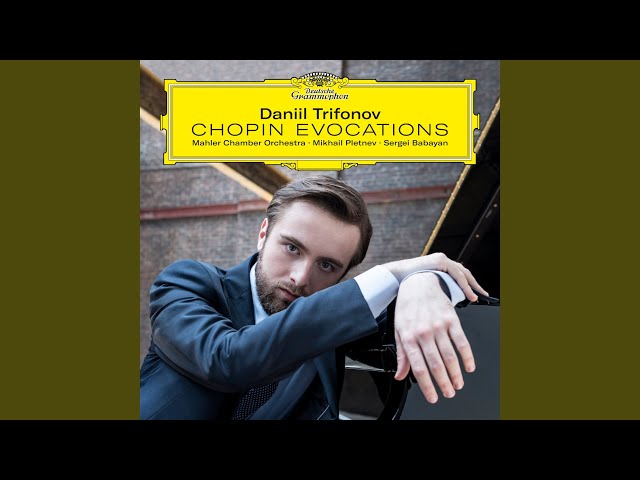
Edvard Grieg, who drew inspiration from Norwegian folk songs and left many lyrical works, composed Homage to Chopin for piano, included in Moods, Op.
73—Grieg’s final collection of piano pieces completed in 1905.
Expressed in Allegro agitato, the piece reflects a profound understanding of and respect for Chopin’s style, and it places high demands both technically and expressively.
It is a masterpiece in which the musical sensibilities of two great composers, Chopin and Grieg, are fused.
Ballad in Variation Form on a Norwegian Folk Song, Op. 24Edvard Grieg

The music of Edvard Grieg, Norway’s national composer, is rooted in the country’s folk traditions and is characterized by warm melodies that evoke Norway’s rugged nature and fjords.
From a young age, he showed a strong interest in music, exploring a variety of sounds and harmonies, and he composed a large-scale work consisting of 14 variations and a coda based on a Norwegian folk song.
This piece embodies his profound sorrow and despair, making it both technically and emotionally rich.
It is one of Grieg’s representative piano works that I highly recommend not only to those familiar with classical music but also to those who are new to it.
Piano Sonata in E minor, Op. 7, First MovementEdvard Grieg

Composed when Edvard Grieg was 22, the Piano Sonata in E minor, Op.
7 is Grieg’s only piano sonata and a work filled with his early ambitious experimentation.
The first movement showcases distinctive techniques, such as beginning the melody with his own initials, “E.H.G,” and creating a dynamic impression by having the melody descend across a range exceeding an octave.
While its folk-inspired elements are not particularly strong, the piece abounds with musical characteristics that foreshadow his later works.