RAG Music - Classic Grieg’s masterpieces... works that tease
Grieg’s Masterpieces and Popular Works: Pieces That Evoke the Nature of Norway favorite_border Last updated:2026/3/27
Grieg’s Masterpieces and Popular Works: Pieces That Evoke the Nature of Norway Edvard Grieg, who drew inspiration from Norwegian folk music, gained recognition as a composer of the national romantic school.
He left behind numerous masterpieces, and his name has continued to resonate long after his death.
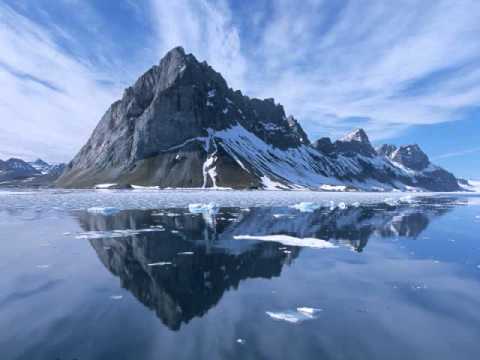
Many of Grieg’s works are beautiful pieces that evoke Norway’s rich natural landscapes.
In this article, we introduce some of Grieg’s famous and popular works.
From piano pieces and songs to orchestral and wind band music, his output spans many genres.
Whether you’re familiar with classical music or not, we encourage you to experience his music at least once!
Table of Contents Grieg’s Masterpieces and Popular Works: Pieces That Evoke the Nature of Norway Lyric Pieces: Wedding Day at Troldhaugen, Op. 65 No. 6 Edvard Grieg Lyric Pieces “Nocturne,” Op. 54 No. 4 Edvard Grieg String Quartet in G minor, Op. 27 Edvard Grieg Lyric Pieces “To Spring,” Op. 43 No. 6 Edvard Grieg Ballad in variation form on a Norwegian folk song, Op. 24 Edvard Grieg “Peer Gynt” Suite No. 1 “Morning” Op. 46-1 Edvard Grieg Piano Concerto in A minor, Op. 16 Edvard Grieg Lyric Pieces “Butterfly,” Op. 43 No. 1 Edvard Grieg Morning from Peer Gynt Suite Edvard Grieg Peer Gynt Suite No. 1, “In the Hall of the Mountain King,” Op. 46 No. 4 Edvard Grieg Lyrical Pieces “Summer Evening,” Op. 71 No. 2 Edvard Grieg Violin Sonata No. 3 in C minor, Op. 45 Edvard Grieg Suite “From Holberg’s Time,” Op. 40 Edvard Grieg Holberg Suite, Op. 40 Edvard Grieg Two Norwegian Melodies, Op. 63 Edvard Grieg Cello Sonata in A minor Edvard Grieg Norwegian Dances, Op. 35 Edvard Grieg Funeral March in Memory of Rikard Nordraak, EG 107 Edvard Grieg Mountain Girl, Op. 67 Edvard Grieg Lyric Pieces “March of the Trolls,” Op. 54 No. 3 Edvard Grieg Lyric Suite, Op. 54 Edvard Grieg Piano Sonata, Op. 7 Edvard Grieg Lyric Pieces, Book V, Op. 54 – No. 3: March of the Dwarfs Edvard Grieg phantom Edvard Grieg Lyric Pieces, Book III, Op. 43: No. 6 ‘To Spring’ Edvard Grieg Lyric Pieces, Book V, Op. 54 No. 3 “March of the Dwarfs” Edvard Grieg An Ode to Spring Edvard Grieg Peer Gynt Suite No. 2: Solveig’s Song, Op. 55 No. 4 Edvard Grieg Anitra’s Dance Edvard Grieg nostalgia Edvard Grieg Fairies’ Dance Edvard Grieg Two Sad Melodies, Op. 34 Edvard Grieg By your side Edvard Grieg Grandmother’s Minuet Edvard Grieg Andante con moto for Piano Trio Edvard Grieg The quiet of the forest Edvard Grieg wind spirit Edvard Grieg Peer Gynt Suite No. 1, Op. 46: I. Morning Edvard Grieg Holberg Suite (From Holberg’s Time), Op. 40: No. 1 “Prelude” Edvard Grieg Lyric Pieces, Book I, Op. 12: No. 1 “Arietta” Edvard Grieg Lyric Pieces, Book VIII, Op. 65, No. 6: “Wedding Day at Troldhaugen” Edvard Grieg Lyric Pieces, Book VIII, Op. 65: No. 6, Wedding Day at Troldhaugen Edvard Grieg Two Elegiac Melodies Edvard Grieg Morning Mood from Peer Gynt Edvard Grieg “Morning Mood” from Peer Gynt Edvard Grieg In the Hall of the Mountain King from Peer Gynt Suite No. 1 Edvard Grieg Hommage to Chopin, Op. 73 Edvard Grieg Ballad in Variation Form on a Norwegian Folk Song, Op. 24 Edvard Grieg Piano Sonata in E minor, Op. 7, First Movement Edvard Grieg Piano Concerto in A minor, Op. 16 Edvard Grieg Peer Gynt Suite No. 1, Op. 46: No. 3 “Anitra’s Dance” Edvard Grieg Peer Gynt Suite No. 1, Op. 46: IV. In the Hall of the Mountain King Edvard Grieg Peer Gynt Suite No. 1, Op. 46: ‘The Death of Åse’ Edvard Grieg Peer Gynt Suite No. 1, Op. 46: In the Hall of the Mountain King Edvard Grieg In the Hall of the Mountain King, from Peer Gynt Suite No. 1, Op. 46 Edvard Grieg Åse’s Death from Peer Gynt Suite No. 1 Edvard Grieg ‘Solveig’s Song’ from Peer Gynt Suite No. 2 Edvard Grieg Holberg Suite No. 1: Prelude Edvard Grieg waltz Edvard Grieg From Lyric Pieces, Book VIII: Wedding Day at Troldhaugen Edvard Grieg I love you. Edvard Grieg Lyric Pieces, Book X, Op. 71 No. 2: Summer Evening Edvard Grieg Lyric Pieces, Book 10, Op. 71: No. 3 “Puck” Edvard Grieg Lyric Pieces No.10-2 “Summer Evening” Edvard Grieg Lyric Pieces, Book I, Op. 12 “Arietta” Edvard Grieg Lyric Pieces, Book III, Op. 43: No. 1, “Butterfly” Edvard Grieg Lyric Pieces, Book III, Op. 43, No. 4: “Little Bird” Edvard Grieg Poetic Tone Pictures, Op. 3 No. 5 Edvard Grieg piano concerto A-mol op.16 Grieg From the Concerto in A minor (from Glover Piano Method, Vol. 3) Edvard Grieg morning Edvard Grieg Ich liebe dich Edvard Grieg Symphonic Dances Edvard Grieg secret Edvard Grieg Piano Concerto in A minor Edvard Grieg Lyric Pieces, Book I, Op. 12, No. 4: ‘Elves’ Dance’ Edvard Grieg In autumn Edvard Grieg play_arrow Play in playlistGrieg’s Masterpieces and Popular Works: Pieces That Evoke the Nature of Norway (1–10) Lyric Pieces: Wedding Day at Troldhaugen, Op. 65 No. 6 Edvard Grieg Wedding Day at Troldhaugen is included in Lyric Pieces, Book VIII.
Its rhythmical melody, which makes you want to dance, is just like a wedding venue.
The gentle, quiet character of the middle section evokes scenes brimming with happiness during the ceremony.
expand_less Raise the rankingexpand_more lower
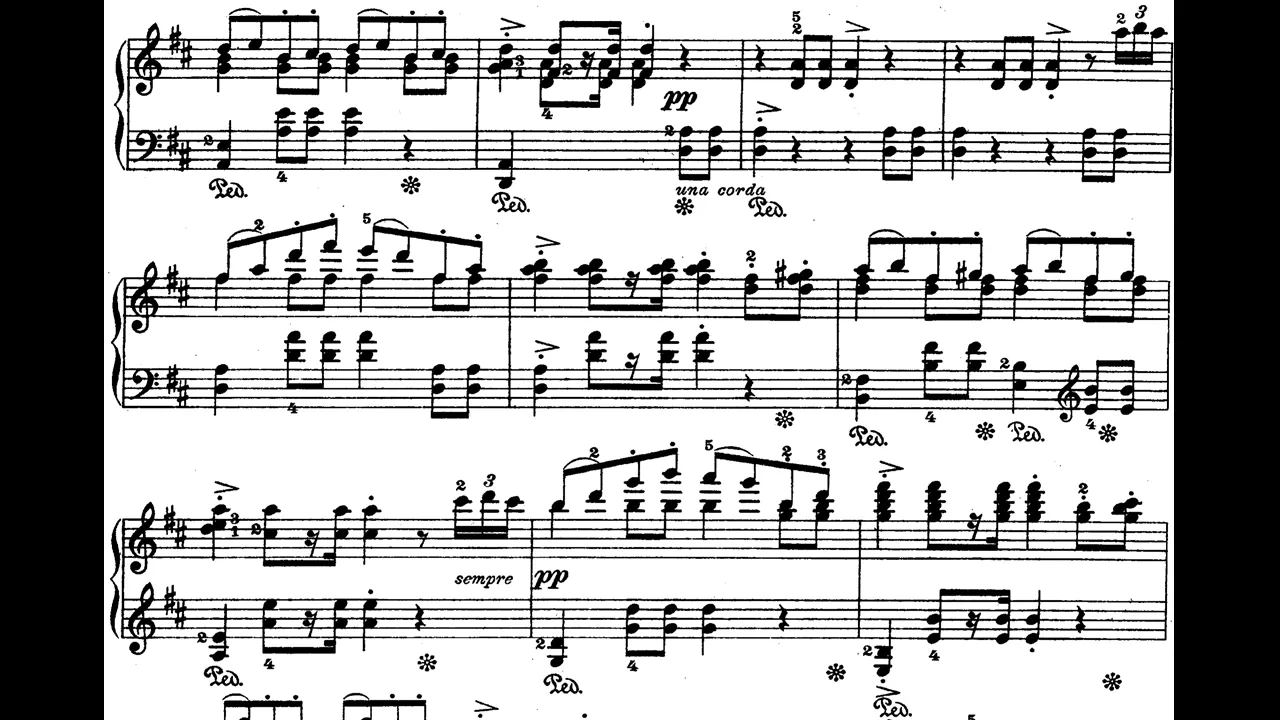
Lyric Pieces “Nocturne,” Op. 54 No. 4 Edvard Grieg A solo piano piece included in Grieg’s Lyric Pieces, Book V.
Published in 1891, this work overflows with beauty that evokes Norway’s richly natural landscapes.
It depicts the stillness of night and a dreamlike atmosphere, characterized by a gentle, meditative melody.
The left hand’s eighth-note accompaniment provides the overall momentum, while the right-hand melody sings delicately.
In the middle section, brilliant passages reminiscent of birdsong appear, adding sparkle to the piece.
Highly recommended for those who wish to express nocturnal scenes and emotions through music.
Why not listen while imagining Norway’s forests and lakes?
expand_less Raise the rankingexpand_more lower
String Quartet in G minor, Op. 27 Edvard Grieg It begins with a very powerful passage, followed by increasingly intense melodies.
In the middle section it shows a gentler side, yet the cello’s low register, rendered with trills, imparts a subtle sense of unease.
In the latter half, the music turns open and supple in character.
It is one of the most original and daring string quartets, leaving a profound influence on later generations.
expand_less Raise the rankingexpand_more lower
Lyric Pieces “To Spring,” Op. 43 No. 6 Edvard Grieg A masterpiece composed by Grieg in 1884.
Included in Lyric Pieces, Book III, this work was written while Grieg was traveling in Denmark and feeling homesick, praising the beauty of his homeland.
The gentle piano timbre creates a lyrical piece that evokes the breath of spring and majestic nature.
Grieg’s music is rooted in Norwegian folk traditions and is highly regarded for its lyrical and refined sensibility.
This work was also featured on NHK’s “Famous Music Album,” presented alongside stunning scenes of Norway.
A recommended piece for anyone who wants to be captivated by the beauty of nature.
expand_less Raise the rankingexpand_more lower
Ballad in variation form on a Norwegian folk song, Op. 24 Edvard Grieg A piano piece composed between 1875, when Peer Gynt was completed, and the following year, 1876.
The entire piece is performed with chordal progressions.
Its character evokes an indescribable nostalgia, conveying a certain bittersweet emotion.
expand_less Raise the rankingexpand_more lower
“Peer Gynt” Suite No. 1 “Morning” Op. 46-1 Edvard Grieg A very famous piece from the Suite Peer Gynt, included in the First Suite.
The opening flute melody evokes a sunrise, and after it is passed to the bassoon, the timbres of various instruments layer in.
The sound grows fuller and louder, allowing you to imagine a complete morning scene.
expand_less Raise the rankingexpand_more lower
Piano Concerto in A minor, Op. 16 Edvard Grieg This piece, one of Grieg’s signature works, is among the most popular piano concertos.
Many of you have probably heard its opening melody at least once.
The first movement unfolds a powerful theme, the second movement highlights lyrical beauty, and the finale concludes the work with bright, dazzling melodies, brimming with Nordic charm.
Composed in 1868 when Grieg was 25, this work splendidly captures Norway’s nature and culture.
expand_less Raise the rankingexpand_more lower