

Recreation Activities Effective for Long-Term Care Prevention for Seniors

This article introduces recommended recreational activities for preventing the need for long-term care.
We’ve gathered a wide range of options, including exercises and games that move the hands and feet, as well as quizzes that engage the mind.
Doing recreational activities is effective for physical rehabilitation and dementia prevention.
You can also expect benefits like increased appetite and improved sleep quality as your activity level rises.
It’s also a great opportunity to interact with other older adults who are participating.
Please use this article as a reference and enjoyably put it to use for care prevention.
- For Seniors: Effective Recreation for Preventing Care Needs—Have Fun While Staying Healthy
- [For Seniors] Recommended Easy Strength Training
- [Brain Training for Seniors] Recommended Hand-Play Recreation for Dementia Prevention
- [November Health Topic] Indoor Recreation Ideas for Older Adults
- [For Seniors] Refresh Your Mood! Lively, Get-Moving Games
- [For Seniors] Enjoyable Indoor Activities! Recreations and Games That Engage the Mind and Body
- Recommended recreational activities to help seniors enjoy their time in care facilities
- [For Seniors] Enjoyment at Day Care: A Roundup of Games and Recreational Activities
- [For Seniors] Extremely Effective Brain Training! A Fun Collection of Hand Games
- [October Health Topic] Introducing Recreational Activities for Seniors!
- For Seniors: Enjoy Every Day! A Collection of Senior Recreation Ideas
- [For older adults] Music recreation that helps boost mood and improve health
- [March Health Topic] Introducing Recreational Activities for Seniors!
[For Older Adults] Recreational Activities Effective for Preventing the Need for Long-Term Care (181–190)
Music Therapy Handbell Concert

Let me introduce music therapy using handbells.
In handbell ensembles, each person is responsible for specific notes on the scale, which actually requires a lot of concentration.
Even with familiar children’s songs, you need to remember exactly when to play your note.
The timing is important, and you also have to adjust the volume with your arm movements.
Because this sends a lot of stimulation to the brain, it can be expected to have brain-training effects.
In addition, since it is often done in groups, it naturally fosters interaction among participants, and the sense of accomplishment when it all comes together is exceptional.

[For Seniors] Recreational Activities Effective for Preventing the Need for Long-Term Care (191–200)
Music Therapy: Fun with Rhythm

Recreation that uses music is popular with many people.
This time, we’ll introduce ideas for rhythm-based music therapy.
When you move your body to a rhythm, it becomes a dual task: you have to both “listen” to the rhythm and “move” in time with it, processing these two actions simultaneously.
This creates a situation where the brain works to its fullest.
Above all, moving together to music tends to create excitement and a sense of unity, making it a fun activity for everyone.
Mackerel and Spanish mackerel: a game where you only take the cards with the same kanji

If you want to train your visual discrimination, try this! Here’s a game where you only grab cards with the same kanji.
First, write two similar-looking kanji—such as 鯖 and 鰆—on cards, making sure each one appears the same number of times.
When the game begins, one person quickly gathers all the mackerel (saba) cards, while the other quickly gathers all the Spanish mackerel (sawara) cards.
The player who gathers all of their cards first wins.
Because you have to instantly tell apart similar shapes, it naturally boosts fine visual recognition, and it also seems to improve concentration and decision-making.
It’s fun to include a variety of kanji, symbols, or pictures, too.
Give it a try for inspiration!
Ultimate luxury aircraft at a deserted Kyushu airport
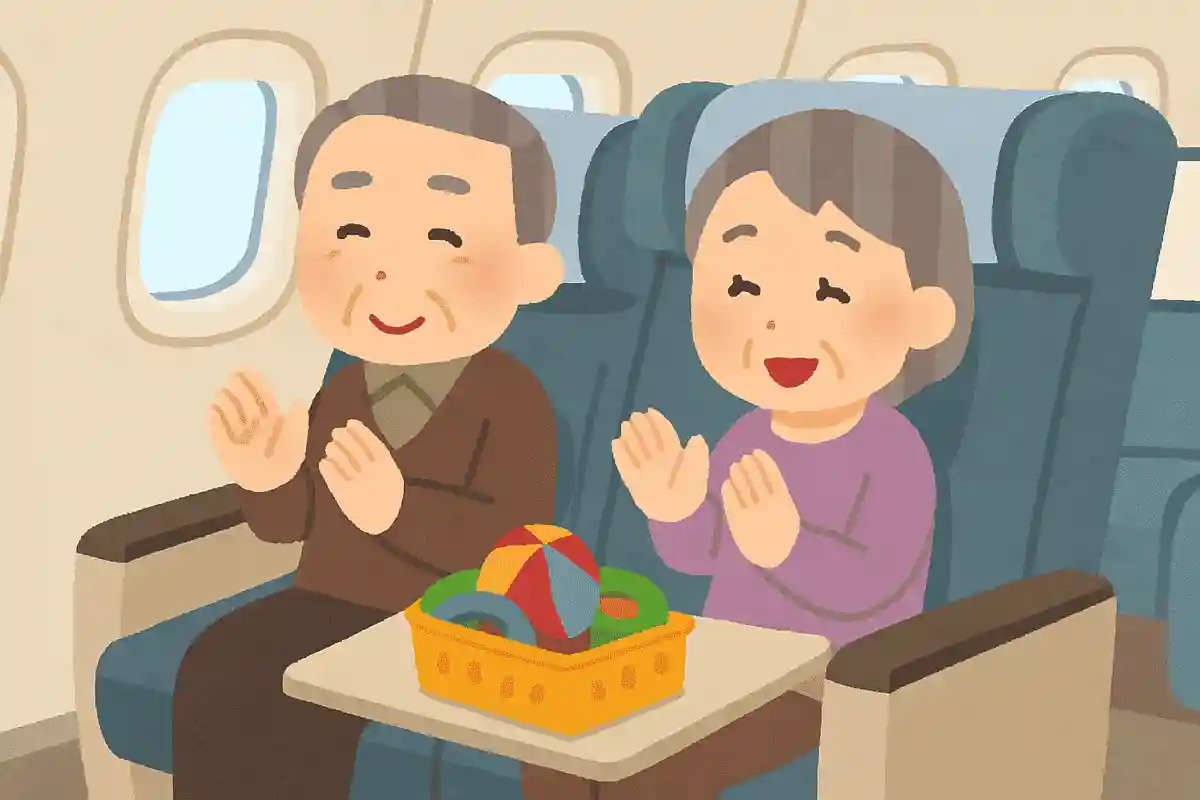
The tongue twister “kuukyo na Kyushu kuukou no kyuukyoku koukyuu koukuuki” (empty Kyushu airport’s ultimate luxury aircraft) feels difficult just by looking at it written down.
The sentence is also on the longer side for a tongue twister, and it’s characterized by a mix of hard k sounds and kya-kyu-kyo clusters.
Because of that, it’s said to be hard to say without tripping up.
To be able to say tongue twisters, the key is to be conscious of each word and pronounce every one clearly and distinctly.
By the way, there is no actual airport called “Kyushu Airport.” If you were to use a real airport in a tongue twister, it would be one of the airports in the Kyushu region, such as Kitakyushu Airport.

Find the same items

We’d like to introduce a matching game that’s recommended even for people who find arithmetic or reading and writing difficult, as well as for seniors who aren’t comfortable with them.
Look for items in a picture that match the prompt.
Searching for images that are the same as the prompt requires observation and memory skills, which helps stimulate the brain.
You can focus and play on your own, or enjoy it while chatting in a larger group.
With a big group, forming teams of several seniors and doing a team competition could be exciting.
It may also encourage interaction with others.
In conclusion
How was it? We introduced some recommended recreational activities for preventing the need for care among older adults. There were various types, such as those that use the hands and feet and those that engage the mind. Recreational activities that involve the body and the brain are effective for increasing activity levels and preventing dementia. Please use this article as a reference and give them a try!