

Recreation Activities Effective for Long-Term Care Prevention for Seniors

This article introduces recommended recreational activities for preventing the need for long-term care.
We’ve gathered a wide range of options, including exercises and games that move the hands and feet, as well as quizzes that engage the mind.
Doing recreational activities is effective for physical rehabilitation and dementia prevention.
You can also expect benefits like increased appetite and improved sleep quality as your activity level rises.
It’s also a great opportunity to interact with other older adults who are participating.
Please use this article as a reference and enjoyably put it to use for care prevention.
- For Seniors: Effective Recreation for Preventing Care Needs—Have Fun While Staying Healthy
- [For Seniors] Recommended Easy Strength Training
- [Brain Training for Seniors] Recommended Hand-Play Recreation for Dementia Prevention
- [November Health Topic] Indoor Recreation Ideas for Older Adults
- [For Seniors] Refresh Your Mood! Lively, Get-Moving Games
- [For Seniors] Enjoyable Indoor Activities! Recreations and Games That Engage the Mind and Body
- Recommended recreational activities to help seniors enjoy their time in care facilities
- [For Seniors] Enjoyment at Day Care: A Roundup of Games and Recreational Activities
- [For Seniors] Extremely Effective Brain Training! A Fun Collection of Hand Games
- [October Health Topic] Introducing Recreational Activities for Seniors!
- For Seniors: Enjoy Every Day! A Collection of Senior Recreation Ideas
- [For older adults] Music recreation that helps boost mood and improve health
- [March Health Topic] Introducing Recreational Activities for Seniors!
[For Older Adults] Recreational Activities Effective for Preventing the Need for Care (61–70)
Music Therapy: Fun with Rhythm

Recreation that uses music is popular with many people.
This time, we’ll introduce ideas for rhythm-based music therapy.
When you move your body to a rhythm, it becomes a dual task: you have to both “listen” to the rhythm and “move” in time with it, processing these two actions simultaneously.
This creates a situation where the brain works to its fullest.
Above all, moving together to music tends to create excitement and a sense of unity, making it a fun activity for everyone.

Word search with lyrics about Mt. Fuji

Let’s enjoy some brain training using familiar children’s songs! This time, we’ll use the lyrics of “Mount Fuji.” We’ll make a fill-in-the-blank activity with parts of the lyrics missing, and have participants think about what words go there.
Instead of just recalling the lyrics, they will search for words from prepared letter cards and assemble them.
Finding the correct answer gives a real sense of accomplishment.
Using well-known songs familiar to seniors makes the activity approachable and can also lead into singing.
It’s a fun way to help prevent cognitive decline, so it’s recommended as a recreation activity in senior care facilities.
This kid had a hard time writing katakana, didn’t they? I wonder if they didn’t cry?
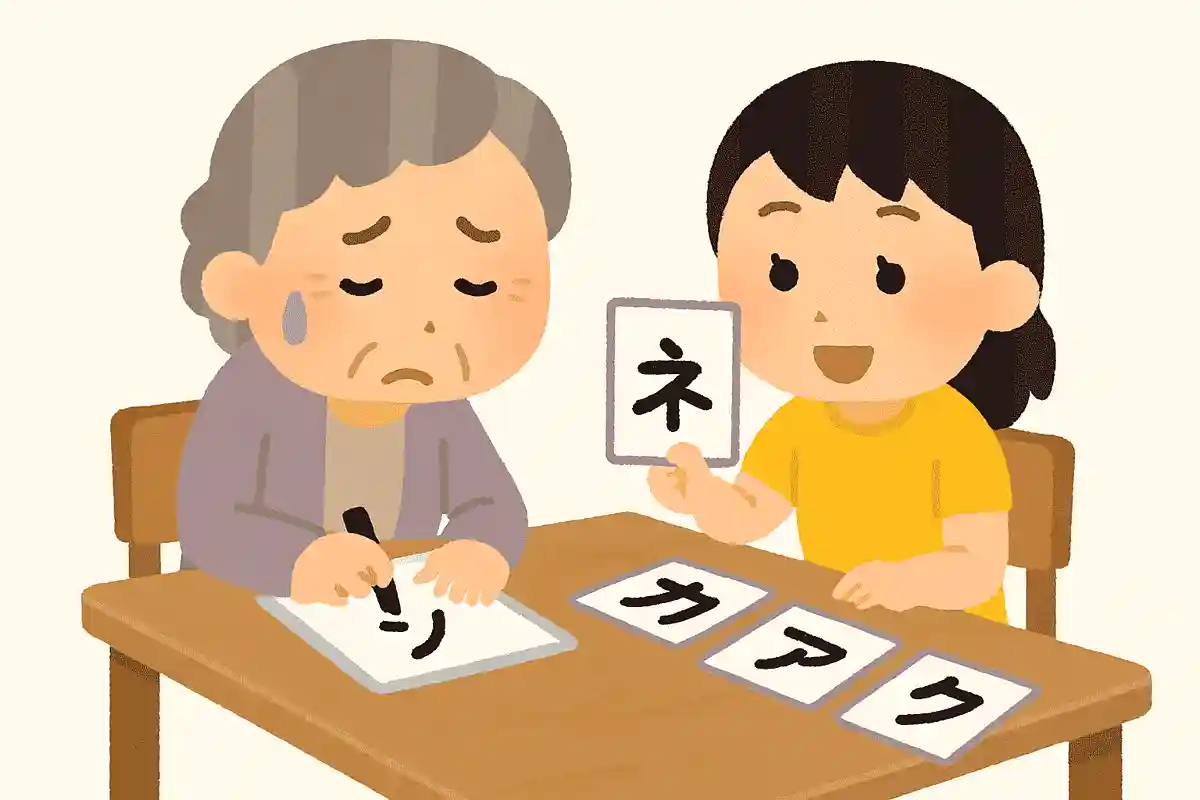
“Kono ko nakanaka katakana kakenakatta na, nakakanakatta kana?” is quite a long tongue twister.
Are they worried that the child who couldn’t write katakana didn’t end up crying? Words with similar sounds like nakanaka and katakana run together almost like a reverse reading.
Plus, the repeated ka sounds create a string of identical syllables, which adds to the difficulty of reading.
Tongue twisters can make you rush, but the key is to stay calm and read through without hurrying.

Both the Japanese plum and the peach are kinds of peaches; the peach and the Japanese plum are both kinds of peaches.
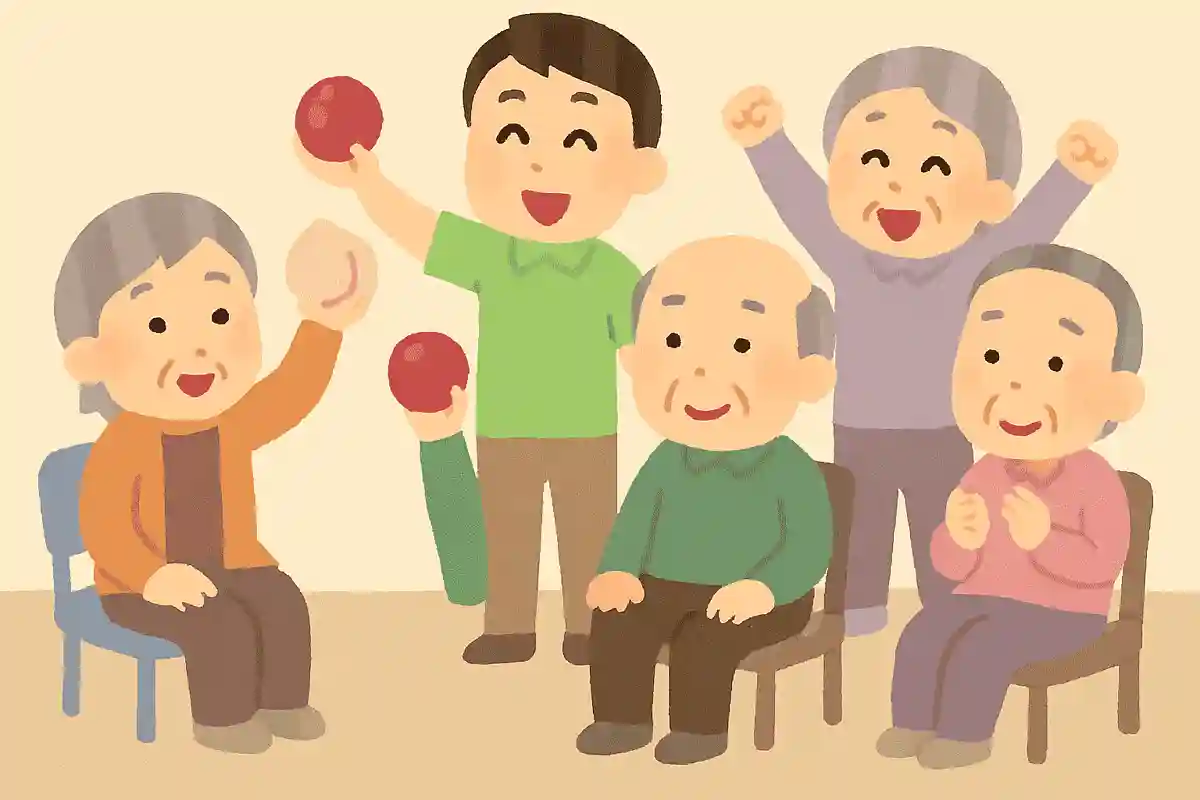
Plums come into season around mid-June.
Plums are a size smaller than peaches and are known for their sweet-and-tart flavor.
Although they’re said to be smaller than peaches, their shapes are similar, which is why there’s a tongue twister: “Sumomo mo momo mo momo no uchi; momo mo sumomo mo momo no uchi,” roughly meaning “Both plums and peaches are kinds of ‘momo.’” Because of this tongue twister, some older adults may have the impression that plums and peaches are the same variety.
However, plums belong to the genus Prunus in the rose family, while peaches belong to the genus Amygdalus (also within the rose family), so they are different.
Indeed, while their shapes are similar, plums have smooth skin, whereas peaches have a fine fuzz.
In fact, plums are said to be more closely related to apricots than to peaches.
Hard-to-pull nails, nails that are difficult to remove, nails pulled out with a nail puller
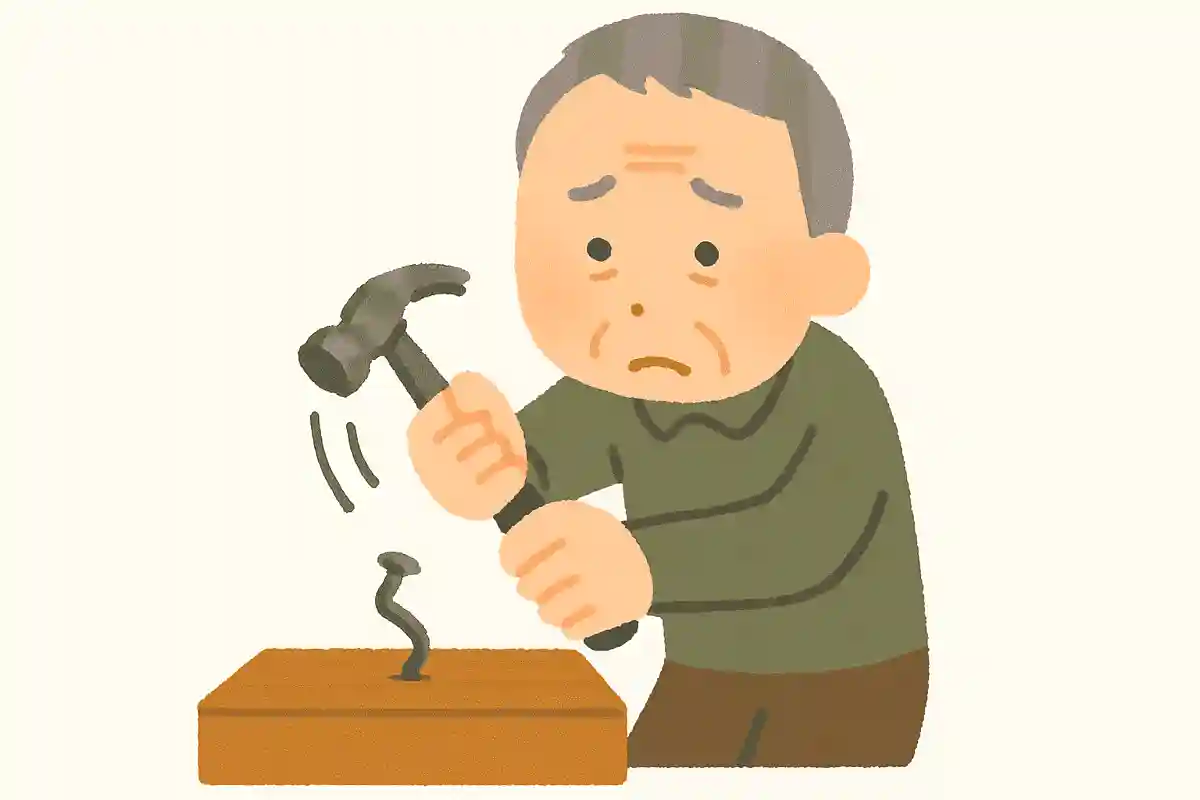
“A nail that’s hard to pull out, a nail that’s difficult to draw out, a nail pulled with a nail puller”—this tongue-twister also brings to mind scenes of carpenters or families doing DIY at home.
You can really picture someone struggling to pull out a stubborn nail.
Because of that, it repeats the same or similar words quite a lot.
It might be easier to say if you consciously break it into words like: hard-to-pull, nail; hard-to-draw-out, nail.
It’s a tongue-twister that may even help older adults recall their own DIY experiences.
Tokyo Patent Approval Bureau
“Tokyo Patent Approval Bureau” is a classic tongue twister.
Some older adults may have heard it or even tried the tongue twister at least once.
However, the Tokyo Patent Approval Bureau doesn’t actually exist.
It never existed in the past either; what does exist is the Japan Patent Office in Chiyoda City, Tokyo.
So where did the TV announcer tongue twister “Tokyo Patent Approval Bureau” come from? As it turns out, it’s said to have been created for use in recruitment exams.
red paper roll, blue paper roll, yellow paper roll
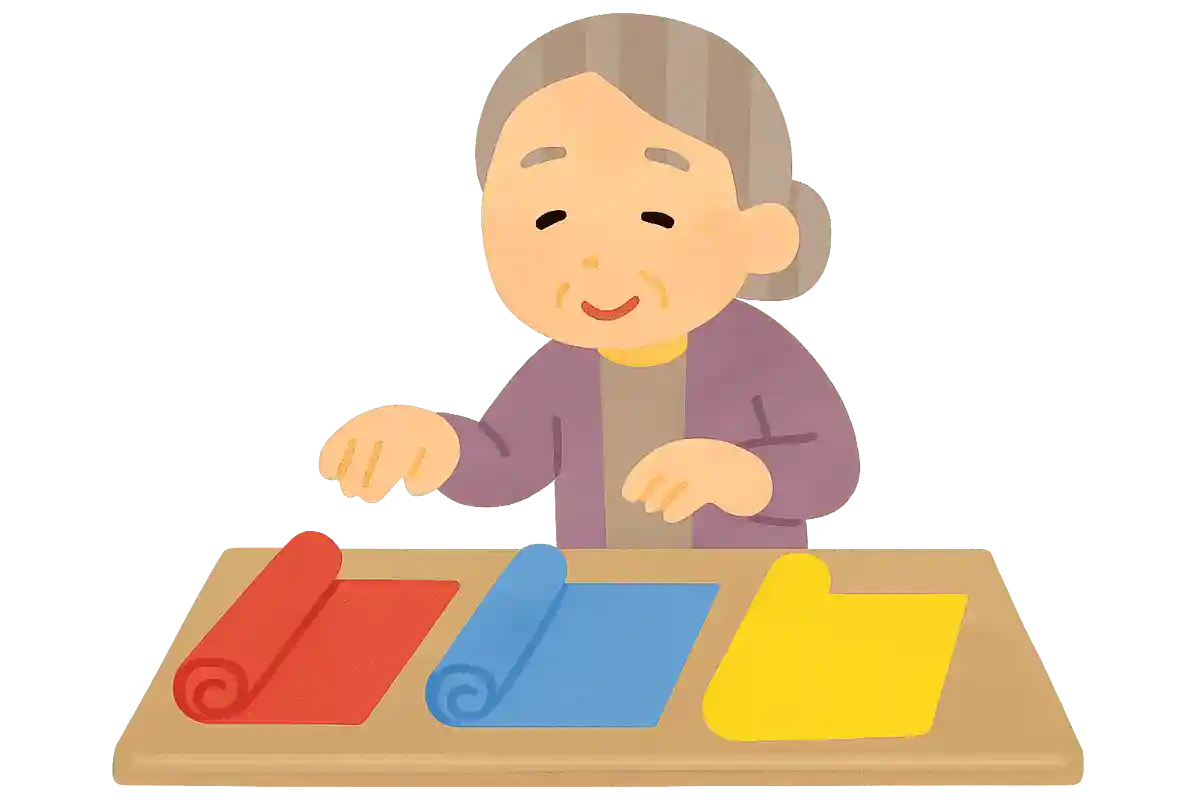
Tongue twisters often consist of strings of hard-to-pronounce words.
“Aka-makigami ao-makigami ki-makigami” (red scroll paper, blue scroll paper, yellow scroll paper) is also a sequence of tricky words.
By the way, makigami refers to paper made by joining together sheets of hansetsu paper (a tall, narrow paper) side by side to make a long roll.
It’s sold in scroll form.
This tongue twister lines up red, blue, and yellow scroll paper.
It looks easy at first glance, but when you try to say it repeatedly, it becomes hard to pronounce.
As a tip, if you pause slightly between the color names—like red or blue—and the word “makigami,” it should be a bit easier to say.
Try it together with older adults.