

![[For Seniors] A Collection of Simple Exercise Programs Suitable for Beginners](https://i.ytimg.com/vi_webp/A2xdMWsUMwg/maxresdefault.webp)

For those aged 65 and over, it is recommended to engage in at least 40 minutes of physical activity every day, regardless of intensity.
However, 70% of people aged 65 and over are not meeting the recommended amount of exercise.
Not exercising can shorten healthy life expectancy.
It also increases the risk of conditions such as diabetes, heart disease, cancer, and depression.
That said, suddenly starting high-intensity exercise can be taxing on the body.
In this article, we’ll introduce an exercise program that even beginners can do without overexertion.
Use it as a guide to help you live a healthy and enjoyable life for years to come.
- Recommended Indoor Exercises for Seniors
- For seniors: Leg-strengthening exercises you can do without overexertion.
- [Today's Recommendation] Gentle Health Exercises for Seniors
- For seniors: Enjoyable exercises done while seated, accessible for wheelchair users.
- [For Seniors] Stretching Exercises: Easy and Safe to Do
- For Seniors: Fun and Lively Exercise Recreation
- [For Seniors] Easy and Fun Core Training
- For Seniors: Back-Strengthening Exercises, Calisthenics, and Stretches—Workouts Women Can Do Without Strain
- [For Seniors] Balance-Training Exercises: Preventing Falls
- [For Seniors] Recommended Easy Strength Training
- [For Seniors] Core Training: Recommended Simple Rehabilitation
- [For Seniors] A Fun Sports Day! Recreational Activities You Can Do Safely
- [For Seniors] Improve Your Body Concerns! A Summary of Exercises for Urinary Leakage
[For Older Adults] A Collection of Simple Exercise Programs for Beginners (1–10)
A stretch to lengthen the gluteus medius while lying downNEW!

Let me show you a stretch that helps align the hips.
First, lie on your back with your knees bent.
Next, place your right ankle on your left knee.
Once you’re set, gently rock your lower body side to side, alternating which leg is crossed.
The gluteus medius is the muscle on the outer side of your buttocks, so focus on feeling a good stretch there.
If you raise your arms while doing this movement, you’ll also stretch your obliques, which can help ease shoulder and lower back tension.
It’s a two-birds-with-one-stone stretch!

Side leg raise in a standing positionNEW!
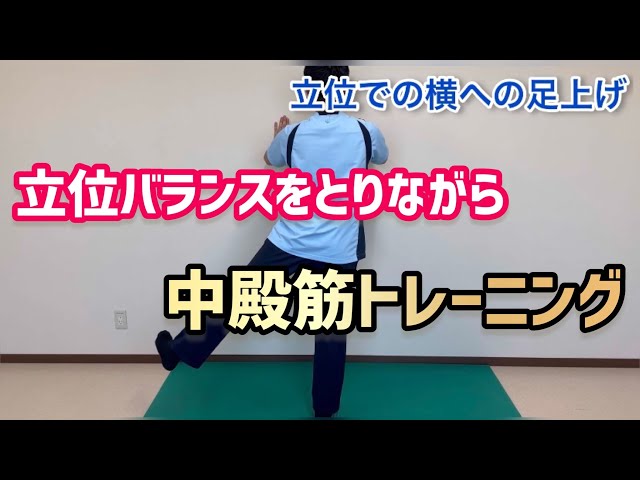
Stand with both hands on the wall and open one leg to the side at a time.
Be careful not to let your toes point outward when you open your leg, and avoid leaning your body to the opposite side.
Aim for 3 sets of 10 reps, but start within a comfortable range until you get used to it.
Because falling can be dangerous, be sure to do this where you have something to hold onto.
By practicing a little every day, you can strengthen the gluteus medius.
The gluteus medius is important for stable walking, so take this opportunity to give it a try.
BoxerciseNEW!

Boxercise for seniors is a safe workout you can enjoy even while seated.
Even if walking is difficult or going outside is hard, you can still get your body moving well in your room.
Basically, you repeat punching movements.
Since simply repeating them can get boring, it’s good to do it while listening to your favorite music or by changing up the rhythm.
If you do it standing, be careful to avoid falling.
Punching also offers brain-training benefits!
Hip joint yoga you can do lying down: iliopsoas stretchNEW!

Here’s a hip joint yoga routine that can help improve urinary leakage and reduce a bloated lower belly.
While lying down, gently loosen the stiff muscles around the hips.
There are several stretching movements, but start by bending your right leg and drawing the knee toward your body while keeping your left leg extended straight.
Then move your right leg in a circular motion from the hip joint.
Other options include bringing the soles of your feet together and gently rocking your knees, or placing a towel between your raised knees and lifting your hips.
Each is simple yet effective, so give them a try if you like.
Yoga to Strengthen the IliopsoasNEW!

The iliopsoas is what’s called a deep (inner) muscle, so strengthening it helps with posture and walking.
It’s not hard to train.
Start on your knees, then step one foot forward.
Bend the front knee to 90 degrees and open it outward.
Turn the back leg inward.
Raise both hands overhead, then hinge your torso forward and return, keeping your hips from shifting.
Switch legs and do 10 reps on each side.
It’s a simple move, so add it to your daily stretching routine.
For people with tight iliopsoas muscles! Iliopsoas stretchNEW!

If you spend more time sitting than standing, your iliopsoas muscles are probably stiff and tight.
The iliopsoas is an important deep muscle for maintaining posture and walking.
Take this opportunity to stretch and loosen it up.
Start by sitting on your heels (seiza), place both hands on the floor in front of you, and extend your right leg straight back.
Keep your left leg in the seiza position.
With your hands slightly wider than shoulder-width, shift your weight backward to stretch the right iliopsoas.
Switch legs and stretch the other side as well.
Psoas muscle exercisesNEW!

As we get older, we often develop pain in the knees and lower back.
If massage hasn’t been helping, why not try this exercise to strengthen your iliopsoas? Activating the iliopsoas can reduce the strain on your knees and lower back.
It’s simple: sit toward the edge of a chair and perform high knee lifts.
Do 30 reps on each leg.
If you want to increase the load, extend both arms straight forward and lean your torso slightly forward.
Keep doing the knee lifts in this position.