

Fireworks Trivia Quiz & Fun Facts: Nostalgic Topics for Seniors
Fireworks, beloved as a hallmark of summer.
To help seniors enjoy nostalgic memories and the feeling of the season, we’ve gathered trivia quizzes and fun facts about fireworks.
The content focuses on questions that aren’t too difficult, making it enjoyable to learn.
Through topics on the history, types, and ways to enjoy fireworks, it will evoke old memories and serve as a great conversation starter.
Please make use of it for family time or recreational activities in caregiving settings.
May it bring lots of smiles!
Fireworks Trivia Quiz & Fun Facts. Nostalgic Topics for Seniors (1–10)
Fireworks festivals are held in the summer. Why are they free every year?
- Because there is a sponsor
- Because the mayor is issuing it.
- Because they are funding (paying money) at the venue
See the answer
Because there is a sponsor
The reason you can enjoy the summer fireworks festival for free every year is that it has sponsors. Sponsors are companies or organizations that cover the event’s costs in exchange for advertising and promotional benefits. Thanks to their support, many people can enjoy the festival easily, which also helps revitalize the local community and promote tourism.

What is the traditional Japanese clothing that people often wear at summer fireworks festivals and similar events?
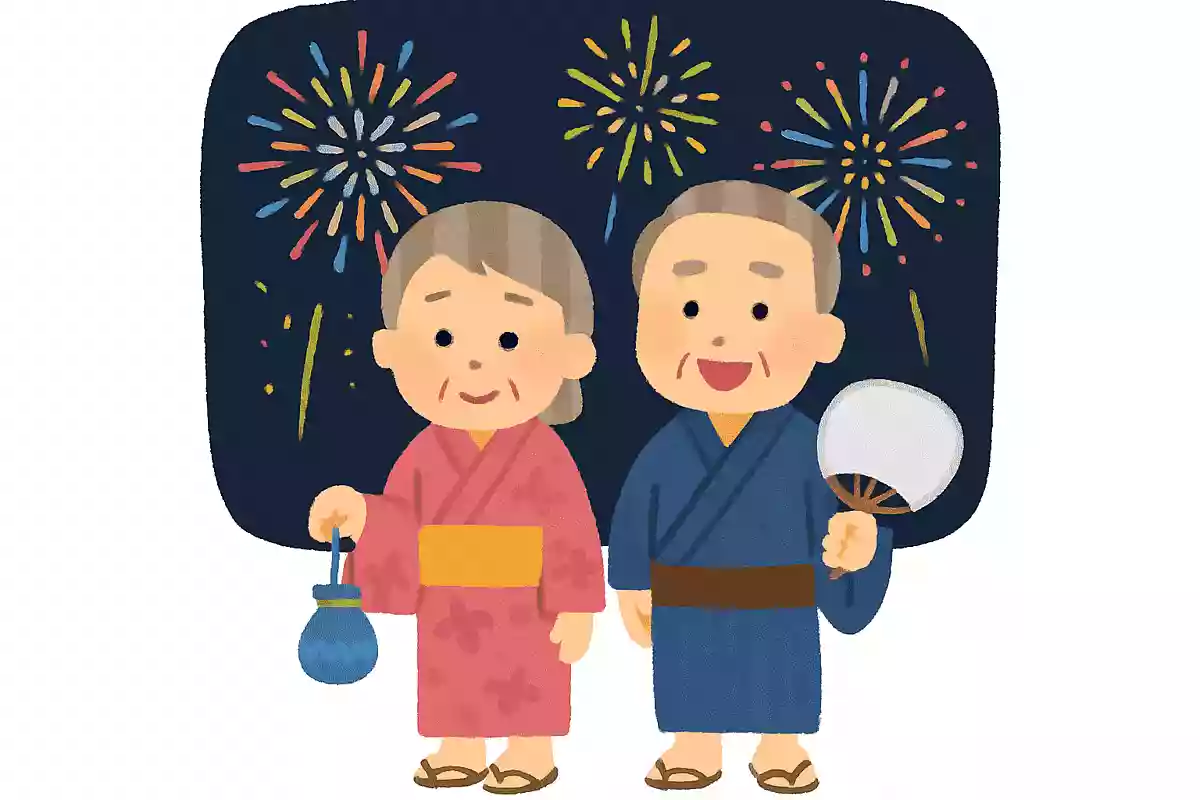
- tuxedo
- junihitoe (twelve-layered robe)
- yukata
See the answer
yukata
The traditional Japanese clothing often worn at summer fireworks festivals is the yukata. A yukata is a type of kimono made from light, breathable cotton, making it perfect for the hot summer season. Wearing a yukata to a fireworks festival lets you enjoy the atmosphere of a Japanese summer even more. They come in a wide variety of colors and patterns and are loved by people of all ages, regardless of gender.
What do you call the decorative lights that allow people to enjoy a festival even at night?
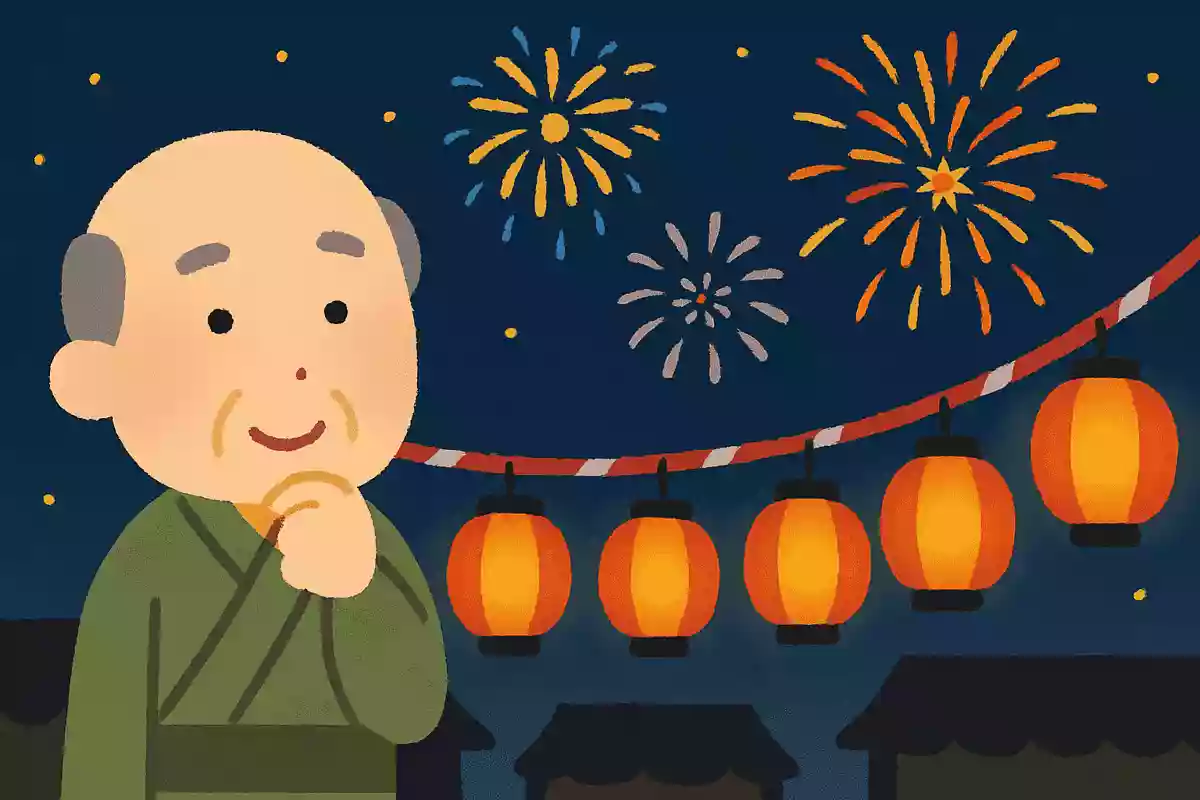
- paper lantern
- mercury lamp
- flashlight
See the answer
paper lantern
The lights used to decorate festivals so they can be enjoyed at night are called chōchin, or paper lanterns. Chōchin are traditional lighting fixtures made from washi paper or cloth that emit a warm, gentle glow. When many are hung around festival grounds and food stalls, they enliven the nighttime atmosphere and lift the spirits of visitors. They are an indispensable symbol of Japan’s summer festivals.
How many types of fireworks, broadly speaking, are there?
- One type only
- three types
- 7 types
See the answer
three types
Sky fireworks can be broadly divided into three types. First are “warimono,” the quintessential fireworks that burst into large, round shapes in the sky. Next are “kowarimono,” which are smaller and more delicate than warimono. Finally, there are “pokamono,” which either fall without opening or entertain with their motion and sound. These three types are combined to create a wide variety of fireworks displays.
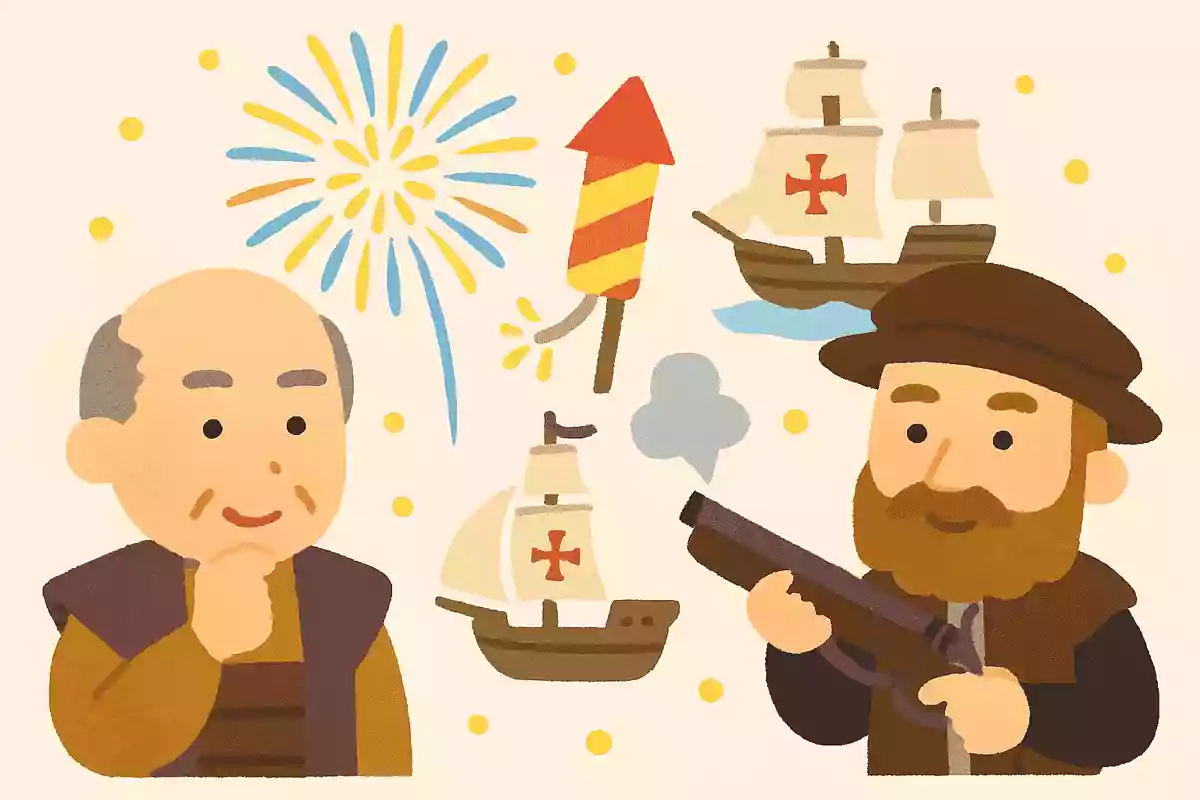
Black powder, the raw material for fireworks, was first introduced to Japan during the 16th-century Warring States period. In what form was it transmitted?
- bomb
- gun
- sparkler
- fireworks launched into the sky
See the answer
gun
Black powder, the raw material for fireworks, was first introduced to Japan during the Warring States period in the 16th century. This black powder arrived together with firearm technology. Firearms are weapons that use gunpowder, and their introduction helped spread awareness of gunpowder in Japan. The gunpowder used in fireworks is the same type as that used in firearms, and gunpowder technology advanced alongside the spread of firearms.
Who was the shogun of the Edo shogunate when Japan’s first fireworks festival, the Sumida River Fireworks Festival, was held?
- Tokugawa Ieyasu
- Tokugawa Tsunayoshi
- Tokugawa Yoshimune
See the answer
Tokugawa Yoshimune
The shogun at the time of the Sumida River Fireworks Festival—considered Japan’s first fireworks festival—was Tokugawa Yoshimune. The festival traces its origins to an event called “Kawakirizome” (river opening) held in 1733 (Kyōhō 18). In response to the many deaths caused by a major famine and epidemics, fireworks were launched over the Sumida River to console the souls of the deceased, ward off plagues, and pray for economic recovery.
When did sparklers (senko hanabi) originate?
- Heian period
- Edo period
- Taisho era
See the answer
Edo period
It is said that senko-hanabi (sparkler fireworks) originated in the Edo period. During this era, fireworks technology advanced greatly, giving rise to many varieties. Senko-hanabi are delicate fireworks that gently scatter tiny sparks from the tip of a thin stick, characterized by a quiet, fleeting beauty. As a traditional symbol of summer that has continued since the Edo period, they are still loved by many people today.