

Energetic and Lively! Sing-and-Exercise Program for Seniors

Exercise is essential for good health, but as we become adults, many of us have fewer opportunities to be physically active, don’t we?
And I imagine there are also fewer chances to sing out loud.
For people like that, we recommend a wonderful routine that lets you do both at the same time!
In this article, we’ll introduce exercises for older adults that let you move your body while singing.
Please consider incorporating them into day services and other care facilities.
Of course, you can enjoy them while seated as well.
Move and sing together, and have a great time!
- For Seniors: Fun and Lively Exercise Recreation
- [For Seniors] Simple Rhythm Exercises: Recommended Songs and Routines
- [For Seniors] Have Fun and Relieve Stress! Introducing Dances Everyone Can Enjoy Together
- [For Seniors] Songs Everyone Can Sing Together! A Roundup of Recommended Crowd-Pleasers
- [For Seniors] Hand and finger play roundup: Finger exercises that lead to brain training
- For People in Their 90s: Dance Tracks and Exercise Songs That Make Moving Your Body Fun!
- [For Seniors] Fun Exercises You Can Do While Seated
- [Recommended for seniors] Rejuvenating Rock-Paper-Scissors Exercise
- [Sing for your health!] Popular songs among seniors. Also recommended for recreational activities.
- [Today's Recommendation] Gentle Health Exercises for Seniors
- [For Seniors] Popular Hand-Play Songs: Fun Brain-Training Ideas
- [Brain Training for Seniors] Recommended Hand-Play Recreation for Dementia Prevention
- Ranking of popular songs for senior citizens
Full of Vitality! Singing Exercises for Seniors (21–30)
Caregiving Dance Exercise: Dracula

Halloween, with its images of various monsters, has a fun side amid the eeriness, doesn’t it? Among the monsters that convey that Halloween fun, we’re focusing on Dracula—this is an exercise routine that expresses Dracula playfully through body movements.
Set to MAX’s “Dracula,” it recreates lunging, attacking motions; encourage participants to feel the rhythm firmly as they go.
Because the song is fast, structuring the routine with relaxed movements—like making one move span two beats—is the key to helping everyone enjoy moving their bodies.

Halloween dance for seniors
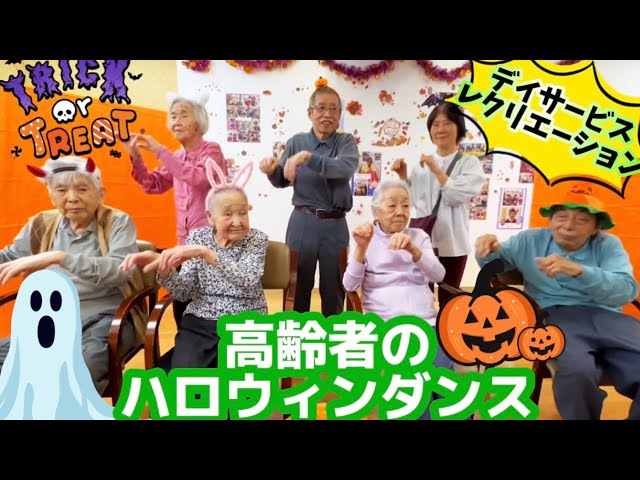
Speaking of Halloween, many people picture it as a spooky yet fun event filled with all kinds of motifs like ghosts and monsters.
This activity aims to capture that variety of motifs and eerie atmosphere through body movements so you can really feel the spirit of the event.
The basic movement is the ghost’s swaying motion, which you can do with your arms and upper body to keep the physical strain low.
It also sounds fun to have everyone think up new motifs they’d like to see at Halloween and add more movements based on those ideas.
Energetic and Lively! Singing Exercises for Seniors (31–40)
Ashi-fumi A-I-U-Be exercises

Let’s do “marching in place” while practicing the “Ai-U-Be” mouth exercise.
This routine is recommended for older adults who are already comfortable moving their mouths into “A” and “I” shapes with the Ai-U-Be exercise.
By adding marching, you can also strengthen the iliopsoas at the hip and the abdominal muscles.
It can even help train the gluteal muscles.
This supports balance in older adults and helps prevent falls.
The key points are to move your mouth widely and stick out your tongue when vocalizing.
Exaggerating the movements a bit more than you would in normal conversation—within your comfortable range—can enhance the benefits.
Please make good use of this exercise.

Ah, there are tears in life.Sugi Ryōtarō to Yokouchi Tadashi

Aa, Jinsei ni Namida Ari is a song by actor-singer Ryotaro Sugi and voice actor Tadashi Yokouchi, best known as the theme song of the period drama Mito Komon.
When doing exercises to this song, try to evoke Lord Mito Komon by raising your hands high and marching with big steps! If you work out while listening to the upbeat lyrics—which say that life has both hardships and good times—you’ll feel energy surging through your whole body.
Also, the lyrics are in the traditional 7-5 meter, so you can even mix in and arrange lyrics from other songs that use the same 7-5 rhythm, such as “Donguri Korokoro” and “Ureshii Hinamatsuri.”

Ochara-ka-hoi

By moving your body to the lyrics of the traditional hand-clapping song “Ocharaka Hoi,” it quickly turns into a game that stimulates the brain.
For example, during “Ses-ses-se,” place your hands on your back, and during the “Yoi-yoi-yoi” part, have your right hand represent 4 and your left hand represent 1, alternating the gestures.
Adding these actions engages memory, attention, and decision-making at the same time.
Performing multiple movements simultaneously like this is effective in preventing cognitive decline.
It can be done while seated and doesn’t depend on the number of participants.
It’s easy to introduce in care settings and is a type of brain training that people can continue without getting bored.

What shall we make with rock, scissors, paper?

The “Goo-Choki-Paa de Nani Tsukurou” exercise is a song that many older adults are familiar with.
Those with children may remember singing it to them often.
This hand-play song involves moving your body while singing, which provides good stimulation for the brain.
What’s more, just by combining rock, scissors, and paper in different ways, you can create many variations.
It’s a hand-play song enjoyed by a wide range of ages, from children to seniors, so it might be nice to try it together with your grandchildren.

Where are you from?warabeuta
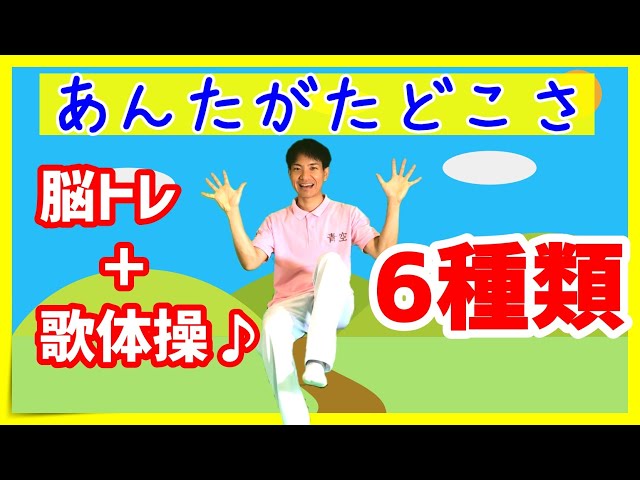
When you were little, many of you probably played along to the song “Antagata Dokosa,” bouncing a ball or rolling it through your legs.
Controlling a ball can be a bit challenging, but you can still move your body enjoyably without overexerting yourself by keeping rhythm with your feet while seated or clapping your hands to the lyrics.
Once you get used to it, add variations to include some brain training elements, such as clapping while holding one knee up, patting your thighs, or incorporating rock-paper-scissors hand movements.
