

![[For Seniors] Hina Matsuri (Girls’ Day) Trivia Quiz & Fun Facts. Recommended for Dementia Prevention Activities](https://media.ragnet.co.jp/img/1200__png__https://www.studiorag.com/files/2026/02/1b92b4aff717a610691817869a05e708.webp)


How many bits of trivia about Hinamatsuri do you know?We’ll present quiz-style tidbits about the festival—things you may think you know but don’t—such as the figures who inspired the Emperor and Empress dolls, the roles of the three court ladies, and what the five musicians are holding.Why is only one of the three court ladies shown with blackened teeth and no eyebrows?Which seasons are represented by the colors of hina-arare rice puffs?…As you ponder the answers, old memories may come flooding back.These questions are perfect for recreational activities or passing the time for older adults.Why not enjoy a moment that lets you savor the joy of getting the right answer while feeling the arrival of spring?
- [For Seniors] Fun for Everyone! A Quiz about Hinamatsuri (Girls' Day)
- [For Seniors] Hinamatsuri Recreation: Fun Ideas for Games, Crafts, and Snack Making
- [For Seniors] Take on the Setsubun Quiz! A comprehensive collection of diverse quizzes, including trivia, true-or-false, and spot-the-difference.
- [For Seniors] Brain-training with winter-themed quizzes. Great for activities, killing time, and dementia prevention.
- Spring Event Quiz for Seniors to Enjoy in March
- [For Seniors] Laugh-Out-Loud, Crowd-Pleasing! Fun Quiz
- [For Seniors] Sports Trivia Quiz & Fun Facts. Easy and Entertaining
- For seniors: Fun shiritori—enjoyable and easy to play
- [Simple and Fun] New Year’s Quizzes Recommended for Seniors
- [For Seniors] Spring-themed quizzes: Fun trivia questions that help prevent dementia while you solve them
- [For Seniors] Fun Food Trivia Quizzes You'll Want to Share
- [Day Service] Excited for Hinamatsuri! Craft ideas to brighten up your room
- [For Seniors] Spring Haiku. Spring Activity
[For Seniors] Hina Matsuri Trivia Quiz & Fun Facts. Also Recommended for Dementia Prevention Activities (1–10)
Which is the title of the classic children’s song for Hinamatsuri (Girls’ Day)?
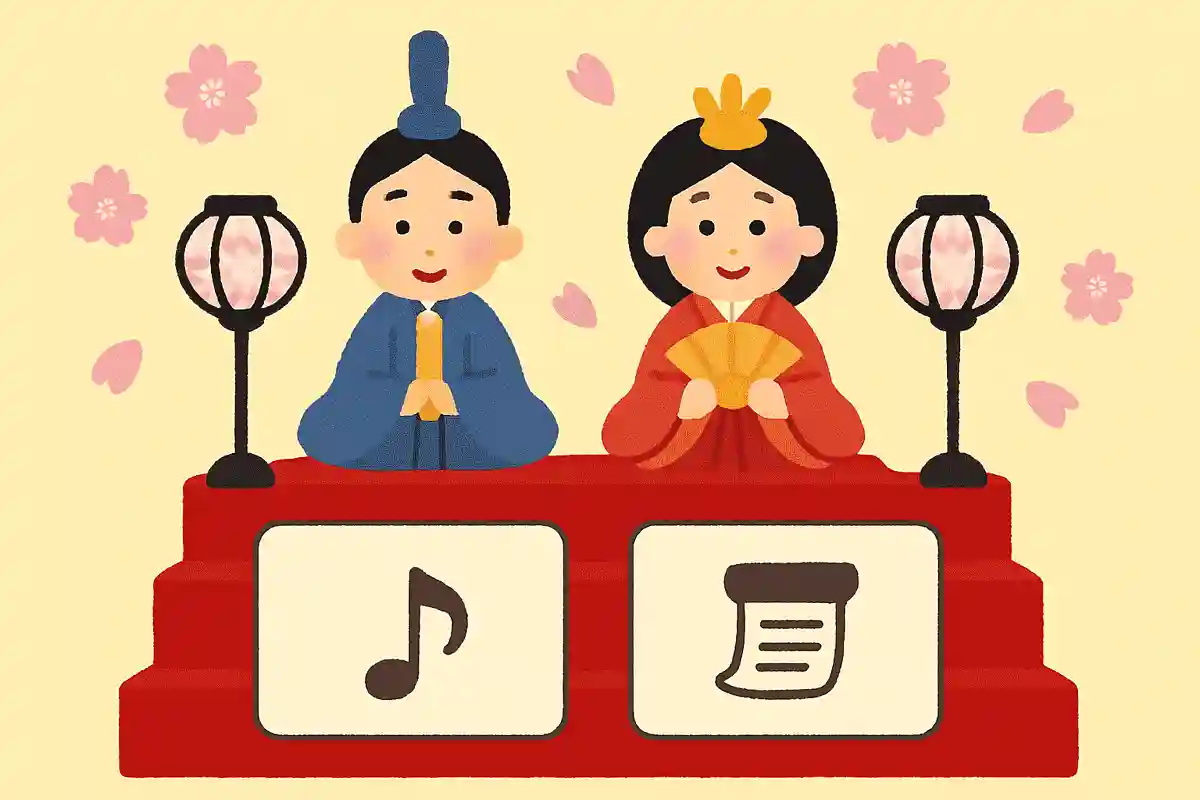
- Happy Hinamatsuri
- Fun Doll Festival
- Interesting Doll Festival
See the answer
Happy Hinamatsuri
The children’s song best known for its opening line, “Akari o tsukemasho bonbori ni,” which represents the Hinamatsuri (Doll Festival), has the official title “Ureshii Hinamatsuri.” With lyrics by Hachiro Sato and music by Koyo Kawamura, it was released in 1936. It’s said that the expression “O-Dairi-sama to O-Hina-sama” that appears in the lyrics also became widely established through this song. Please try humming it while recalling the lyrics.

What is the correct role of the three court ladies?
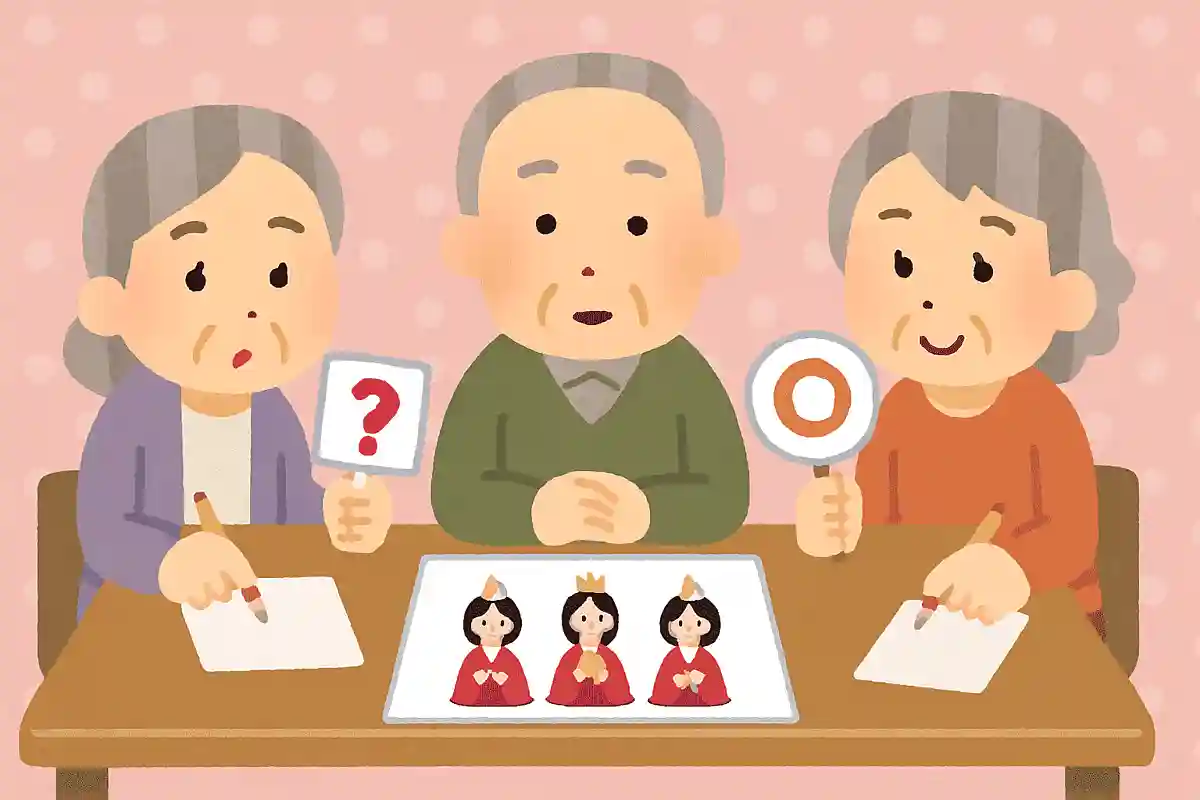
- person in charge of the performance
- cleaner
- caretaker
See the answer
caretaker
The three court ladies are women who attend to the personal needs of the Emperor and Empress dolls, mainly serving as attendants who pour sake. From the viewer’s right, they hold a long-handled sake server (naganaga no chōshi), in the center a stand tray (sanpō) or a sake cup (sakazuki), and on the left an additional sake server (kuwae no chōshi).
Among the three attendants called ‘Shichō’ in Hina dolls, one is smiling and one is crying—what kind of expression does the remaining one have?
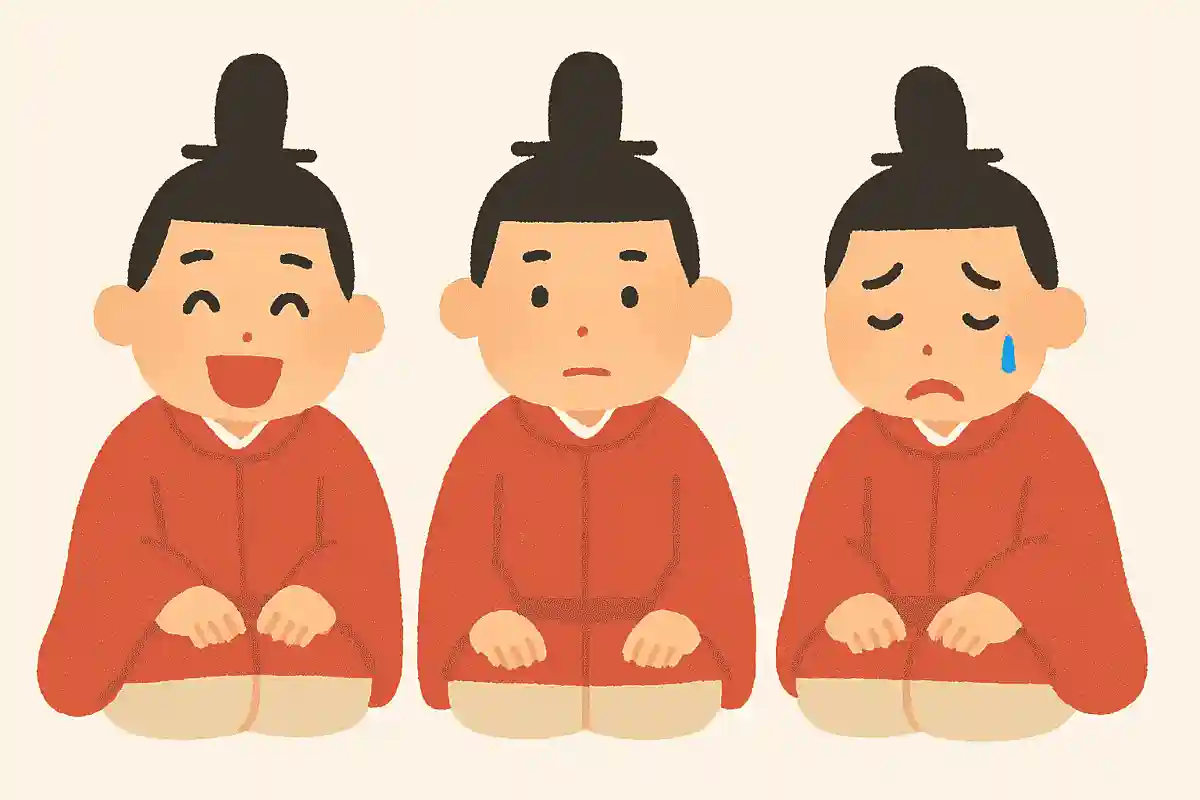
- angry
- Sleeping
- surprised
See the answer
angry
The correct answer is “angry.” The three-person group displayed on the fifth tier of Hina dolls, holding items like brooms and dustpans, are called “shichō” (attendants). They are also known as the “three jōgo,” each showing a different expression: laughing, crying, and anger. This represents the full range of human emotions—joy, anger, sorrow, and pleasure—and conveys the wish for children to grow up emotionally rich no matter the circumstances.
What do the furnishings displayed on the tiered stand represent?
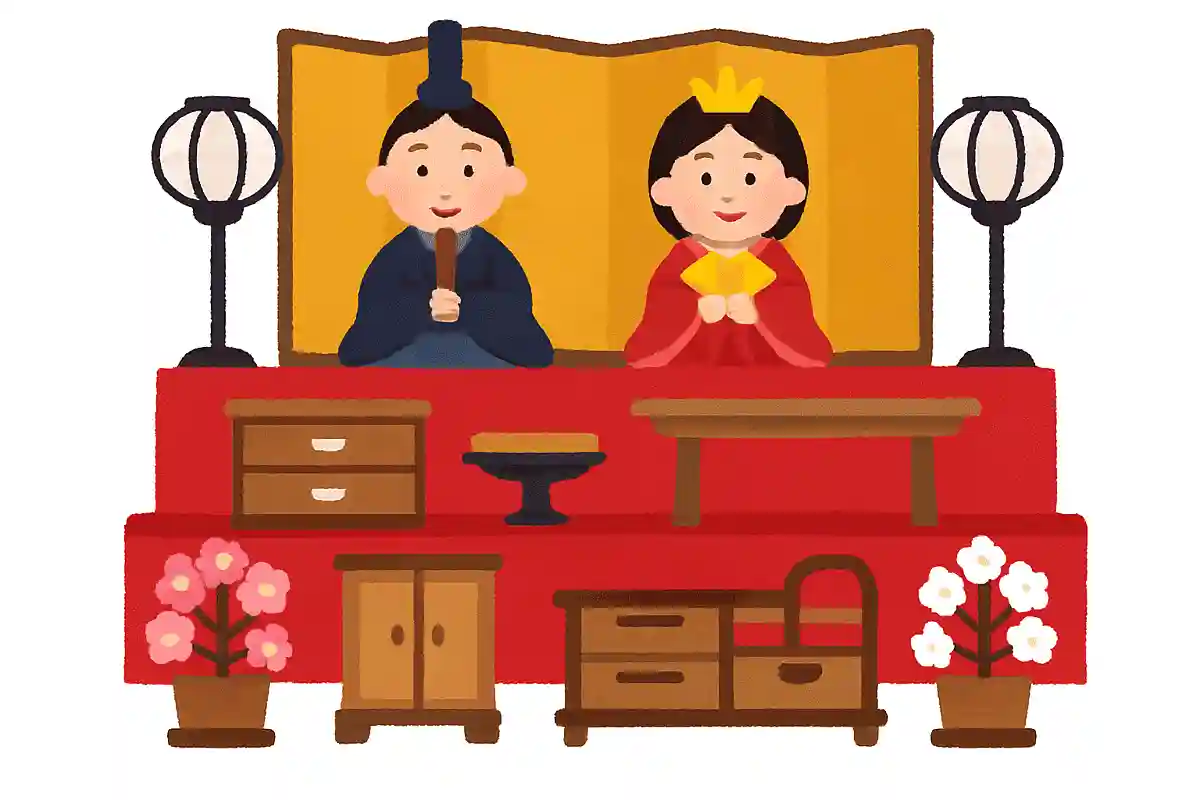
- bridal trousseau
- Cooking utensils
- carpentry tools
See the answer
bridal trousseau
The pieces of furniture displayed on the sixth and seventh tiers of the hina platform—such as chests, dressing tables, long storage chests, and sewing boxes—represent the “bridal trousseau” that a princess would take with her when she marries. They embody parents’ wishes that their daughters will one day have a happy marriage and live in comfort and prosperity without want. Modeled after the wedding customs of feudal lords in the past, these items are crafted with exceptional precision.
In the past, there was a custom during Hinamatsuri of adding something to sake and drinking it. What was that “something?”
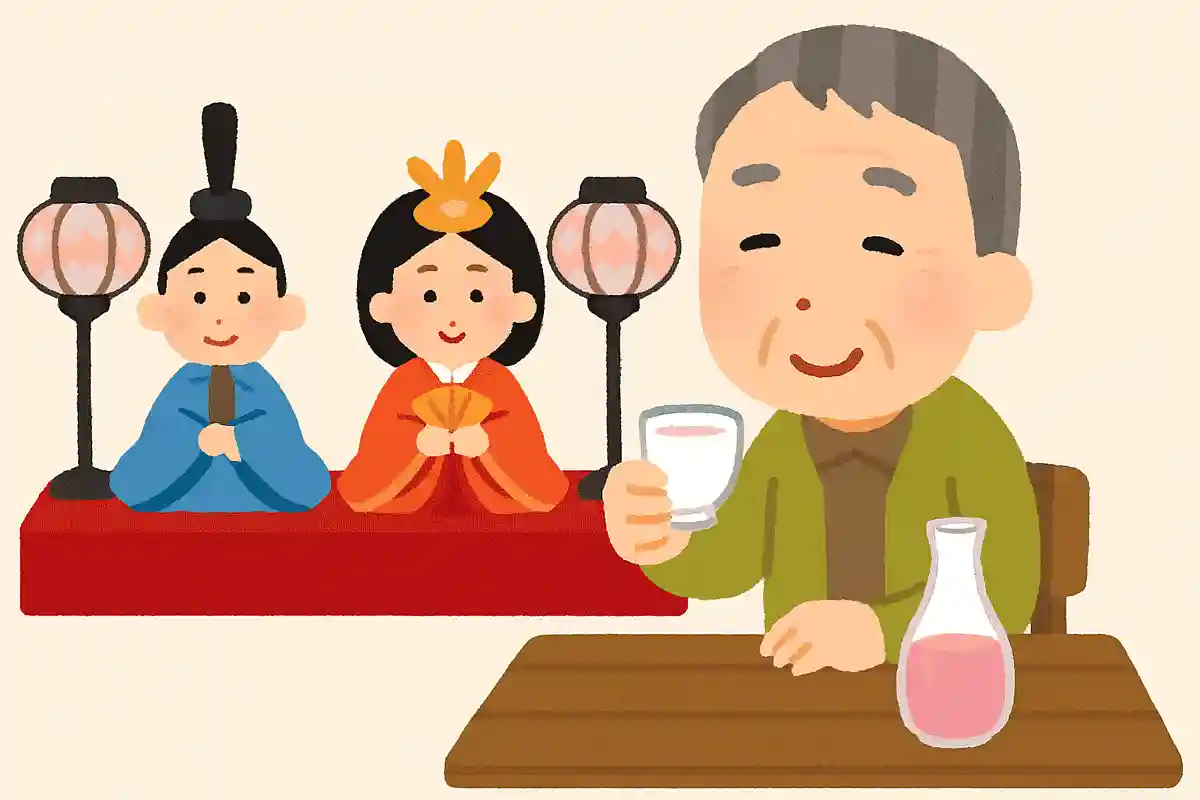
- cherry blossom petals
- Plum blossom petals
- Peach blossom petals
See the answer
Peach blossom petals
The correct answer is peach petals. Hinamatsuri is also known as the “Peach Festival,” and in the past, there was a custom of celebrating by drinking tōkashu, sake with peach petals floating in it. In China since ancient times, the peach tree has been regarded as a sacred tree that wards off evil and grants immortality. From this comes the wish that one may live a healthy, long life “to a hundred years” (momotose). Nowadays, it’s more common to drink shirozake or amazake, but it’s interesting to know about this elegant custom from the past.
As for the props held by the five court musicians, they include fans and drums; what else is there?
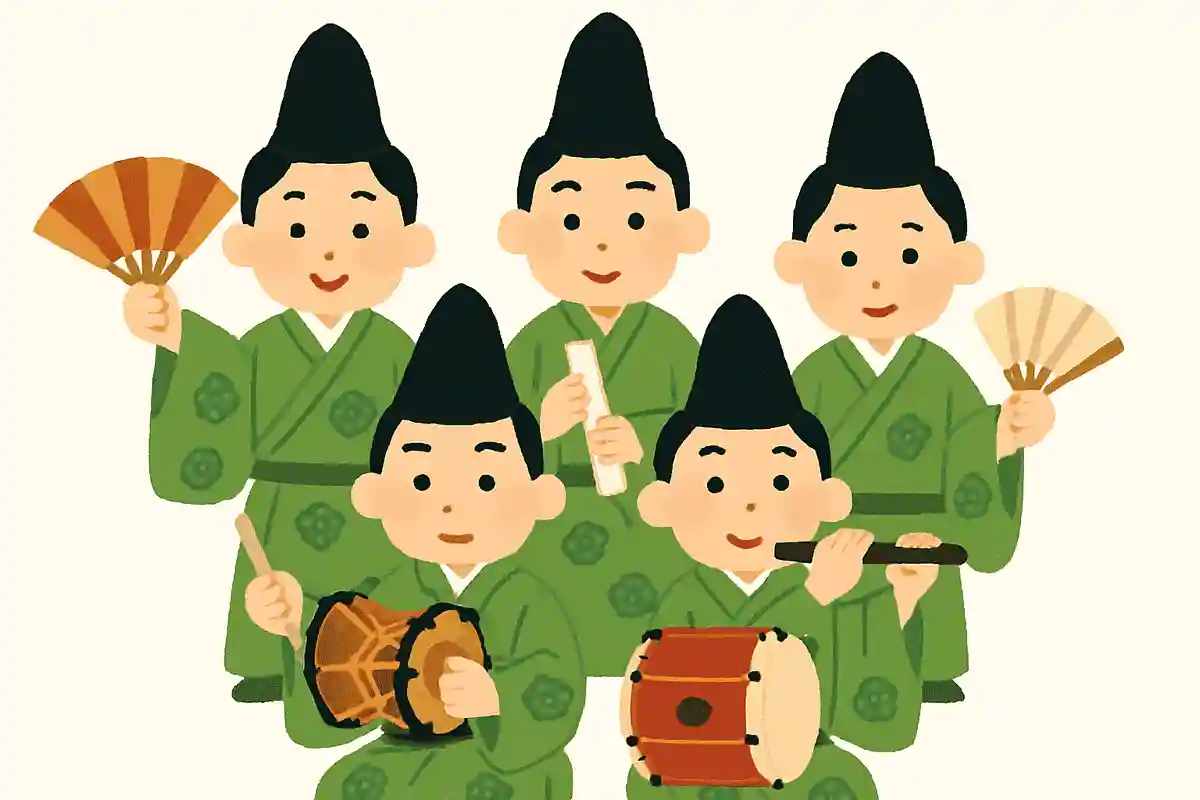
- flute
- shamisen
- shakuhachi
See the answer
flute
The Goninbayashi are five young boys who perform Noh music. Their order and what they hold are fixed: from the viewer’s right, a fan, a flute, a small hand drum (kotsuzumi), a large hand drum (otsuzumi), and a drum (taiko). A notable feature is that the instruments are arranged so the sound grows progressively louder from right to left. They sit on the third tier of the Hina doll display and play the role of enlivening a wedding banquet.
What posture did the oldest Hina dolls have?
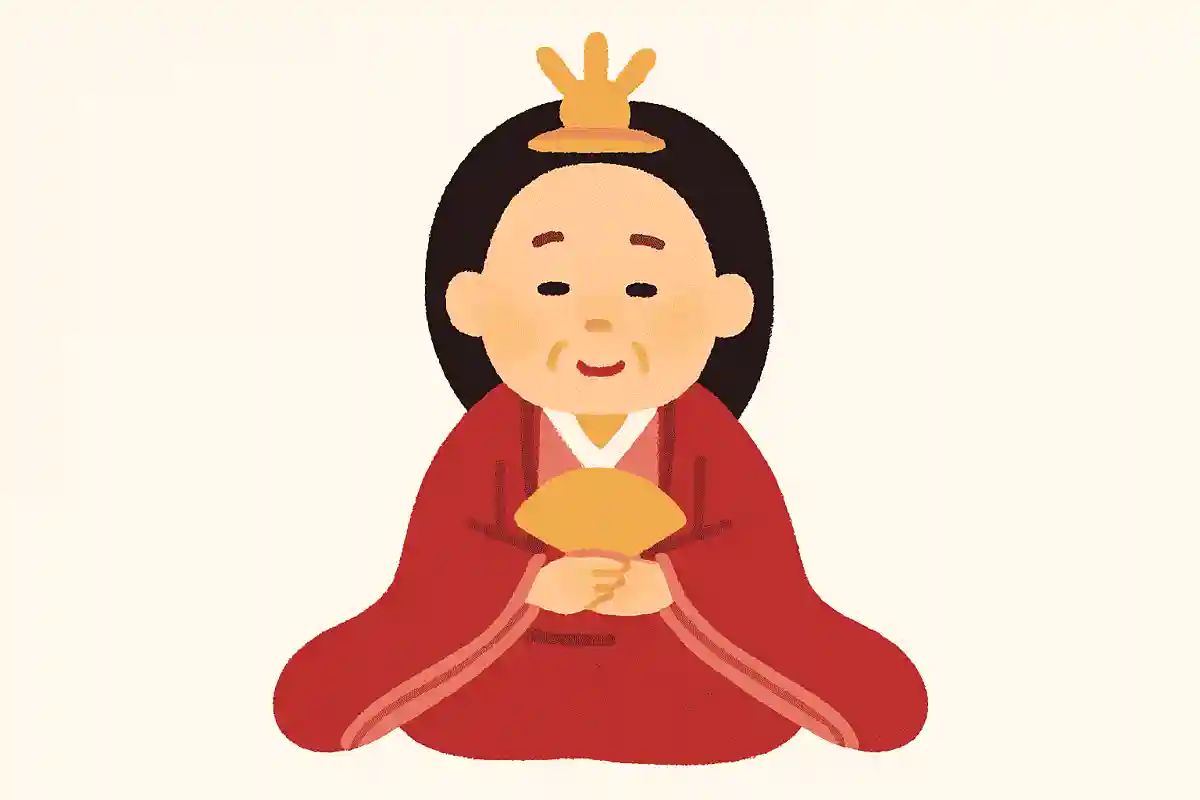
- Sitting
- Standing
- sleeping
See the answer
Standing
Today, when people think of Hina dolls, it’s common for both the male and female dolls to be seated. However, the older form considered the origin of Hina dolls featured standing figures known as “tachi-bina.” This is because they evolved from “nagashi-bina,” paper dolls used in the Heian period and later to which people would transfer misfortune by rubbing them over the body and then float them down a river. From these simple paper figures, the dolls developed into standing figures dressed in kimono, and from the Edo period onward, the luxurious seated Hina dolls we know today became mainstream. Even now, there are regions that continue to display the traditional standing Hina dolls.