

[For seniors] Dice talk: engaging prompts

Dice Talk is a simple and fun communication game where you roll a die and chat about the topic that matches the number you get.
It’s also popular as a recreation activity for seniors, helping conversations flow and naturally bringing out more smiles!
By sharing memories and talking about favorite things, it can stimulate the brain and create chances for social connection.
This time, we’re introducing lots of Dice Talk topics that are perfect for seniors and sure to liven things up!
From nostalgic subjects to laugh-out-loud themes, we’ve chosen topics everyone can enjoy together.
Why not try an easy round of Dice Talk and spend a delightful time enjoying conversation?
- [For Seniors] Conversation starters that help you chat: engaging questions and topics to spark lively talks
- [For Seniors] Hilarious! A Collection of Funny Questions
- [For Seniors] What's in the Box? A Collection of Exciting Content Ideas
- [Brain Training] Lively Word Quiz for Seniors
- Introducing old-fashioned words that are useful for conversations with elderly people!
- [For Seniors] Simple Tabletop Games: Fun and Engaging Recreational Activities
- For seniors: Fun shiritori—enjoyable and easy to play
- Fun, engaging topics for conversations with older adults!
- [Recommended for Seniors] Simple and Fun Gesture Game Prompts
- Conversations Made Easy! A Collection of Topics That Elderly People Enjoy
- For seniors: Fun, crowd-pleasing word association game ideas
- [For Seniors] Perfect Brain Training! Fun Trivia
- For Seniors: Fun and Lively Exercise Recreation
[For Seniors] Dice Talk Lively Topics (1–10)
Story about pets
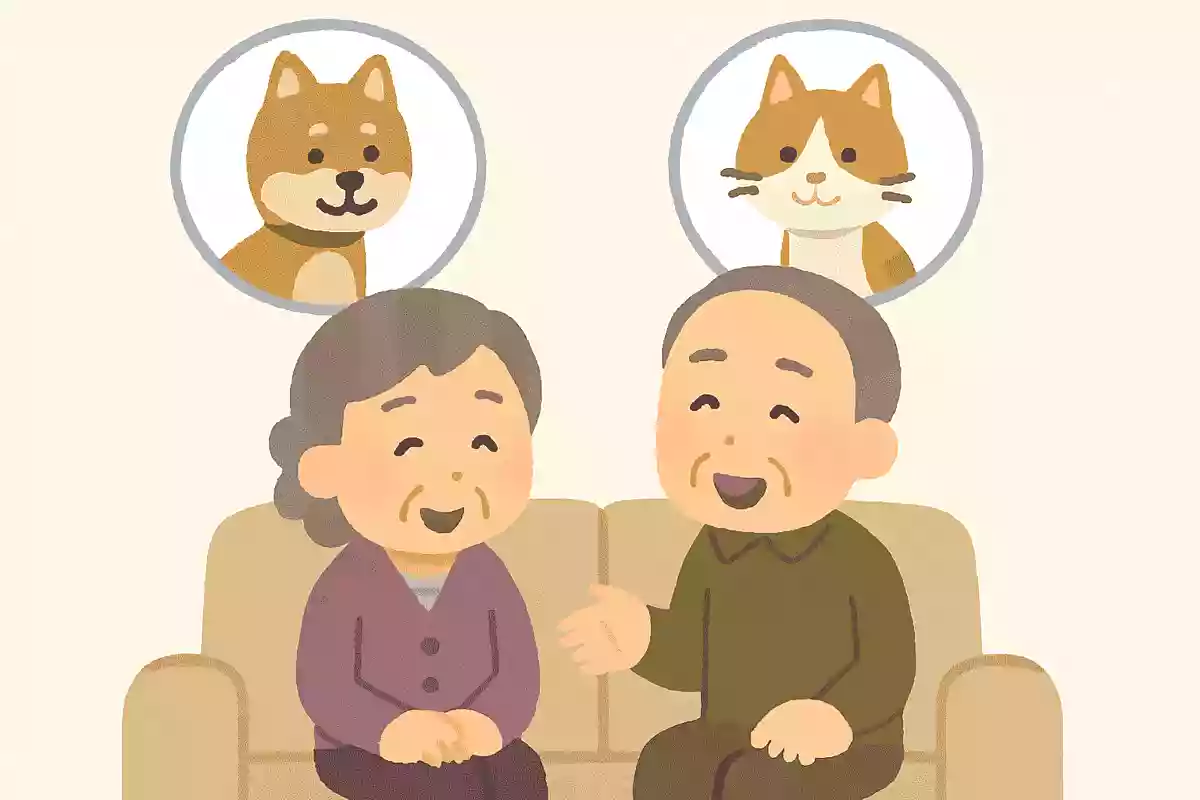
How each of us has interacted with animals varies from person to person, and even the pets we’ve had show their own personalities.
How about looking back on your memories of how you’ve related to animals and the pets you’ve owned? By noticing the differences—such as between people who have kept many kinds of pets and those who really wanted to but never could—you might also see the unique paths each person has taken.
If you can recall what you felt during the time you spent with pets, it may even become a chance to bring a sense of peace to your heart.

The moment I feel the happiest is
Shall we all have a conversation on the theme: “When do you feel happiest?” Whether it’s when you’re eating something delicious, when a good crop has been harvested, or when you’re showing off your proud singing voice, there must be as many happy moments as there are people.
By sharing what happiness means to you, communication will surely be greatly encouraged even after the discussion.
Since it clarifies the topics each person enjoys, it’s bound to spark conversations in all kinds of situations.
Give it a try!

Childhood story
Tips for communication are covered in many places, like books and the internet.
Among them, one effective topic is “stories from childhood.” Why is that? The answer is simple: older adults have all experienced being children.
You can’t talk about things you don’t know or aren’t interested in, but you can talk about what you’ve lived through.
For instance, you might say, “Kids nowadays seem to play like this.
When I was a kid, I played such-and-such.” If you share a recent example or your own experience, they’ll likely respond with, “When I was a child…” and tell you their stories.
[For Seniors] Dice Talk Exciting Topics (11–20)
Daily habits
On the internet, content that showcases the daily lives of celebrities and other well-known people is quite popular.
So this time, why don’t we all have a conversation on the theme of “daily habits” that older adults are mindful of? The reasons and activities vary—whether for health, for study, or for hobbies.
By learning what they do and why they do it, we can gain insight into who they are.
And by adopting habits we find appealing, it can also become a chance for us to change ourselves.
The secret to a long life
How can we live a long and healthy life? That’s something many people want to know.
So this time, why don’t we have a discussion together on the theme of “the secrets to longevity”? You’ll likely get lots of ideas, such as “I make sure to drink plenty of water,” “I eat a well-balanced three meals a day,” and “I try to exercise.” Some people might even say, “I’m not doing anything special—I just enjoy my hobbies.” Why not listen to a variety of perspectives and take this as an opportunity to adopt the ideas that suit you?
What kind of work were you doing?
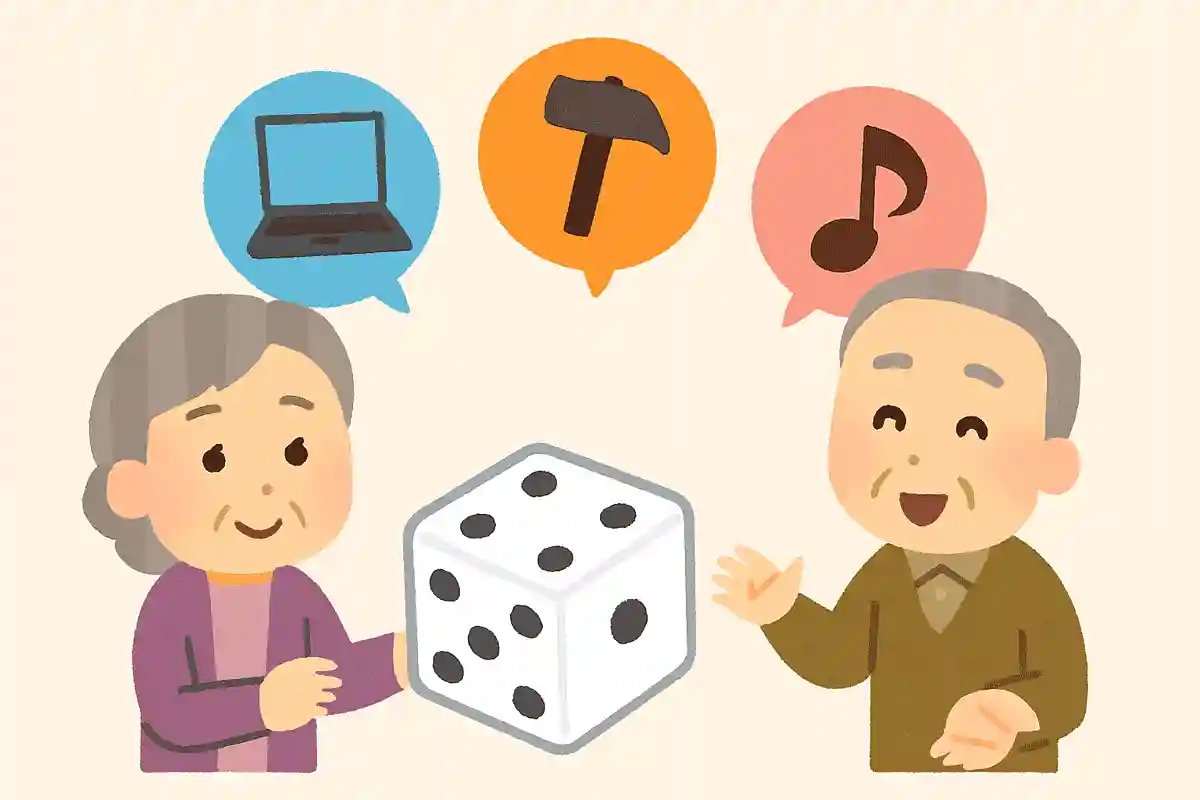
This is a conversation theme that brings on a wave of nostalgia as you share the work experiences you’ve built up over many years.
Because work takes up such a large part of our lives, the memories attached to it run deep.
People will likely talk about moments when they felt a sense of fulfillment, times they overcame difficulties, and memories with coworkers.
If someone has worked in the same field, you’ll find common ground; if they’ve done something different, you’ll think, “I didn’t know there was a job like that,” and become curious.
It’s also a great idea to talk about how your appreciation for work changes after retirement.
By sharing your own experiences, you get to know each other’s values, and it can turn into a lively, enjoyable conversation.

Something that makes me itch to tell others
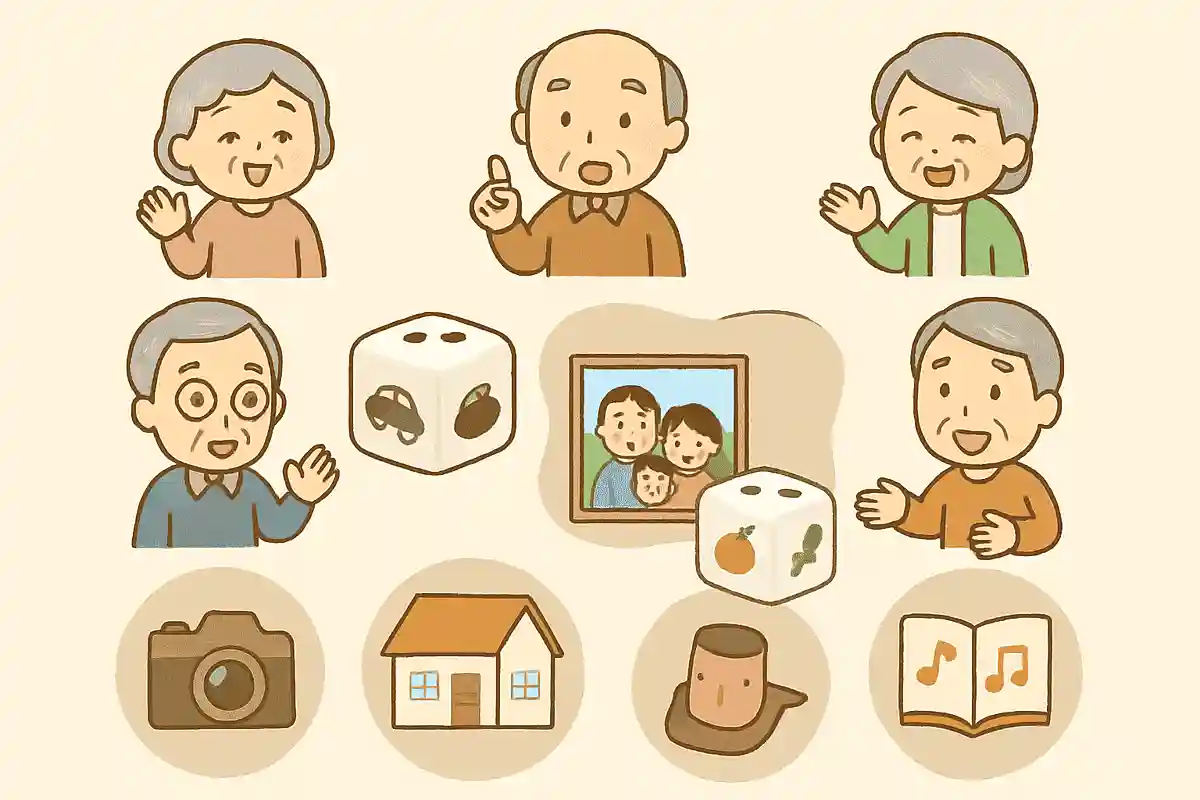
The knowledge and experiences we gain over a long life naturally make us want to share them with someone.
Talking about things we’ve learned or life lessons—topics you feel like teaching others—can liven up a conversation.
Sharing things you’ve been eager to tell someone or little nuggets of trivia will spark interest in listeners.
The joy of discovering something new makes your own experiences feel even more valuable.
By discussing questions and curiosities, a lively back-and-forth develops, helping older adults enjoy conversations together.
It’s an idea that expands enjoyment by sharing knowledge, allowing everyone to learn from one another.