

Let's boost your creativity: Recommended brain training for seniors!

Brain-teaser quizzes are one type of activity that can train quick thinking in older adults.
Thinking in your head and answering right away also helps stimulate seniors’ brains.
They’re perfect for activity time at senior facilities and day services.
They can improve communication among older adults and are also appealing because participants gain various kinds of knowledge.
For staff, offering hints that guide participants to the answer is important, but please also focus on creating an atmosphere where everyone can have fun together.
I hope this helps anyone who’s unsure about how to run quiz activities.
- [Brain Training] Lively Word Quiz for Seniors
- [For Seniors] Fun Brain Training! A Collection of Tricky Quizzes You’ll Definitely Get Stumped By
- [For Seniors] Fun and Informative! Health Trivia Quiz
- [For Seniors] Fun and Engaging Brain-Training Recreation
- [For Seniors] Perfect for Brain Training! Themed Hiragana Fill-in-the-Blank Quiz
- [For Seniors] Fun Brain Training! Lively Mind Exercises
- [For Seniors] Today’s recommended quiz. Daily brain-training quiz!
- [For Seniors] Recommended and Exciting! Brain-Teaser Quiz Collection
- Recommended for seniors. Brain training with an odd-one-out quiz.
- [For Seniors] Great for Brain Training! Question Card Ideas
- [For Seniors] Recommended for Brain Training! Ultra-Difficult Quizzes and Riddles
- [For Seniors] Who Am I? Quiz: A Fun Set of Questions with Exciting Hints
- [For Seniors] Have Fun with Wordplay Characters! A Collection of Funny Puzzles
Boost Your Insight: Recommended Brain Training for Seniors! (11–20)
I put three tangerines in the basket. Then I added four more. How many tangerines are in the basket now?
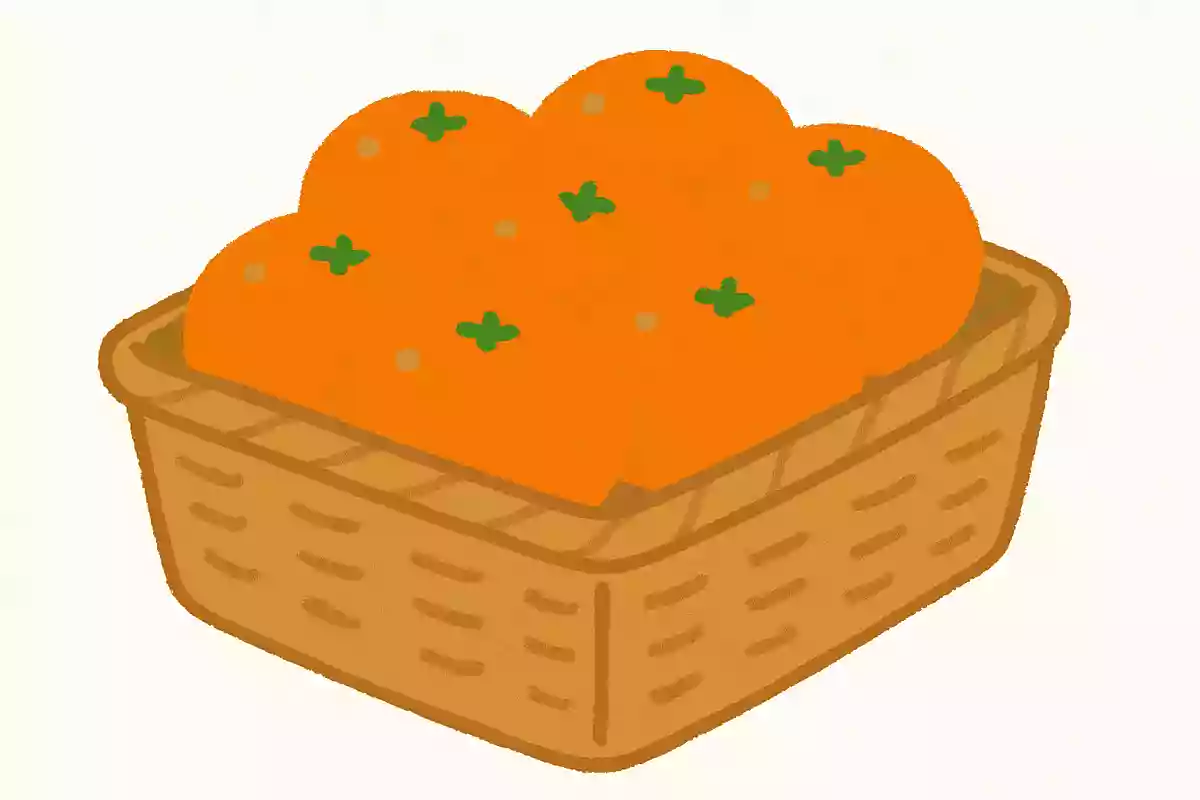
See the answer
three
It means you put three in the basket and four on the plate, so that’s the answer. It’s easy to take it as “in addition,” but this question tests the insight to read carefully that it says “on the plate.”

Letter Display Game

Let’s try a “letter-picking game” using hiragana magnets and a whiteboard! In this game, you pick one magnet with a letter from the a-ka-sa-ta-na rows, decide a theme based on the letter that comes up, and give an answer.
For example, for place names or countries that start with “a,” answers could be Akita Prefecture or America.
You can prepare a variety of themes in advance, or let older adults choose the themes—it should be fun either way.
Since it can be played while seated and is effective as brain training, it’s perfect for recreational activities in senior care facilities.

Proverb Match

Let me introduce a proverb matching game that stimulates your vocabulary while having fun.
First, prepare 20–30 proverbs and write the first half and second half on separate cards.
Lay the cards out randomly on a table and look for pairs that form complete proverbs by matching the first halves with the second halves.
Because it uses familiar Japanese proverbs, it encourages you to revisit your memory, rediscover culture and general knowledge, and activate cognitive functions.
The sense of achievement when you find the correct pair can also boost self-esteem! It will be even more exciting if you split into teams or pairs and work together.
Please give it a try.
Colorful Card Rec: Fish Edition Quiz

From the familiar to the unfamiliar, you can freely adjust the difficulty! Introducing the Fish Radical Quiz.
There are so many kanji that use the fish radical, and their readings change dramatically depending on the character on the right.
In this quiz, you keep switching the right-hand component and guess how the kanji is read.
Thinking about which fish it might represent mobilizes memory, reasoning, and language comprehension, providing excellent cognitive stimulation.
It also encourages lively communication among participants with fish-related topics.
Using colorful cards makes it visually fun too—be sure to make some and give it a try!
Communication Card

If you’re looking for a card game that energizes the brain and the heart, this is a must-see! Here’s how to play a communication card game.
The rules are very simple: prepare several cards with prompts such as flowers, animals, colors, or foods.
The person who draws a card names three things related to the word on the card.
For example, if someone draws a card that says “Flowers,” it’s OK if they can name three flower names like tulip, cherry blossom, and dandelion.
It seems great for improving vocabulary and memory! If you add twists to the prompts, like “Something great about the person next to you” or “Something that made you happy recently,” the conversation will definitely take off.
Give it a try!
Kanji Puzzle

Here’s a kanji puzzle to boost creativity.
Print out kanji characters and cut them in half.
Try combining the pieces to form the correct characters.
Once you get the hang of it, you can raise the difficulty by cutting the kanji into quarters.
If you laminate the printed and cut pieces, you can use them over and over.
It’s a fun brain workout that builds your ability to visualize kanji shapes and identify where each component belongs.
You can make it even more exciting by setting a time limit or forming teams.

Let's Boost Your Inspiration: Recommended Brain Training for Seniors! (21–30)
Kanji Search: Let’s find the character ‘田’

Let’s look for the kanji 田 among the many 由 characters lined up.
There are four 田 characters in total.
Checking each character one by one is good for training your concentration, but if you take a bird’s-eye view of the whole, it becomes easier to find characters that are hard to see.
Also, as the title suggests, this is an exercise for your eyes and brain, so it’s important to keep a flexible mindset.
It’s fine to do it on your own, but competing to see who can find them fastest with multiple people could make it more exciting.
It’s also recommended as a quick recreational activity in senior care facilities.
