

[For Seniors] Recommended Easy Strength Training
We all want to live a healthy, independent life for as long as possible.
Strength training is an important habit for maintaining health.
By maintaining muscle strength, you can reduce the risk of falls and move more smoothly in daily activities.
In this article, we’ll introduce simple strength training routines that are easy to try.
This is likely a topic of interest for older adults.
Because these exercises can be started easily at home, even those who aren’t confident with exercise can feel at ease.
Take a step forward today and start building a healthier body!
- [Today's Recommendation] Gentle Health Exercises for Seniors
- For seniors: Enjoyable stick exercises. Easy workouts.
- Summary of exercises for seniors: introducing preventative care movements by body part.
- [For Seniors] A Collection of Simple Exercise Programs Suitable for Beginners
- Recommended simple exercises for recreational activities for the elderly
- [For Seniors] Recommended Rhythm Play and Exercises
- [For Seniors] Easy and Fun Core Training
- [For Seniors] Fun and Easy! Fall-Prevention Exercises for Older Adults
- For seniors: Leg-strengthening exercises you can do without overexertion.
- [For Seniors] Recommended Handmade Activities! Simple Ideas
- [For Seniors] Easy to try. Fun, crowd-pleasing recreation
- For seniors: Enjoyable exercises done while seated, accessible for wheelchair users.
- [Recommended for seniors] Rejuvenating Rock-Paper-Scissors Exercise
[For Seniors] Recommended Easy Strength Exercises (21–30)
Strength training important for standing up from a chairNEW!

Let’s build your body so you can stand up more easily with four strength exercises and stretches that target the iliopsoas, quadriceps, gluteus maximus, and erector spinae.
You’ll do both the exercises and stretches while seated in a chair.
The first move is lifting your knee, the second is extending the lower leg forward, the third is pulling the leg that was extended back in, and the fourth is drawing your outstretched arms in and then reaching them down toward the floor.
For the stretches, gently rub your legs and open your legs to loosen the muscles around the hip joints.

Grip strength training with a water-filled plastic bottleNEW!

Fill an empty plastic bottle with water and use it as a dumbbell.
First, while seated, place the hand holding the bottle on a desk and move only your wrist as if curling the bottle upward.
Keep your elbow from lifting by holding it down with your other hand.
Do the same with the opposite hand.
Next, stand up and, in the same way, raise the bottle using only your wrist.
Again, it helps to hold your elbow in place with your other hand so it doesn’t move unnecessarily.
Of course, repeat on the other side as well.
Do each for 30 seconds.
If the bottle feels too heavy, it’s fine to reduce the amount of water inside.

[For Seniors] Recommended Easy Strength Training (31–40)
Dishcloth wringing exerciseNEW!

A training exercise that’s easy to incorporate into everyday life is the “wringing-a-cloth” drill.
It’s very simple: imagine a towel as a cleaning rag and wring it tightly with both hands.
This strengthens your grip and wrist movements.
The key is to avoid overexertion, keep your elbows close to your sides, and move slowly while focusing on the muscles in your palms and fingers.
Little by little, your hand strength will improve, making your grip and finger movements smoother.
It’s easy to keep up since you can do it while watching TV or alongside your laundry, and it also boosts blood flow to your hands, warming them up.
It’s a fun way to build healthy, lively hands, so give it a try!

Pelvic floor muscle exercise: squatNEW!
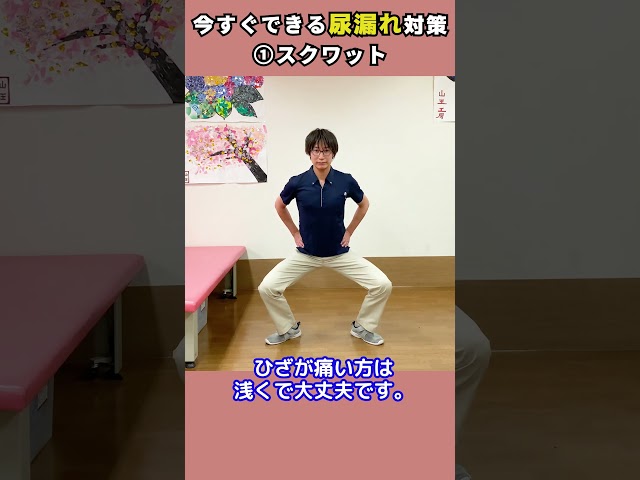
Stand with your feet just a bit wider than shoulder-width and your toes pointed outward.
As you slowly exhale, lower your hips as if pulling your buttocks back.
At this time, gently focus on and engage the anus and lower abdomen to effectively stimulate the pelvic floor muscles.
If your knees hurt, you don’t need to squat deeply—do a shallower range within your comfort.
When the pelvic floor muscles work together with the inner thighs and glutes, it becomes easier to develop core stability.
Inhale as you slowly return to the starting position, and repeat about five times without holding your breath.
If you can do three sets, you’ll find it easier to feel your pelvic floor working in everyday movements.
Back Workout for Complete Beginners

This is a workout that targets the entire back.
Since all movements are done lying face down, it’s easy to try even if standing or sitting postures are difficult for you.
First, prop yourself up on your elbows to lift your upper body, and move your head up and down.
It’s a very simple motion, but the weight of your head will gradually work your back muscles.
Next, slightly lift your upper body and extend one arm forward.
Use the arm that isn’t reaching forward to support your torso.
The key is to look straight ahead as you extend your arm.
A total of five exercises are introduced, so give them a try during your time at home.
Banzai workout
@user8673152313321 A cost-effective workout that trains your entire back using only pull-ups
♬ original sound – user8673152313321 – user8673152313321
Why not try incorporating a simple exercise into your daily routine that trains your back muscles and calves at the same time? Strength training isn’t just about changing your appearance.
It also helps maintain the essential muscle strength that declines with age.
Even a little is fine—try to do some strength training every day.
The exercise we’re introducing today involves swinging both hands up from below into a full overhead “banzai” and stretching upward.
Before swinging your arms up, draw your shoulder blades firmly together, and when you raise your arms overhead, be careful not to arch your back.
Three exercises to straighten your back
@hapreha Stand up straight! Improve your posture 💪 Don’t let anyone call you old ☝️ Top 3 strength-training exercisesPreventive Care ExercisesDementia preventionFall prevention#HappyRehabLate-stage elderly
Original song – Happiriha – Happiriha | My 82-year-old mother's vitality habits
Many older adults find their backs getting more rounded with age year by year.
Has slouching led to issues like stiff shoulders or lower back pain? Here, we introduce three exercises to help straighten your posture.
The “Back Sway Exercise,” where you clasp your hands in front while seated and gently sway; the “Chest-Opening Stretch,” done by clasping your hands behind you; and the “W Exercise,” where you bend both elbows to make a W shape and open and close your arms.
All can be done while seated, so you can even try them while watching TV.
Feel free to incorporate them casually in little moments throughout your day.
