

[For Seniors] Recommended Easy Strength Training

We all want to live a healthy, independent life for as long as possible.
Strength training is an important habit for maintaining health.
By maintaining muscle strength, you can reduce the risk of falls and move more smoothly in daily activities.
In this article, we’ll introduce simple strength training routines that are easy to try.
This is likely a topic of interest for older adults.
Because these exercises can be started easily at home, even those who aren’t confident with exercise can feel at ease.
Take a step forward today and start building a healthier body!
- [Today's Recommendation] Gentle Health Exercises for Seniors
- For seniors: Enjoyable stick exercises. Easy workouts.
- Summary of exercises for seniors: introducing preventative care movements by body part.
- [For Seniors] A Collection of Simple Exercise Programs Suitable for Beginners
- Recommended simple exercises for recreational activities for the elderly
- [For Seniors] Recommended Rhythm Play and Exercises
- [For Seniors] Easy and Fun Core Training
- [For Seniors] Fun and Easy! Fall-Prevention Exercises for Older Adults
- For seniors: Leg-strengthening exercises you can do without overexertion.
- [For Seniors] Recommended Handmade Activities! Simple Ideas
- [For Seniors] Easy to try. Fun, crowd-pleasing recreation
- For seniors: Enjoyable exercises done while seated, accessible for wheelchair users.
- [Recommended for seniors] Rejuvenating Rock-Paper-Scissors Exercise
[For Seniors] Recommended Easy Strength Training (31–40)
Core training that targets the lower abdomen

Do you know the iliopsoas muscle? It’s a muscle located from the lower back to the front of the thigh, and it’s an important deep core muscle for walking and maintaining posture.
If you don’t train this iliopsoas, your body may become hunched forward and it may become difficult to lift your legs, so please try these iliopsoas exercises.
For example, even in leg-raising exercises, if you focus on lifting your legs by engaging your abdomen rather than using your leg muscles, you can effectively train the iliopsoas.

Inner muscle training for the hip joint

The six deep hip external rotator muscles, which connect the hip joint and the pelvis, play a role in stabilizing your posture when standing on one leg.
By strengthening them, you can improve your sense of balance and build a body that is less prone to falls.
There are various ways to train these hip external rotators, but the method with the least load is to step one foot forward, place the heel down, and rotate the entire leg side to side as if turning the knee outward and inward.
Using this movement as a basic exercise, you can perform a range of trainings with different levels of load.
Choose an appropriate intensity according to your physical condition and give it a try.

Toe exercises using a frog hand

Recommended for toes lacking exercise! Here are some ideas for toe training using the Frog Hand.
The Frog Hand is a silicone device designed for toe exercises, and it’s said to help reduce swelling and stimulate the muscles in your feet.
This time, let’s use the Frog Hand to make up for a lack of foot exercise! Since it can train your toes, soles, ankles, and calves, it’s great to add to your daily routine.
Give it a try and incorporate it into your life.
Full-body cold prevention exercises

When blood circulation worsens, your body tends to get cold more easily.
So this time, we’ll introduce a “whole-body cold-prevention exercise” using a ball that you can do while sitting in a chair.
First, keep marching your feet to a rhythm and add the motion of lifting a ball held with both hands up and diagonally up.
Next, while marching, extend one foot forward and simultaneously thrust the ball forward.
By coordinating the ball-thrusting with your leg movements, you promote hand–foot coordination, which helps activate the brain.
It’s a simple exercise you can do without strain that not only improves whole-body chilliness but also helps prevent dementia and maintain muscle strength.
Highly recommended.

Neck strength training
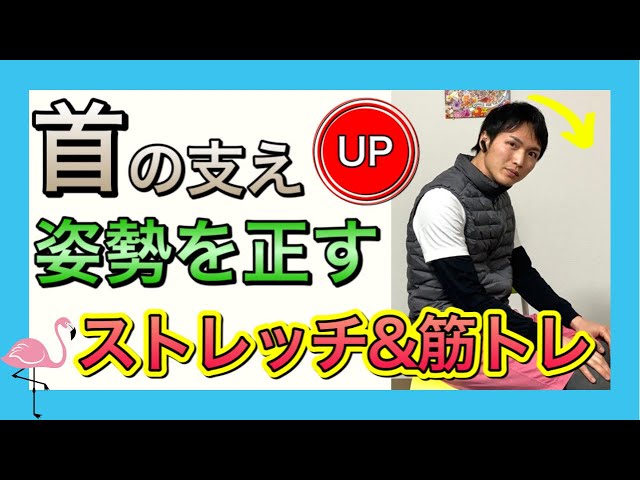
Some older adults may suffer from stiff shoulders or lower back pain, don’t you think? It might be related to a decline in neck muscle strength.
Since the neck muscles connect to the shoulder and lower back muscles, they can have an impact.
This time, we’ll introduce neck strengthening exercises to help prevent loss of neck muscle strength.
Try moving your neck up and down and diagonally while seated.
It’s said that the head weighs about 5 to 6 kilograms.
Neck training places a load comparable to lifting that same weight.
Please adjust the number of repetitions and how often you do the exercises to suit older adults.

[For Seniors] Recommended Easy Strength Training (41–50)
Slow aerobics to When the Saints Go Marching In

Aerobics—moving your body to music—can feel difficult for people who have trouble with movement.
This exercise adapts aerobics by slowing the tempo and using gentler motions, making it accessible for anyone.
Find a calmer rhythm than the original song and move your body as if buoyantly engaging your whole body.
Rather than trying to keep up with the music, it’s more important to use your entire body, so it may be best to proceed at a rhythm that suits the participants.

resistance band

This is about turning everyday movements into training by adding resistance with a band.
Even a common daily action like lifting your arms will engage your muscles well when you add the element of stretching a band.
It’s recommended to start with a simple move: hold both ends with your hands and stretch the band to gauge how much force is needed, then incorporate it into your movements.
Since every movement will require effort, you’ll likely start to see which muscles are being used for each movement.