

[For Seniors] Summer-Themed Quiz: A Collection of Fun Questions to Liven Up Recreational Activities


How about an indoor quiz that lets you stay comfortable as a recreational activity on hot summer days? In recent years, Japan has been getting hotter year by year.
Quizzes let you train your brain without physical exertion, so they’re a great option for recreation in senior facilities during midsummer.
Since the theme is summer, it might help people feel the season and recall past memories.
For older adults, looking back and talking about the past can promote emotional stability and benefit cognitive function.
It also makes it easier to spark communication with those around them.
Enjoy a fun summer moment while doing brain training with quizzes!
- [For Seniors] Brain Training! Recall Quiz Collection!
- [For Seniors] Fun Brain Training! Prefecture Quiz
- [For Seniors] Boost Your Knowledge! Fun Trivia Quiz
- For Seniors: Lively! Trivia and Fun Facts Quiz for August
- For seniors: Fun, crowd-pleasing word association game ideas
- [For Seniors] Lively Wordplay Game: Fun Recreation for Elderly Care
- August quizzes that seniors can enjoy!
- [Brain Training] Lively Word Quiz for Seniors
- [For Seniors] Enjoy Brain Training with September Trivia Quizzes & Fun Facts
- [For Seniors] Guaranteed to Liven Things Up! A Collection of Brain Training Activities That Will Spark Laughter
- [For Seniors] Fun Riddles That Stimulate the Brain
- [For Seniors] Summer-Themed Trivia Quiz & Fun Facts Collection
- [For Seniors] Summer Festival Trivia Quiz & Fun Facts. Enjoyable Quizzes That Boost Your Knowledge
[For Seniors] Summer-Themed Quiz: A Collection of Fun Questions to Liven Up Recreation (1–10)
Why are mosquito coils spiral-shaped?
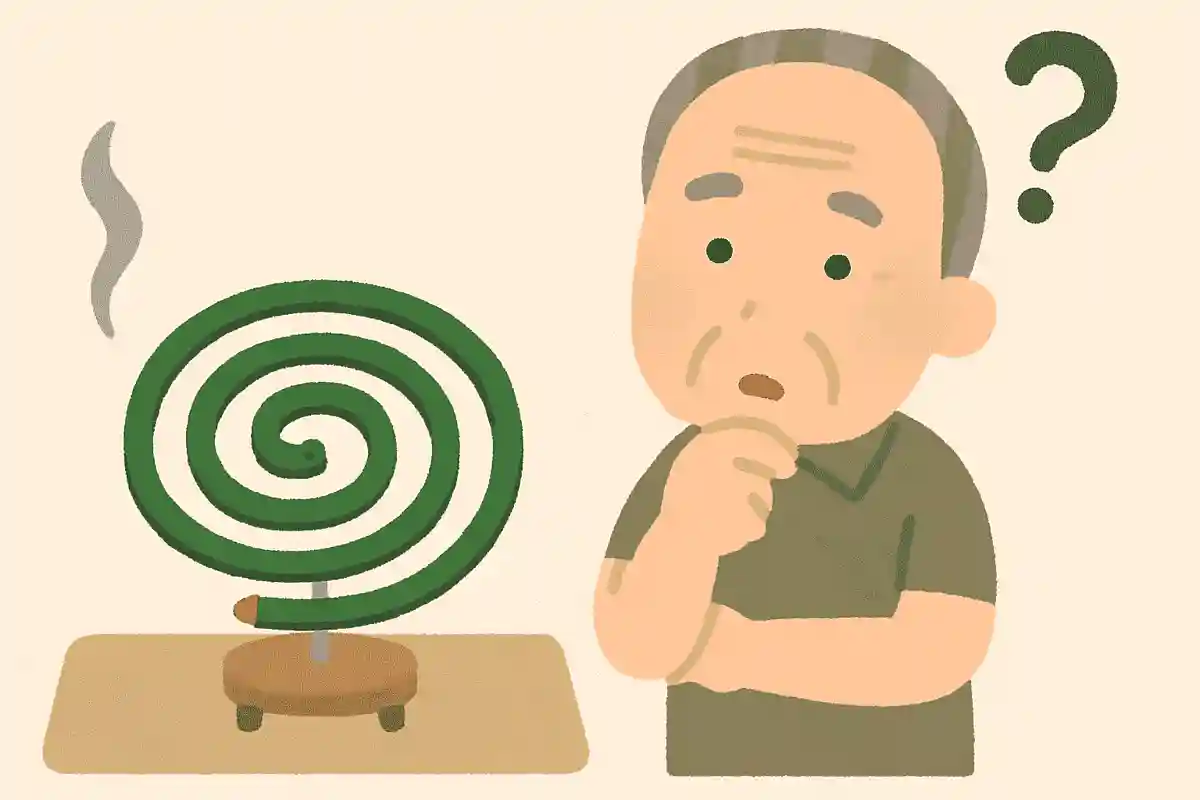
When summer is in full swing, mosquitoes seem to appear out of nowhere, and those itchy bites are one of the season’s biggest annoyances.
To prevent mosquito troubles, mosquito coils can be an effective item.
Their distinctive color and shape, along with the gently rising smoke, also signal the arrival of summer.
Many people have probably wondered why mosquito coils are shaped like a spiral.
The reason is very simple: it allows them to be used for a long time.
It’s a shape chosen for efficiency.

When cicadas are chirping in the background during a phone call, how does it sound to the person on the other end?

How would the sound of cicadas in the background come across to the person on the other end of a phone call? The hint is “how phones work.” Traditional telephones are designed to transmit only the frequency range of the human voice, so higher-pitched sounds like cicadas are cut out.
In other words, the answer is: “You can’t hear them.” The unexpected answer is sure to prompt a “Wow!” and liven up the conversation.
That said, with modern smartphones, the microphone’s performance and the calling app can sometimes let cicada sounds come through.
If this summery sound becomes a topic, it might make people recall their childhood days spent running around or scenes from the countryside.
It’s a warm little quiz that can whisk your heart back to summer with just the chirp of a cicada.

Ice cream was originally served as a kind of medicine. What was the medicine for?

On hot summer days, you really feel like eating ice cream, don’t you? Many people think of ice cream as a dessert, but it actually wasn’t originally one.
In ancient Greece and Rome, it was reportedly eaten by soldiers for recovery from fatigue and as a health food.
Back then, people would pour honey or fruit syrups over natural ice or snow and eat it.
It seems that ice cream began to be eaten as a dessert like it is today around the 16th to 17th centuries, and it is said to have been introduced to Japan from the late Edo to the Meiji period.

[For Seniors] Summer-themed Quiz: A Collection of Fun Questions to Liven Up Recreational Activities (11–20)
Why do fireflies glow?

The way fireflies softly glow is a hallmark of summer nights.
It’s a beautiful sight to watch, but do you know why fireflies light up? Here’s a hint: it’s a sign to meet.
Their manner of glowing has meaning, and it’s said they send messages through the rhythm and timing of their flashes.
Signals exchanged in the stillness of night.
The answer is… courtship.
Fireflies use light to find a mate and to announce their presence.
Knowing such a romantic reason might make the night scenery feel a little more special.
What do the phrases “Tamaya~” and “Kagiya~,” shouted when fireworks are launched, refer to?
Cries of “Tamaya!” and “Kagiya!” echo across the summer night sky.
You often hear these shouts at fireworks festivals, and while they’re an old custom, do you know what they mean? In fact, they’re not just random cheers—they have a history.
In the Edo period, there were famed fireworks craftsmen whose shop names were Tamaya and Kagiya.
Spectators would call out as if to cheer and compare which shop’s fireworks were more beautiful.
In other words, they’re “the names of the shops that made the fireworks.” This custom, which remains today, is proof that the artisans’ skill and pride have been passed down.
When those calls ring out along with the boom of the fireworks, a summer night becomes all the more evocative.
Unlike modern watermelons, old watermelons lacked something. What was missing?
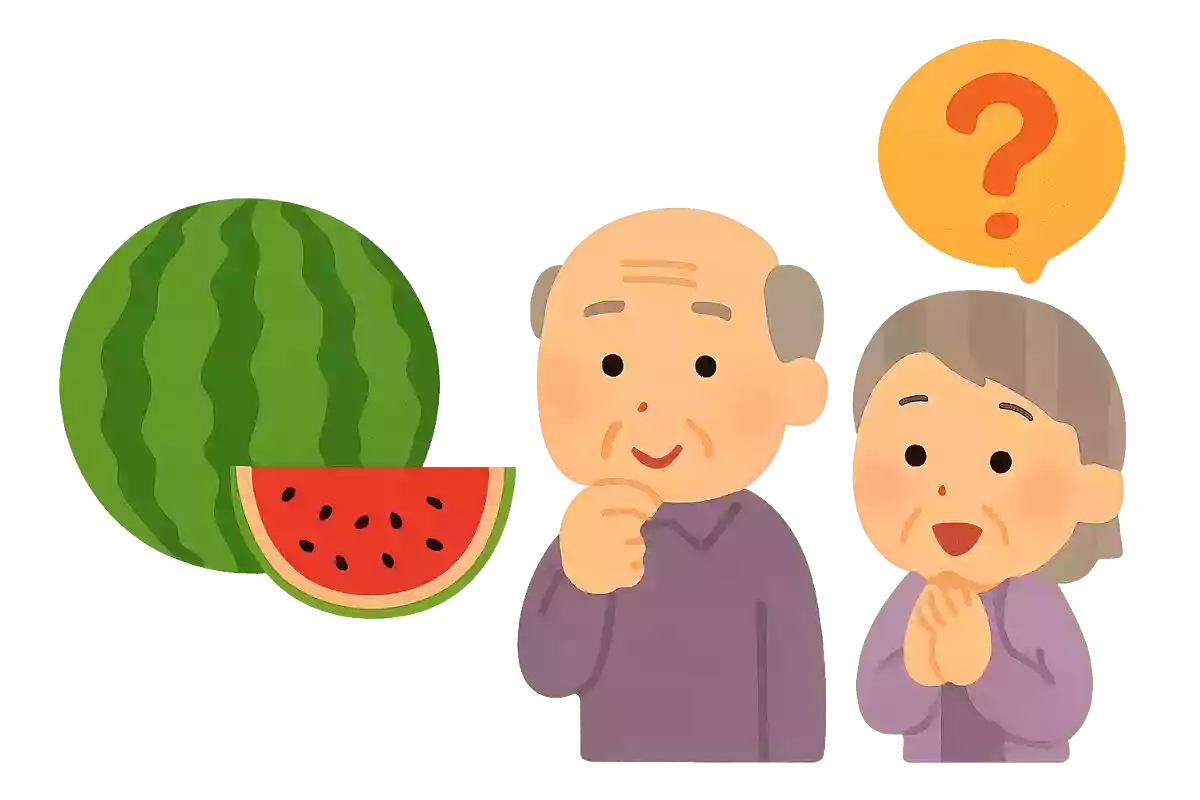
A quintessential symbol of summer: the watermelon.
Today, we’re all familiar with its round shape and striped pattern, but in fact, watermelons in the past were a little different—there was something they didn’t have.
What was it? “Weren’t they not red?” “Did they have more seeds?” “Weren’t they less sweet?” You can imagine all sorts of guesses.
It’s a summery question you can enjoy chatting about while you think of the answer.
So, the correct answer is… vertical stripes.
The now-standard pattern didn’t exist back then.
Even the appearance of watermelons has evolved over time.
Many people associate summer with the sea, but why is the sea blue?
When you think of summer, many people picture the ocean.
So, do you know why the ocean looks blue? The answer is that it reflects blue light.
Let me explain in a bit more detail.
Water itself is colorless and transparent, but it has the property of absorbing red, orange, yellow, green, and violet light.
Only blue light is not absorbed.
As a result, among the colors of sunlight entering the water, only blue is reflected from the seafloor, which is why the ocean appears blue.
Incidentally, the unevenness in shades of blue is due to differences in the distance to the seafloor where the light is reflected.
