

[For Seniors] Summer-Themed Quiz: A Collection of Fun Questions to Liven Up Recreational Activities


How about an indoor quiz that lets you stay comfortable as a recreational activity on hot summer days? In recent years, Japan has been getting hotter year by year.
Quizzes let you train your brain without physical exertion, so they’re a great option for recreation in senior facilities during midsummer.
Since the theme is summer, it might help people feel the season and recall past memories.
For older adults, looking back and talking about the past can promote emotional stability and benefit cognitive function.
It also makes it easier to spark communication with those around them.
Enjoy a fun summer moment while doing brain training with quizzes!
- [For Seniors] Brain Training! Recall Quiz Collection!
- [For Seniors] Fun Brain Training! Prefecture Quiz
- [For Seniors] Boost Your Knowledge! Fun Trivia Quiz
- For Seniors: Lively! Trivia and Fun Facts Quiz for August
- For seniors: Fun, crowd-pleasing word association game ideas
- [For Seniors] Lively Wordplay Game: Fun Recreation for Elderly Care
- August quizzes that seniors can enjoy!
- [Brain Training] Lively Word Quiz for Seniors
- [For Seniors] Enjoy Brain Training with September Trivia Quizzes & Fun Facts
- [For Seniors] Guaranteed to Liven Things Up! A Collection of Brain Training Activities That Will Spark Laughter
- [For Seniors] Fun Riddles That Stimulate the Brain
- [For Seniors] Summer-Themed Trivia Quiz & Fun Facts Collection
- [For Seniors] Summer Festival Trivia Quiz & Fun Facts. Enjoyable Quizzes That Boost Your Knowledge
[For Seniors] Summer-Themed Quiz: A Collection of Fun Questions That Liven Up Recreational Activities (41–50)
What color are the lanterns used during the first Obon (shinbon)?
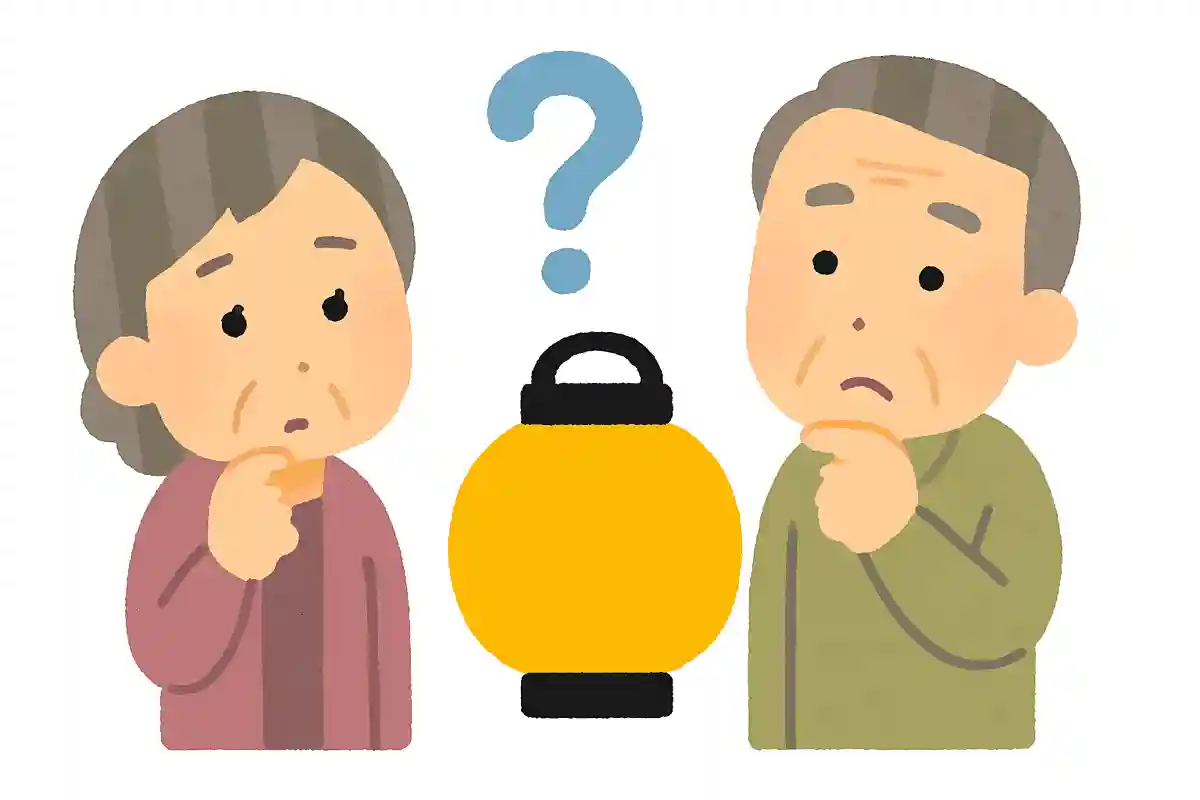
Shinbon (the first Bon) refers to the first Obon observed after a person has passed away.
More precisely, it is the first Obon that comes after the forty-ninth day memorial period has ended, and the name varies by region—such as “shinbon” or “arabon.” During the first Obon only, a white lantern called “hakumonten” is displayed.
The reason is to serve as a marker so that the spirit of the deceased, returning for the first time, does not lose its way.
Some older adults may already know this, but since it’s very informative, why not turn it into a quiz to help people feel the season?

[For Seniors] Summer-Themed Quiz: A Collection of Fun Questions That Liven Up Recreational Activities (51–60)
A certain Japanese custom began because it originates from Obon. What is the custom?
There is a Japanese custom that originates from Obon.
What is this event? The answer is “Ochūgen,” a summer tradition alongside the winter “Oseibo,” in which people send gifts to those who have helped them.
Because Obon carries the meaning of honoring and giving thanks to one’s ancestors, the practice of expressing gratitude to those who have supported you during this season spread as Ochūgen.
It’s a custom that heightens a sense of joy, including the fun of thinking about what kind of gift will best convey your appreciation.

This event, held in Kyoto every year on August 16th, involves lighting fires on the mountains in the sequence of “Daimonji,” “Myoho,” “Funagata,” “Hidari Daimonji,” and “Toriigata.” What is this event called?
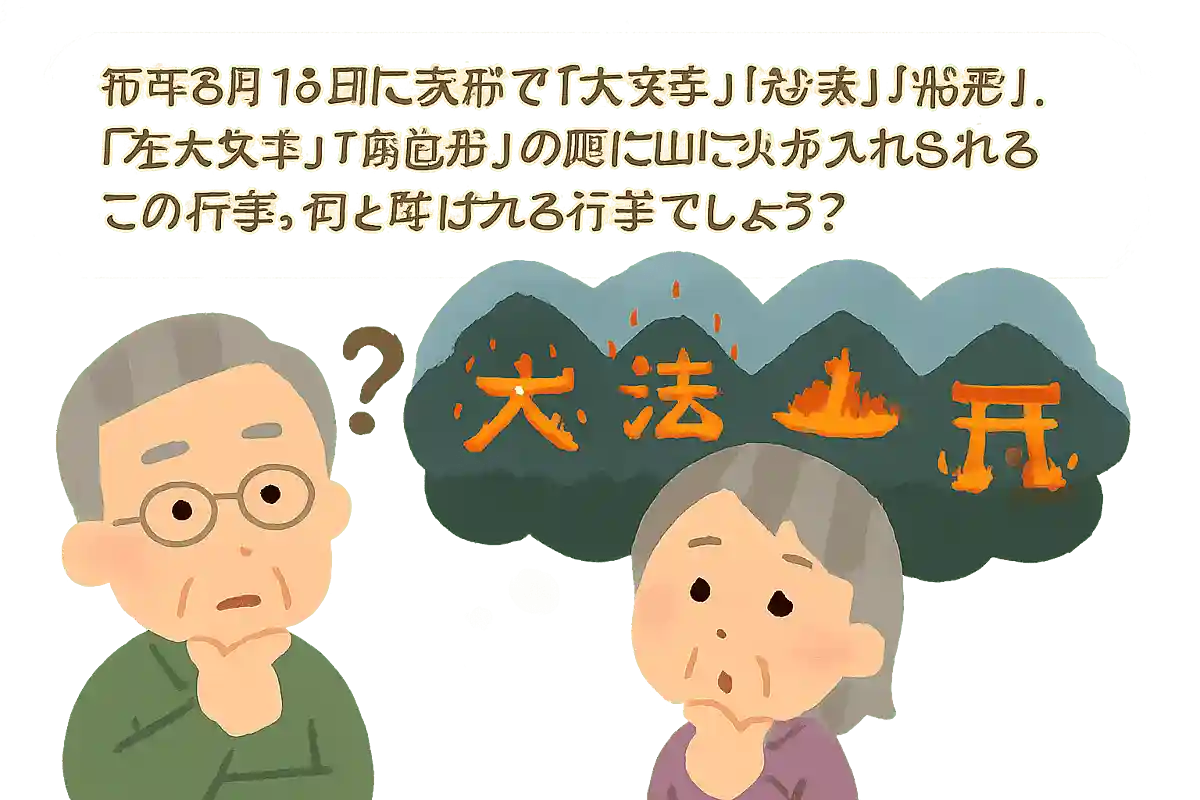
What is the name of the event in which fires are lit on the mountains in Kyoto every year on August 16, in the order of “Daimonji,” “Myōhō,” “Funagata,” “Hidari Daimonji,” and “Toriigata”? The answer is “Gozan no Okuribi.” It is a famous traditional summer event in Kyoto, held to send off the spirits of Obon.
Every year, many people visit Kyoto as tourists to see this event.
It is often broadcast on television, and the characters of fire flickering in the darkness are beautiful and feel very powerful.
It’s an Obon event that many would want to see at least once.

Which parts of the body are recommended to be cooled when heatstroke is suspected?
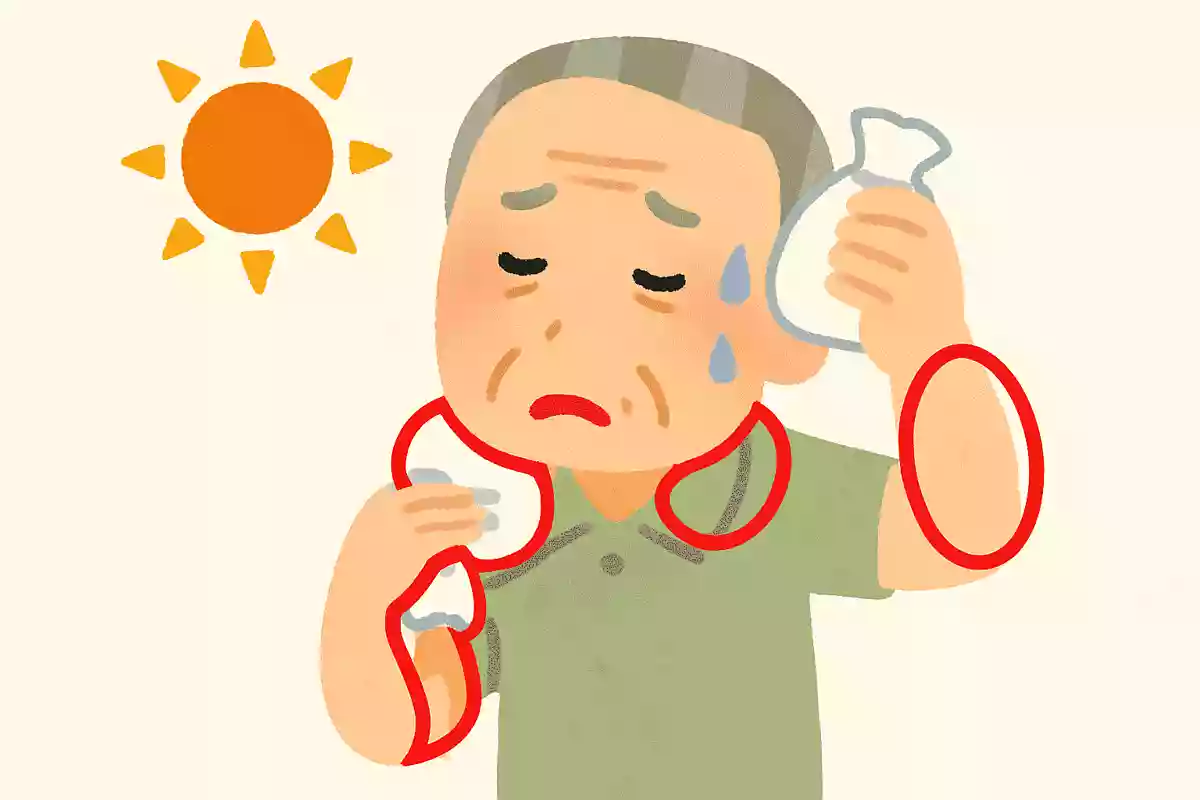
In the peak heat of August, you may unexpectedly develop symptoms of heatstroke.
If you know how to respond in advance, it can help you alleviate your own symptoms and support those around you.
When you’re dealing with situations like feeling overheated and needing to cool down but not knowing which areas to cool, remember the appropriate spots.
If heatstroke is suspected, it’s recommended to cool the armpits.
The key is to cool areas where large blood vessels run.
What is a color that fireworks absolutely cannot produce?
Watching aerial fireworks, playing with handheld fireworks—fireworks are an essential part of summer, aren’t they? The flames that shine beautifully in various colors make summer even more fun.
Fireworks use a phenomenon called the “flame reaction” (flame test) to change the color of the fire.
By mixing specific elements that produce different flame colors when burned into the fireworks, they create those beautiful hues.
One color that can’t be produced even using the flame reaction is black; no matter what chemicals you use, you can’t get a black flame.
Since fireworks are mostly enjoyed at night, a black flame would be hard to see anyway, wouldn’t it?
What is the custom of giving gifts to those who have taken care of you between early July and mid-August called?
In the summer, some people give gifts to those who have helped them, or receive gifts from close friends.
Here’s a question: what are these gifts called? The answer is “ochūgen.” This custom originated in the Edo period; it is said to have begun as a way of expressing gratitude to those who hosted or helped you during the Obon season by giving them items.
Today, the emphasis is more on showing appreciation for everyday kindness, and accordingly, the typical period for giving such gifts is from early July to mid-August.

The fruit of the moonflower, which blooms with flowers similar to morning glories, becomes a certain food ingredient when processed. What does it become?
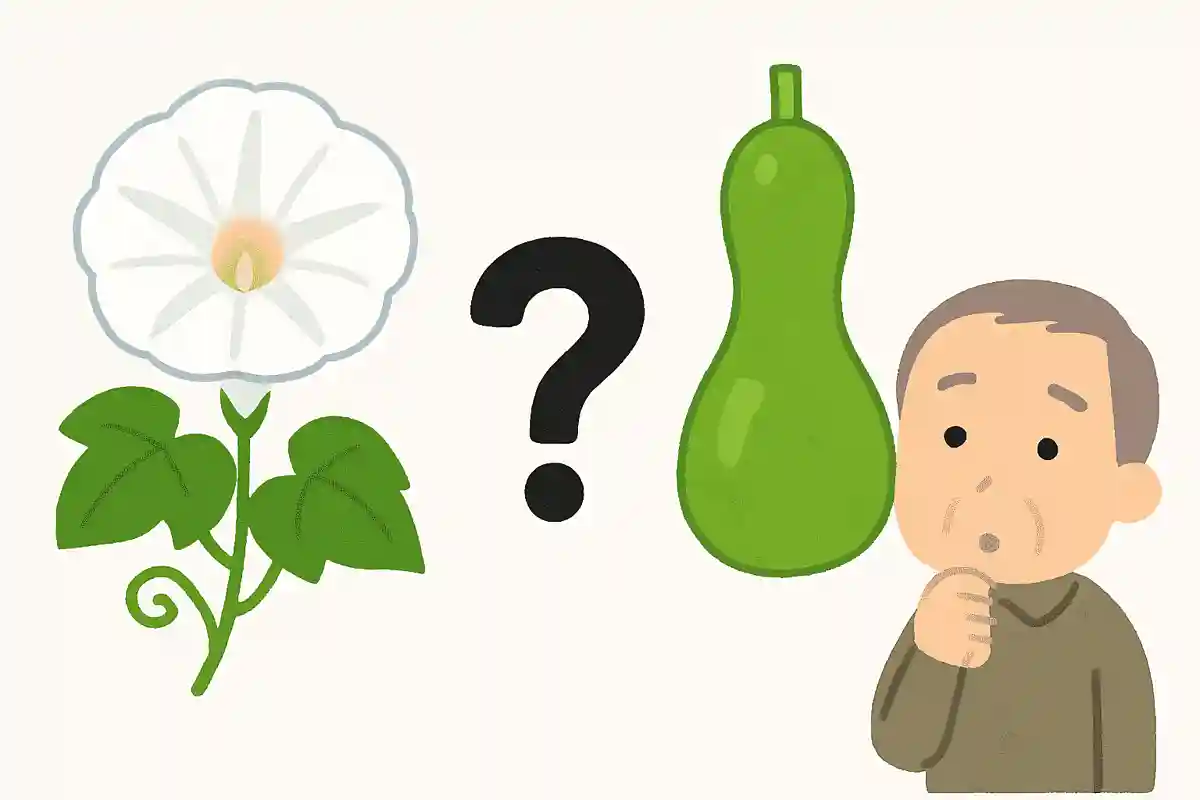
You know the moonflower, which blooms with flowers similar to morning glories, right? In fact, when moonflowers are processed, they become a certain food everyone knows.
What is it? The answer is kanpyo (dried gourd strips).
The moonflower bears green fruit, and if you slice it thinly and dry it, you get kanpyo.
By the way, the name “moonflower” (yūgao) comes from the fact that it blooms in the evening and its buds close the next morning.
If you have one blooming nearby, take a look.
It might also be fun to take this opportunity to plant some and try making kanpyo yourself.