

I want to sing songs that use a lot of falsetto—tracks that are also good for practicing falsetto at karaoke.


I want to be able to sing in falsetto at karaoke! But I don’t know how to choose practice songs… Many people probably share this concern.
In fact, when practicing falsetto, choosing songs with moderate melodic contours and a suitable range is the shortcut to improving.
In this article, we’ll introduce the characteristics of songs that are effective for practicing falsetto, as well as tracks that are easy to try at karaoke.
From songs you can tackle casually to ones that help you step up gradually, you’re sure to find options that let you practice enjoyably within your vocal range!
- [High-pitched warning!] Songs with high notes that are hard to sing
- [For Men] Mix Voice Practice Songs: Reference Tracks to Help You Hit High Notes More Easily
- [Taking on a song with a wide vocal range] An S-class challenge track
- [Karaoke] A roundup of songs that are easy for women to sing!
- Must-see for men: Songs that look cool if you can sing them at karaoke—numbers that women can’t help but be captivated by.
- Practice Songs Helpful for Learning Mixed Voice (Middle Voice) [For Women]
- Recommended karaoke songs for male vocalists with high voices
- Songs Women Want Men to Sing: Popular Karaoke Picks Chosen by Girls
- Even karaoke beginners can relax! Easy-to-sing songs for men
- [Karaoke] Songs That Make It Easy to Score High | From Classics to the Newest Hits
- A must-see for low-voiced women! Popular songs that are easy to sing at karaoke
- Karaoke songs that are easy to sing even with a low voice (for women in their 30s)
- Songs to Help Women Sing Better: Practice Tracks for Improving at Karaoke
I want to sing songs that use a lot of falsetto. Songs suitable for practicing falsetto at karaoke (41–50)
Letter to TomorrowTeshima Aoi

Her songs, sung like a gentle exhale, spread a tender voice you can’t forget once you hear it.
Her pure, soothing vocals are truly captivating.
This track is also popular at karaoke for those who want to produce a clean falsetto.
Since you sing using falsetto for most of the song, it can be quite good practice.
Listeners will likely feel their hearts soften and a warm ache in their chest.

cherry blossomMoriyama Naotaro
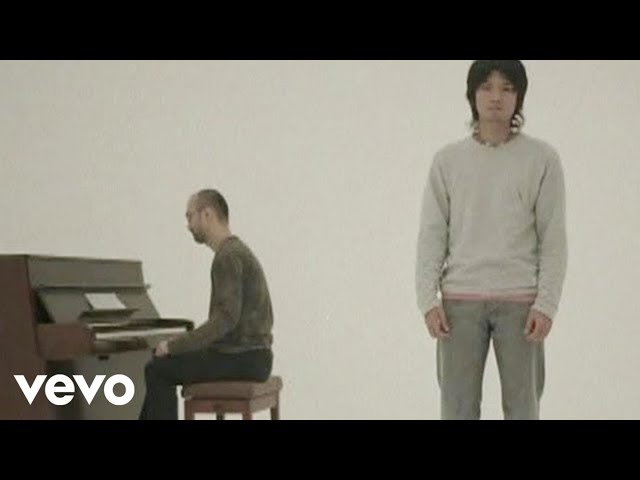
Sakura, released on March 5, 2003.
With this single, Naotaro Moriyama broke through to mainstream success.
This song, which sings of parting from friends during cherry blossom season and the hope of meeting again, has become a staple for graduation ceremonies and among sakura-themed songs.
The piano-only accompaniment and the beautiful falsetto lend a sense of wistfulness and warmth to the entire piece.
It’s a must-sing for anyone confident in their falsetto!

AWAKEHoshimachi Suisei

Right now, one of the most active VTubers in the music scene is Suisei Hoshimachi.
As a signature artist of hololive, she gained nationwide popularity with “Bibidedeba.” Among her tracks, the one I especially recommend is “AWAKE.” From the intro through the first verse, it features a fresh, artcore-adjacent melody, then shifts into a hip-hop vibe, and in the chorus transforms into house-style dance music.
Falsetto is used effectively in each section, so it’s perfect for listeners who want to enjoy smooth, beautiful falsetto vocals.

Love, Day After TomorrowKuraki Mai

Mai Kuraki’s debut single, released in December 1999.
Despite being a debut, it became a million-seller, topping 1.4 million copies over the course of more than a month.
Throughout the track, she skillfully employs falsetto and a falsetto-leaning mixed voice, delivering an exceptionally soft vocal performance.
Considering that Kuraki was only 17 at the time of recording, this level of expressiveness is quite remarkable.
Compared to contemporaries like Hikaru Utada, who debuted around the same time and helped ignite the R&B-style diva boom, her voice and singing do convey a touch of “youthfulness,” but that quality is precisely part of the song’s charm.

Snow BlossomNakajima Mika

Her signature song “Yuki no Hana,” known for its beautiful falsetto, has been covered by many artists both in Japan and abroad.
Countless people sing this song in falsetto at karaoke, and it remains popular today.
As a winter ballad, it’s often sung during the wistful winter season, and her voice in the chorus is so beautiful that many admirers practiced it over and over (lol).
This is truly a classic falsetto song, without a doubt!
sparkleFuji Kaze

This is a song by Fujii Kaze, released exclusively via digital distribution on May 3, 2021.
It was written specifically for Honda’s VEZEL commercial, and it was reportedly the first time he had ever handled a commercial song.
While the track has a very fun, buoyant feel, Fujii’s airy falsetto—especially audible in the latter half of the chorus—really shines within the music and sound.
That sense of weightless floating is possible precisely because of his captivating falsetto!
hyururira-pappatuki.

Singer-songwriter tuki., who gained nationwide popularity with “Bansanka,” is energizing the Japanese music scene with precise pitch control, rising right behind artists like Ado and YOASOBI.
Among tuki.’s songs, the one I especially recommend is “Hyururira Pappa.” Its melody is rooted in traditional Japanese style, and thanks to the frequent alternation between chest voice and falsetto, it offers an exceptionally pleasing listening experience.
The falsetto, born from pitch control as precise as top-tier Vocaloid tuning, is absolutely stunning.